
How to Verify CE-Certified Carton Printing and Converting Equipment Before Purchase
Buying carton printing and converting equipment CE certified for a live production environment requires more than checking a mark on the nameplate. In high-speed corrugated and packaging lines, a weak compliance review can become a safety incident, a customs delay, or a costly retrofit. For operations handling offset printing, die-cutting, folder-gluing, and downstream automation, CE verification is really a test of whether the machine, its documents, and its actual risk controls match each other.
Why CE verification matters more in modern carton lines
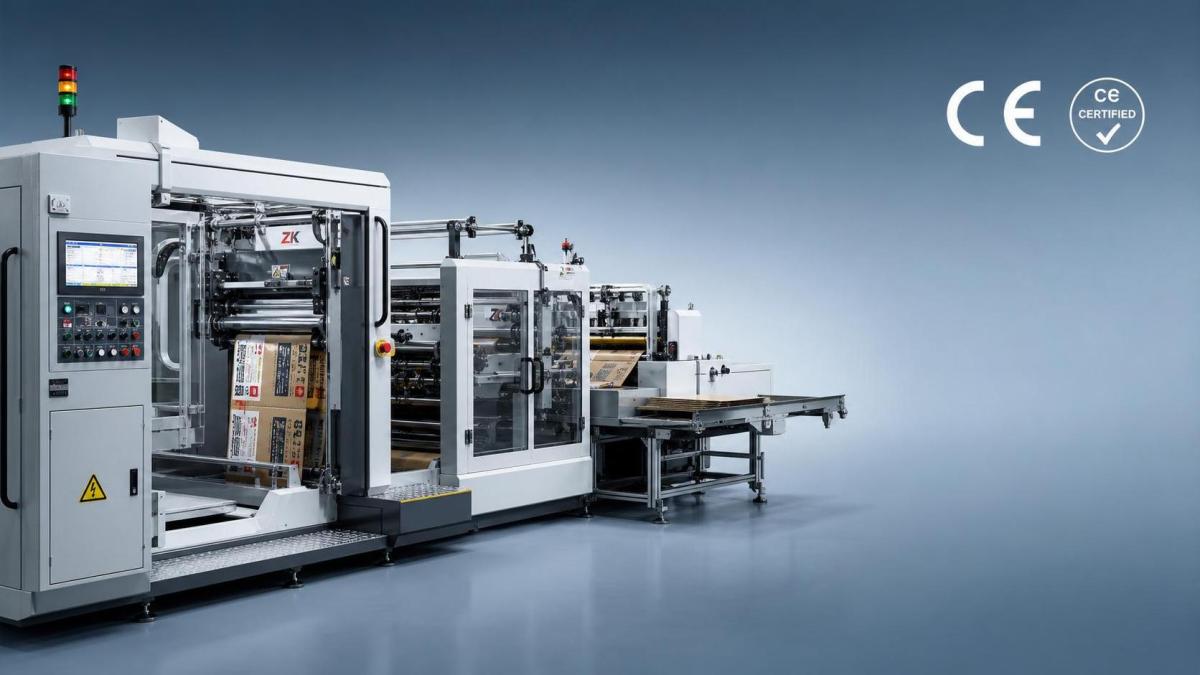
Carton plants are under pressure from e-commerce volume, shorter lead times, tighter print quality demands, and stricter workplace safety expectations. Machines now run faster, integrate more servo systems, and exchange more production data than older lines.
That shift changes the meaning of due diligence. A carton printing and converting equipment CE certified claim must be checked against guarding, emergency stops, electrical design, control logic, and operator access during real maintenance tasks.
This is especially relevant in sectors tracked closely by PWFS, where corrugated board lines, precision presses, and folder-gluers operate at speeds where small compliance gaps can create large operational consequences.
What the CE mark does and does not confirm
The CE mark is not a shorthand for “best machine” or “highest quality.” It indicates that the equipment is declared to comply with applicable European requirements, including safety, health, and in some cases electromagnetic compatibility.
For carton printing and converting equipment CE certified status usually touches several areas:
- Machinery safety design
- Electrical and control system conformity
- Risk assessment and hazard reduction
- Technical documentation and operating instructions
- Declaration of Conformity signed by the responsible party
It does not automatically prove that the machine suits your substrate range, operator skill level, local lockout procedures, or planned production speed. Those checks still belong to the buyer.
Start with the documents before reviewing the machine
A serious supplier should provide a document package early, not after deposit payment. If the file set is incomplete, the CE claim deserves closer scrutiny.
Core records to request
Details must align exactly with the quoted configuration. Many problems appear when the declared model differs from the final machine, especially after adding stackers, feeders, stripping units, or glue systems.
Review the machine as a system, not a standalone frame
In packaging plants, few assets work alone. A printer-slotter may feed a die-cutter. A die-cutter may connect to waste removal, counting, bundling, or palletizing. That means carton printing and converting equipment CE certified status should be assessed at line level.
A compliant main machine can still create gaps when paired with conveyors, guarding bypasses, or third-party software. The transfer points between modules often carry the highest hidden risk.
Questions worth asking during technical review
- Does the CE documentation cover the full line or only the central machine?
- Who takes responsibility for integrated guarding after installation?
- How are emergency stops linked across upstream and downstream units?
- Can operators clear jams without defeating interlocks?
- Are access doors monitored and reset procedures controlled?
The factory acceptance test should include compliance behavior
A factory acceptance test often focuses on speed, registration, waste rate, and substrate range. Those metrics matter, but they do not replace safety validation.
For carton printing and converting equipment CE certified claims, the acceptance test should also examine how the machine reacts when something goes wrong.
What to witness directly
- Emergency stop response from multiple stations
- Interlocked guard opening during slow and full-speed modes
- Safe restart logic after stoppage
- Jam clearing access around feeders, print units, and folding sections
- Noise, heat, and dust behavior in realistic production conditions
- Control panel warnings and alarm clarity
This is where technical intelligence matters. In high-precision presses and fast die-cutting systems, dynamic motion, braking distance, and operator proximity are inseparable from compliance.
Red flags that often appear before purchase
Most weak CE claims leave traces. They are usually visible long before shipment.
- The supplier sends a generic Declaration of Conformity with no exact model reference.
- The manual describes a different layout from the quoted machine.
- Guarding appears added after design, not integrated into it.
- Electrical cabinets lack clear labeling or isolation instructions.
- High-risk zones rely too heavily on warning labels.
- The supplier cannot explain applicable harmonized standards.
- Optional automation modules are excluded from the compliance file.
When those signs appear together, the carton printing and converting equipment CE certified statement may be legally presented but practically incomplete.
Different machine types need different verification emphasis
Not every machine carries the same risk profile. The review depth should follow the motion, force, heat, and operator interaction of the equipment being sourced.
This machine-specific view is common in PWFS analysis because the physics of color registration, die pressure, and material flow directly shape the right compliance checklist.
Local use conditions still need a final check
Even when carton printing and converting equipment CE certified documentation looks solid, installation conditions can change the risk picture. Floor layout, operator routes, power supply, compressed air quality, extraction, and housekeeping standards all matter.
A machine that passed review in one factory can create new hazards in another if access space is reduced or guarding is removed to fit the building. This is why pre-installation layout review should happen before shipment.
Useful final checks before release
- Match the final bill of materials with the compliance file
- Confirm language versions of manuals and warning labels
- Review spare parts for safety-critical components
- Define site acceptance criteria before delivery
- Record unresolved deviations in writing
Turning verification into a stronger buying decision
The best purchase decisions treat CE review as part of equipment performance, not a separate legal box. A well-verified carton printing and converting equipment CE certified package supports safer startup, cleaner audits, more stable uptime, and fewer disputes after installation.
A practical next step is to build a comparison sheet that combines compliance documents, line integration scope, factory test observations, and site conditions. That approach makes supplier claims easier to compare and gives the final decision a more defensible technical basis.
Where the process involves high-speed corrugated conversion, precision print registration, or multi-module packaging automation, deeper review usually pays for itself long before the first production month ends.
Related News
Get weekly intelligence in your inbox.
No noise. No sponsored content. Pure intelligence.
