
Micron Color Registration Printing Explained: Tolerance, Control Methods, and Common Defects
Micron color registration printing sits at the center of premium offset performance. It describes how precisely each printed color lands in relation to the others, often within tolerances measured in microns rather than millimeters.
That level of control matters because packaging buyers no longer judge quality only by color richness. They also notice edge sharpness, text clarity, barcode readability, and the visual stability of repeated brand graphics.
In practical production, even slight drift can turn a fast, profitable run into waste. For operations built around corrugated converting, folding cartons, or other high-speed print lines, registration accuracy is directly tied to yield.
Within the broader PWFS view of paper and wood manufacturing systems, this topic also reflects a larger trend. Industrial competitiveness increasingly depends on how well machines hold precision under speed, load, and material variability.
What Micron-Level Registration Really Means
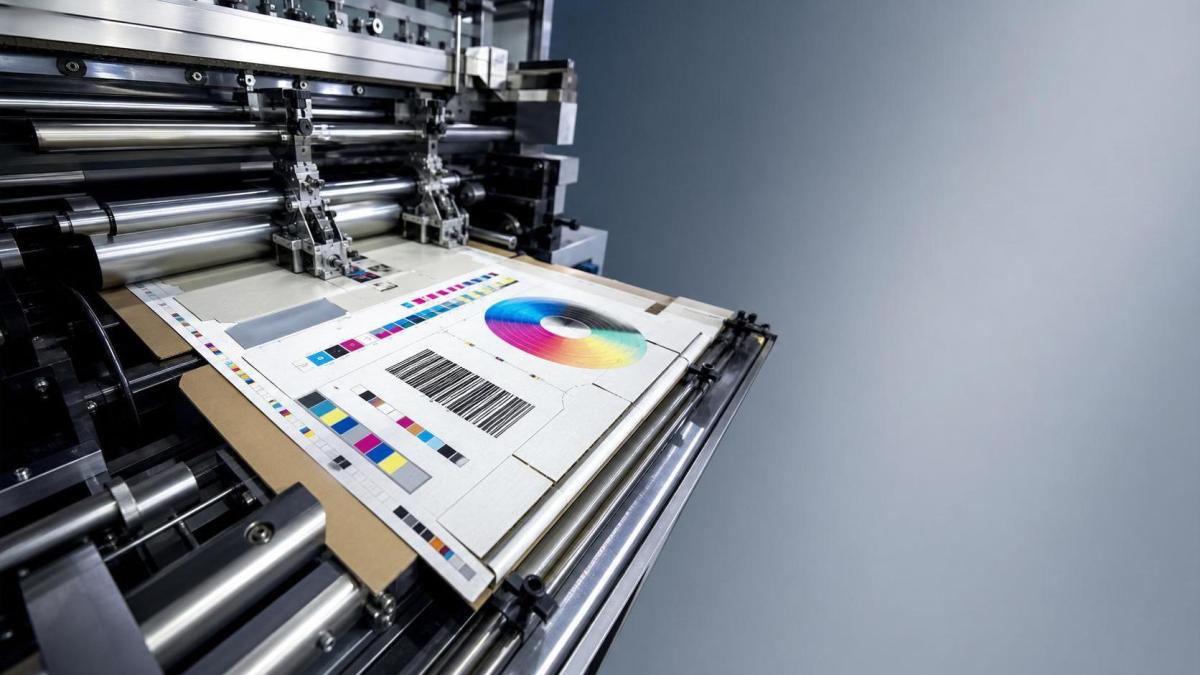
At its simplest, micron color registration printing is the discipline of placing CMYK and spot colors in exact alignment on every sheet or board. The goal is stable overprint, not just acceptable visual color.
A micron is one thousandth of a millimeter. In offset production, that scale matters because halftone dots, fine reverse text, and trapping margins leave little room for positional error.
Registration is usually discussed in two ways. One is static registration, meaning the machine can be set correctly. The other is dynamic registration, meaning it stays correct as speed, temperature, and stock behavior change.
This distinction is important. A press can look accurate during setup but lose control during long runs, acceleration, deceleration, or substrate transitions. That is where real technical differences appear.
Why the Industry Watches Registration So Closely
For carton and display packaging, print quality has become a commercial variable, not just a cosmetic detail. E-commerce, retail shelf competition, and shorter product cycles all push converters toward tighter visual consistency.
High-speed offset presses may run at remarkable output rates, yet their value depends on how much saleable material leaves the line. Registration instability creates hidden cost through spoilage, stoppages, operator intervention, and downstream rejection.
The issue also extends beyond the press itself. Die-cutters, folder-gluers, and inspection systems depend on repeatable print position. If print-to-cut alignment shifts, carton geometry and graphics no longer match.
That is why PWFS treats micron color registration printing as part of a connected manufacturing chain. Precision in print affects converting, packing efficiency, compliance presentation, and brand trust at the final product level.
Tolerance Is a Capability Question, Not a Marketing Number
Published tolerance claims can be misleading when they are detached from job conditions. A stated registration accuracy only becomes meaningful when linked to speed, substrate type, humidity range, ink set, and image structure.
In real evaluations, the more useful question is not whether a press can reach micron-level registration once. The better question is whether it can sustain that condition across an entire production window.
Usually, tighter tolerances are demanded when jobs include microtext, line screens, metallic effects, dense solids beside reverse elements, or complex brand color layering. Corrugated post-print and board variation add further difficulty.
How Registration Control Is Actually Achieved
Micron color registration printing is never the result of one feature. It comes from the interaction of mechanics, sensing, control logic, environmental stability, and operator discipline.
Mechanical precision
Cylinder accuracy, bearing condition, gear or gearless drive behavior, feeder stability, gripper timing, and frame rigidity all shape baseline registration. Weak mechanics cannot be corrected fully by software.
Sensing and feedback
Camera-based register inspection, mark detection, and closed-loop correction reduce drift during production. Faster sensing matters, but signal quality and correction logic matter just as much.
Substrate and process conditioning
Paper stretch, board warp, moisture, ink-water balance, blanket condition, and drying behavior all influence color position. Some registration problems begin as material problems rather than machine faults.
Data and automation
Advanced lines increasingly connect press controls with MES, job presets, inspection history, and fault logs. That makes registration performance measurable, comparable, and easier to improve from run to run.
Common Defects and What They Usually Indicate
Registration faults rarely appear as a single textbook symptom. Most show up as visual patterns that point toward a combination of causes.
- Color fringing on text or image edges: often linked to cross-register drift or sheet transport inconsistency.
- Blurry overprint areas: commonly related to unstable circumferential register, plate movement, or blanket issues.
- Halo around reverse elements: may indicate poor trapping margin or one color station drifting under load.
- Intermittent misregister at higher speed: frequently points to dynamic mechanical limits or delayed correction response.
- Print-to-cut mismatch: often reflects cumulative register error between printing and downstream converting references.
What deserves attention is repeatability. A defect that appears only after several thousand sheets says more about machine behavior than a defect seen during startup.
This is where high-precision offset evaluation overlaps with the broader PWFS focus on production systems. Stable output depends on how well every machine stage preserves positional integrity.
Where Micron Color Registration Printing Creates Business Value
The most obvious benefit is visual quality, but the larger value is operational. Better registration reduces setup waste, lowers inspection burden, and protects throughput on demanding jobs.
In folding carton production, that can mean more reliable small text, cleaner brand marks, and tighter die-cut alignment. In corrugated packaging, it can improve shelf impact despite more challenging substrate behavior.
For regulated sectors, such as food, pharmaceutical, or premium personal care packaging, stable registration also supports compliance presentation. Codes, warnings, and tamper-related graphics must remain legible and correctly positioned.
More broadly, micron color registration printing fits the same industrial logic seen in CNC woodworking and precision edge processing. The winning systems are those that hold accuracy while maintaining speed and flexibility.
How to Assess Capability in Real Production Conditions
A useful assessment framework goes beyond brochure claims. It should test how the press behaves with realistic jobs, realistic speeds, and realistic environmental variation.
- Review registration samples from both startup and steady-state production.
- Check whether correction is manual, semi-automatic, or closed-loop throughout the run.
- Compare performance on coated stock, cartonboard, and difficult corrugated structures when relevant.
- Look for fault history, trend data, and drift patterns instead of isolated pass results.
- Verify whether print accuracy survives downstream die-cutting and folding operations.
- Assess maintenance sensitivity, especially for sensors, grippers, cylinders, and climate control.
It is also worth separating correction speed from correction quality. A fast system that oscillates can create new instability. A slower but well-damped response may deliver better net output.
A Practical Next Step for Comparison and Selection
Micron color registration printing should be treated as a system capability, not a single specification. The strongest evaluations connect tolerance, defect behavior, automation level, and downstream compatibility into one decision framework.
For any shortlist of presses or line upgrades, start by mapping actual job structures. Include substrate mix, fine-detail requirements, speed expectations, and print-to-convert alignment risk.
Then compare how each option manages drift, not just how it reaches nominal setup. That approach usually reveals more about long-run quality and profitable output than headline precision figures alone.
When the review is grounded in those factors, micron color registration printing becomes easier to judge in business terms: less waste, steadier quality, and stronger confidence across the full packaging workflow.
Related News
Get weekly intelligence in your inbox.
No noise. No sponsored content. Pure intelligence.
