
Packaging Machinery Prices: What to Budget Beyond the Purchase Price
The quoted packaging machinery solutions price is only one part of the money a buyer needs to commit. Freight, site preparation, installation, tooling, training and the cash tied up during startup can materially change the investment. The lowest equipment quote may still be the right choice, but only after those costs have been brought into the comparison.
For a standalone folder-gluer, the biggest gaps may sit in tooling, setup time and downstream handling. For a corrugated board line, building work, steam, power and the wider production system can dominate the discussion. Start by budgeting for a machine that can make acceptable product at the required rate, then add the cost of keeping it productive over the intended ownership period.
Build the budget around a working production system
A supplier’s machine price may cover the core equipment while leaving several responsibilities with the buyer. Before comparing quotes, establish the boundary of the purchase: where material enters, where finished product leaves, and which supplier or contractor is responsible for each connection and handoff.
A useful budget has three parts. The first is the delivered and installed cost: everything needed to bring the equipment onto the site and prepare it to run. The second is startup cost: training, trial material, early production losses and any temporary support needed while the line reaches an agreed operating level. The third is ownership cost: labor, utilities, maintenance, software and other expenses over a consistent comparison period.
Keep these categories separate in the approval request. A machine may fit the capital budget while leaving the plant short of operating funds for training, spare parts or the first months of production. Taxes and duties also deserve separate treatment: their effect depends on the transaction, jurisdiction and whether the buyer can recover them. Avoid treating a recoverable tax as a permanent expense, but allow for the cash needed to pay it.
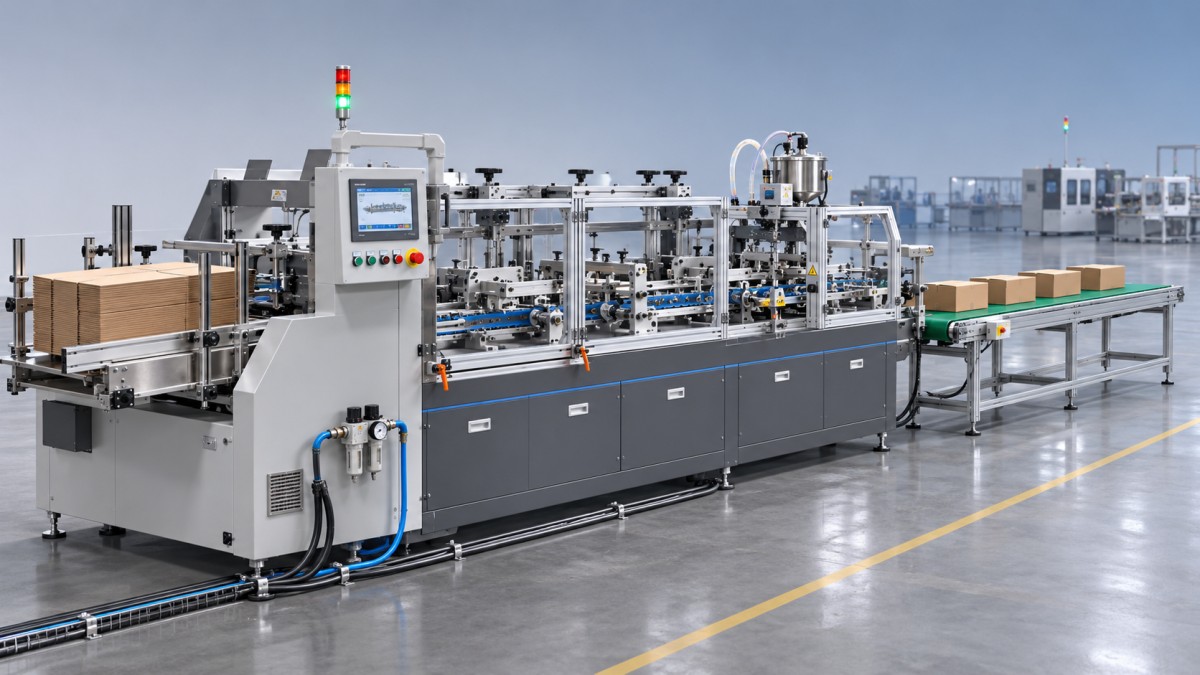
From supplier’s factory to production floor
The difference between an equipment price and an operational line begins with delivery terms. Ask each supplier to state the named delivery point, what transport and insurance are included, and when risk transfers. A quote that ends at the supplier’s factory leaves the buyer to arrange more of the journey than one that includes delivery to the plant.
For large machinery, freight planning extends beyond the transport invoice. Equipment may need to be dismantled, packed into multiple loads and moved through access points with limited clearance. Unloading, lifting equipment, internal movement and temporary storage can all sit outside the machine quotation. Import clearance, duties and local taxes may add further cost where equipment crosses a border.
The site itself can require work before delivery. A die-cutter or folder-gluer may need floor space for feeding, discharge, maintenance access and material movement as well as the machine footprint. A corrugated line calls for a broader review of layout and services, including the capacity and condition of the plant’s steam, electrical and material-handling systems where relevant. The cost of providing those services depends on what is already available and what the proposed line requires.
Ask the supplier for a utility schedule and installation drawings early enough for local contractors to price the work. Check power supply, compressed air, extraction and any heating or cooling requirements against the actual site. Include connections from the plant supply to the machine, not just the utility source itself. If foundation modifications, floor loading checks or building alterations are needed, assign responsibility for design, permits and completion dates.
Installation quotes also need a clear boundary. A supplier’s technician may supervise assembly while the buyer provides electricians, riggers, lifting equipment and consumables. Travel, accommodation, overtime and return visits may be charged separately. Record what happens if the site is not ready when the technician arrives, or if a component arrives late and the installation schedule changes.
Budget for the product mix, not just the machine
A machine can be installed and still be unable to produce the buyer’s full range economically. The missing expenditure may be tooling, peripherals, controls or the time needed to change between jobs.
For a die-cutter, establish which dies, stripping tools, blanking tools and make-ready materials are included for the intended work. The answer depends on the packaging formats and the configuration being purchased. For a folder-gluer, review the feeding, folding, glue application and delivery arrangements against the actual carton designs. A machine configured for straightforward boxes may need additional modules or handling equipment for a more demanding mix.
Do the same exercise at the ends of the line. If the proposed output requires an extra feeder, conveyor, inspection station, packer or pallet-handling arrangement, price it with the core equipment. Otherwise, the headline machine speed may be limited by the capacity of the operators or equipment around it.
Use a representative order mix when discussing performance. Include the materials, sheet sizes, carton styles, batch sizes and quality requirements that account for meaningful production volume. A supplier’s maximum mechanical speed can be useful for understanding capability, but an investment model needs an achievable output for the jobs the buyer plans to run, including setup, stops and quality losses.
Startup has a cost even when installation is included
Commissioning and acceptance are sometimes treated as the end of the capital project. In practice, the buyer should budget for the period between first operation and dependable production. Trial runs consume board, ink, adhesive or other materials; operators and maintenance staff spend time learning the equipment; and a plant may need to retain existing capacity while the new line is brought up to speed.
Define what training includes: the number and roles of people trained, the location, duration, language, training materials and whether follow-up support is included. Operator instruction alone may leave maintenance staff unprepared to diagnose faults or carry out routine service. If personnel work across shifts, check whether training covers all shifts or whether the buyer must arrange internal handover.
Acceptance terms should connect the machine to the intended application. Agree on the test product, material specifications, run duration, output measurement, quality criteria and responsibilities for supplying material and labor. A test using only an easy job may leave the buyer exposed when the machine moves to its normal mix. Conversely, a demanding test is useful only if its conditions and pass criteria are agreed before the equipment arrives.
Calculate ownership costs on the same basis
Once the line is running, a cheaper quotation can be offset by higher labor, waste, energy or service costs. Compare proposals over the same ownership period and under the same production assumptions. The appropriate period depends on the buyer’s investment policy and expected use of the equipment.
For utilities, distinguish installed capacity from actual consumption. A connected electrical load helps the plant plan its supply, but it does not by itself establish the energy used per shift. Ask for operating estimates tied to defined conditions, then use the plant’s own energy rates and planned hours. Treat estimates consistently across suppliers rather than comparing one machine at full output with another at a lighter duty.
Maintenance deserves more than a generic percentage added to the equipment price. Request a recommended preventive maintenance schedule, a list of wear parts and an initial spares proposal. Identify components whose absence could halt production and ask about their availability, shipping route and support arrangements. The right spare-parts stock depends on the buyer’s tolerance for downtime, available alternatives and the cost of holding inventory.
Read warranty terms alongside the maintenance plan. Check the start date, duration, exclusions, labor and travel coverage, and the process for reporting faults. A warranty may cover replacement components while leaving freight, technician travel or production losses with the buyer. Software should receive the same scrutiny: clarify whether licenses are perpetual or recurring, what updates include, and whether production data can be accessed if a support agreement ends.
Turn competing quotes into a decision
Before choosing a supplier, put every proposal into one comparison sheet. Use the same currency and tax treatment, identify the delivery point, and add buyer-supplied work as separate lines. Where a supplier has excluded an item, obtain a contractor estimate or use an explicitly stated internal allowance. Keep the assumption visible so it can be revised without obscuring the quoted price.
Then compare each option against the same demand forecast. Calculate the expected annual cost of labor, utilities, maintenance, consumables and waste using the same operating schedule and product mix. Add the installed and startup costs, and subtract any residual value only if the organization has a defensible basis for it. Financing costs should be included when comparing the full financial commitment; if proposals use different payment schedules, compare their cash flows on a consistent basis.
A payback calculation can help frame the decision: divide the additional upfront investment by the expected annual net savings or additional contribution. Keep the underlying assumptions visible. For example, output capacity creates value only if there is sufficient demand, material supply and downstream capacity to use it. Savings from reduced labor should reflect roles and hours that can actually be removed or reassigned, according to the buyer’s financial policy.
Test the result against less favorable conditions. What happens if order volume is lower than planned, changeovers take longer, or energy and service costs rise? An option that looks attractive only at the supplier’s highest stated speed deserves closer scrutiny. A more expensive configuration may justify itself through lower setup time or reduced waste, but the value should be tied to the buyer’s own job mix rather than assumed from the feature list.
Finally, leave a contingency for identified uncertainties, with an owner and a reason for each allowance. Site work, freight arrangements and startup support become easier to price as drawings, delivery terms and the production plan are settled. The strongest budget is one in which the remaining unknowns are visible and the business can still make the investment work if some of them move against it.
Related News
Get weekly intelligence in your inbox.
No noise. No sponsored content. Pure intelligence.
