
Why do high-speed printing presses miss color at speed?
Why do high-speed printing presses miss color at speed? In today’s packaging and print environment, this is no longer a minor workshop issue.
As order cycles shrink and visual standards rise, high-speed printing presses must hold stable color under maximum output, not only during slow setup.
Even small registration drift can cause sheet waste, customer disputes, delayed delivery, and hidden compliance exposure in branded packaging applications.
For integrated paper, packaging, and industrial production systems, understanding why high-speed printing presses miss color at speed is becoming a strategic quality priority.
The quality challenge is shifting from static setup to dynamic stability
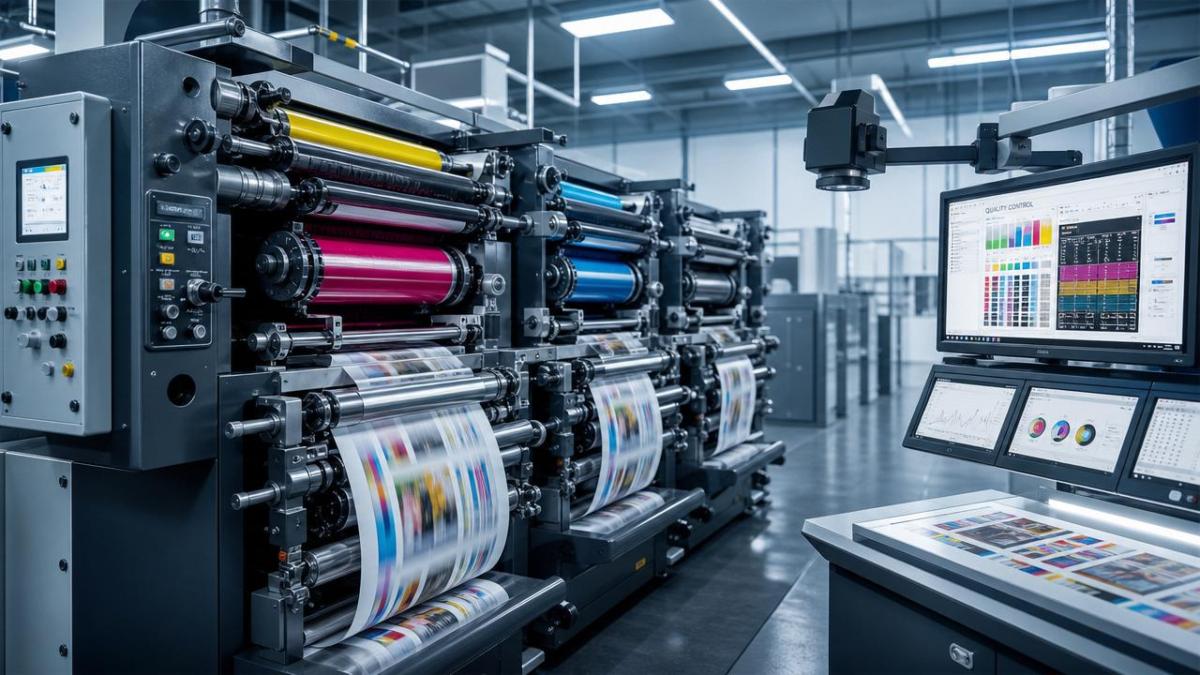
In the past, many teams judged print quality during startup checks or short sampling windows.
That approach is less reliable now because high-speed printing presses run faster, longer, and with more demanding graphics than before.
E-commerce growth, shorter SKU runs, and premium packaging expectations have raised sensitivity to color consistency across full production speed.
At speed, every subsystem interacts differently. Mechanical force, dampening balance, sheet travel, and drying conditions all become more unstable.
This is why high-speed printing presses may look accurate at low speed yet begin missing color when output climbs toward rated capacity.
Why high-speed printing presses miss color at speed is now easier to observe
Modern plants collect more data from sensors, inspection systems, and press consoles than ever before.
That visibility reveals a useful trend. Color misses rarely come from one cause alone.
Instead, high-speed printing presses usually lose registration through combined stress from mechanics, chemistry, material movement, and control response.
Core drivers behind color miss at production speed
Mechanical behavior remains the first hidden cause
When asking why high-speed printing presses miss color at speed, mechanics should be checked before blaming ink alone.
At high velocity, tiny looseness becomes visible. Gear wear, eccentric cylinders, weak bearings, or frame resonance can disturb registration repeatedly.
The problem often appears only after acceleration, making it difficult to detect during maintenance at idle conditions.
- Check cylinder pressure uniformity across width.
- Inspect gripper wear and timing consistency.
- Review vibration trends during real production speed, not test speed.
- Compare registration error direction to identify drive-side or operator-side issues.
In many cases, color miss patterns follow repeatable mechanical signatures rather than random process noise.
Ink-water balance is becoming more fragile with faster output demands
Offset systems depend on a delicate relationship between ink film, fountain solution, roller condition, and plate behavior.
As high-speed printing presses accelerate, that relationship becomes narrower and less forgiving.
Too much water can weaken color strength and increase slur. Too little can create scumming, piling, and unstable transfer.
Temperature adds another layer. Warmer ink changes flow and tack, while dampening chemistry may behave differently across the shift.
Common chemistry-related warning signs
- Color density drifts after speed increase.
- Print appears correct in one zone but not another.
- Operators keep making small corrections without lasting improvement.
- Ghosting, scumming, or mottling appears during long runs.
These symptoms suggest that high-speed printing presses need tighter control of viscosity, pH, conductivity, and roller condition.
Substrate movement is now a bigger trend factor than many lines expect
Packaging grades, coated boards, recycled fibers, and mixed paper sources behave differently under speed and humidity stress.
A sheet that seems flat in storage may expand, shrink, or deform slightly inside the press hall.
That movement affects how high-speed printing presses transfer image layers from unit to unit.
In corrugated or board-related applications, uneven moisture history can worsen the problem further.
Control systems and operator response determine how long errors persist
Another reason why high-speed printing presses miss color at speed is delayed correction.
At high output, a short reaction delay can turn a small issue into hundreds or thousands of defective sheets.
Manual observation alone is often too slow for modern production conditions.
Inline inspection, closed-loop color control, and trend alarms now play a larger role in limiting waste.
Process discipline matters too. If startup standards, wash-up routines, and shift handovers differ, instability increases.
Business areas affected by speed-related color miss
- Production efficiency through stoppages and reruns.
- Material cost through paper, board, ink, and coating waste.
- Delivery reliability for time-sensitive packaging orders.
- Brand perception where color consistency influences shelf impact.
- Compliance risk in regulated packaging requiring stable print identification.
The most practical focus points are becoming clearer across modern print operations
Across integrated print and converting environments, several priorities consistently reduce speed-related color miss.
- Measure registration stability at target production speed, not only at setup speed.
- Track temperature, pH, conductivity, and ink viscosity by shift and substrate lot.
- Condition paper and board before printing to reduce moisture shock.
- Use preventive maintenance based on vibration and wear patterns.
- Standardize operator correction limits and escalation rules.
- Connect prepress, press, and postpress data for root-cause visibility.
These actions help high-speed printing presses deliver stable color without sacrificing output or overcorrecting the process.
A stronger response combines physics, data, and production discipline
The best response is not a single adjustment. It is a coordinated control model.
Why do high-speed printing presses miss color at speed? Because speed amplifies every weak link in mechanics, material behavior, chemistry, and control.
The useful insight is that these failures are measurable and often preventable.
A practical next step is to map one recurring color miss event against speed, substrate lot, temperature, and correction history.
That evidence usually reveals whether high-speed printing presses need maintenance action, process tightening, or stronger inspection logic first.
For operations seeking higher yield and fewer claims, solving color miss at speed is no longer optional. It is a competitive capability.
Related News
Get weekly intelligence in your inbox.
No noise. No sponsored content. Pure intelligence.
