
What the Whole-House Customization Wave Means for Factory Planning and Equipment Investment
Why the whole-house customization wave now reaches deep into factory planning
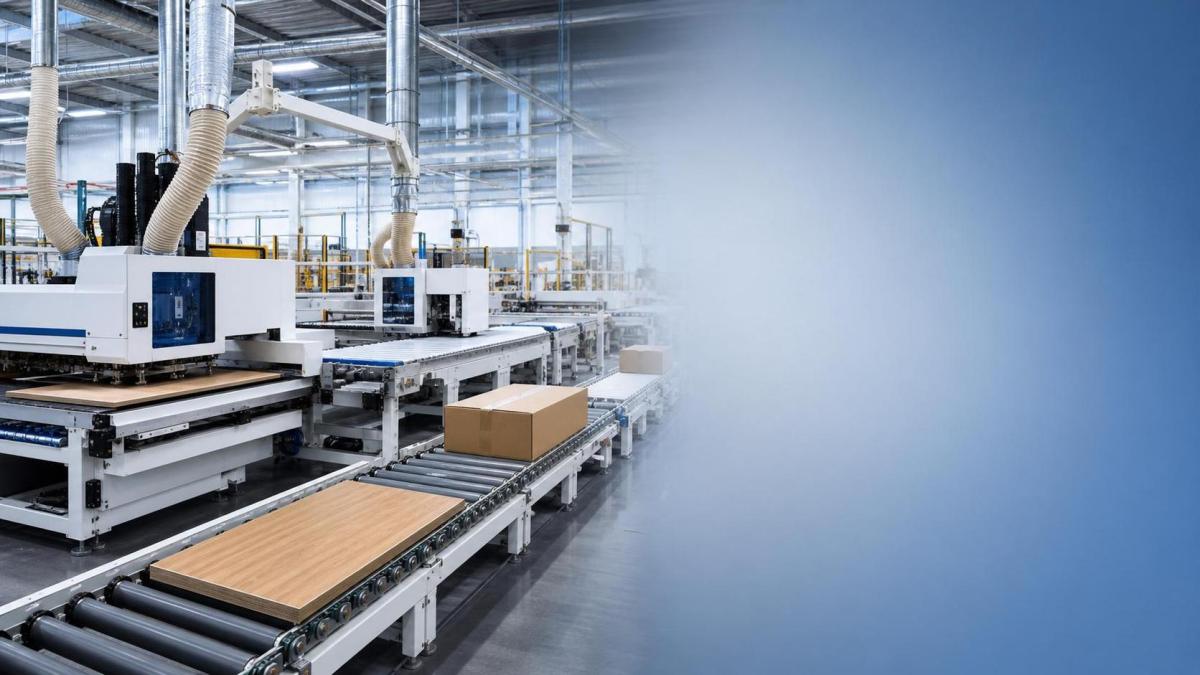
The whole-house customization wave is no longer a retail-side story. It is reshaping how factories define capacity, speed, and capital discipline.
What changed is not only product variety. Order structures are becoming smaller, lead times shorter, and design changes more frequent.
That combination puts pressure on every production node, from board cutting and drilling to labeling, packaging, and outbound logistics.
For factories serving furniture, panel processing, printed packaging, and shipping preparation, the whole-house customization wave changes planning assumptions that once felt stable.
Lines built for long runs and predictable SKU mixes now face a market that rewards flexible throughput more than theoretical peak speed.
This is where the PWFS perspective matters. Paper, print, converting, and woodworking equipment are no longer separate investment tracks.
They increasingly operate as one stitched production logic, connecting living-space customization with packaging precision and delivery reliability.
The stronger signal is a new demand pattern, not just a new product preference
From recent market behavior, the sharper signal is volatility inside the order mix. Customers still care about design, but they now expect compressed fulfillment windows.
In practical terms, this means more frequent setup changes, higher information density per order, and less room for manual interpretation on the shop floor.
The whole-house customization wave also widens the definition of product consistency. Buyers notice edge finish, drilling accuracy, installation fit, and packaging integrity together.
That is why CNC routers, edge banders, die-cutters, offset presses, and corrugated lines now influence the same customer outcome from different angles.
A cabinet panel cut perfectly but packed poorly still creates claim risk. A beautiful printed box with unstable dimensions still adds friction to delivery and installation.
Under the whole-house customization wave, the weak link is rarely one machine. It is usually the handoff between systems, data, and scheduling rules.
What is pushing this shift
- Shorter renovation cycles increase pressure for faster cutting, edge sealing, packing, and dispatch coordination.
- More design personalization raises the number of non-standard components inside each order.
- E-commerce habits carry over into home improvement expectations, especially on visibility, timing, and exception handling.
- Environmental and traceability requirements raise the importance of stable material control and compliant packaging workflows.
- Labor uncertainty makes digital instructions and automation more valuable than operator-dependent flexibility.
Why equipment logic is moving from isolated upgrades to coordinated systems
Many factories first respond to the whole-house customization wave by buying faster equipment. That helps, but only to a point.
The more durable advantage comes from coordinated flow. Machines must process variation without turning every order into a scheduling problem.
In woodworking, the center of gravity has shifted toward CNC routers that read design data directly and translate it into repeatable machining paths.
Edge banding has also become more strategic. Laser and PUR processes affect not only finish quality, but rework rates, emissions control, and long-term brand trust.
On the packaging side, corrugated board lines, offset presses, and folder-gluers support a less visible but equally critical need: protecting customized goods through fragmented delivery chains.
PWFS has long tracked this convergence. Micron-level print registration and flexible wood-cutting algorithms increasingly serve the same business objective: fewer errors across more variable orders.
Factory layout decisions are becoming capital decisions
A useful shift in thinking is this: under the whole-house customization wave, layout is no longer a background engineering topic.
It directly shapes return on equipment investment because travel distance, queue time, and re-sorting now consume more value than before.
Factories built around functional islands often discover that new machines cannot deliver expected output when material flow remains fragmented.
More noticeable lately is the move toward cell-based logic around order families, not only around machine categories.
That does not mean every plant needs a full rebuild. It means bottlenecks should be measured through order completion time, not just machine utilization.
For many operations, the first high-return adjustment is better sequencing between cutting, banding, drilling, inspection, labeling, and packaging.
The second is digital visibility. Without accurate queue and exception data, the whole-house customization wave can make expensive assets look underperforming.
Where investment decisions are becoming more selective
Recent capital allocation patterns suggest a clear preference for assets that preserve flexibility under mixed-order pressure.
- Equipment with fast changeover economics is favored over machines that only excel in stable, long-run conditions.
- Systems with open data interfaces gain priority because they reduce planning friction across software and hardware layers.
- Automation that removes identification errors often outperforms automation that only raises nominal line speed.
- Packaging equipment with variable job capability becomes more valuable when customized furniture moves through complex delivery channels.
The real impact spreads beyond woodworking into print and packaging operations
It is tempting to treat the whole-house customization wave as a woodworking issue alone. In reality, its impact travels across adjacent industrial systems.
Customized furniture creates a packaging challenge because dimensions vary, surfaces are more damage-sensitive, and installation sets must arrive complete.
That increases demand for corrugated board consistency, precise die-cutting, reliable folding, and print accuracy for identification and installation guidance.
This is one reason PWFS frames paper and wood as one industrial conversation. The same order may depend on router accuracy, edge sealing quality, carton compression strength, and label readability.
When those pieces are aligned, the whole-house customization wave supports premium positioning. When they are disconnected, margin leakage appears in rework, claims, and missed delivery promises.
What deserves closer attention over the next planning cycle
The next phase will likely reward factories that judge investment by resilience, not only by annual capacity expansion.
A practical way forward is to test whether each planned investment strengthens response speed, data continuity, and defect containment.
That is especially important as compliance expectations rise around wood sourcing, emissions, inks, adhesives, and transport protection.
The whole-house customization wave will keep rewarding differentiation, but the winners will be those that industrialize variation instead of merely accepting it.
In the near term, it makes sense to compare machine performance with order-level outcomes, review where manual decisions still interrupt flow, and map packaging capability against product complexity.
It is also worth building a phased roadmap that links CNC routing, edge banding, converting, and MES priorities instead of budgeting them as isolated upgrades.
That kind of staged planning is more aligned with how the whole-house customization wave is actually changing the factory floor.
The immediate task is not to chase every new machine. It is to identify which combination of layout, automation, and information flow creates durable return under growing customization pressure.
Related News
Get weekly intelligence in your inbox.
No noise. No sponsored content. Pure intelligence.
