
Choosing a Corrugated Packaging Machinery Manufacturer: 7 Questions Before You Buy
Choosing a Corrugated Packaging Machinery Manufacturer: 7 Questions Before You Buy
Choosing the right corrugated packaging machinery manufacturer can shape output, quality, cost, and future growth.
A low quote may look attractive today, yet create downtime, waste, and service issues later.
That is why the real decision is not only about price.
It is about matching machine capability with plant goals, labor conditions, product mix, and expansion plans.
In practice, the best corrugated packaging machinery manufacturer is the one that reduces total risk.
Before signing a contract, use these seven questions to compare suppliers with more confidence and fewer surprises.
1. Does the Manufacturer Truly Understand Your Production Profile?
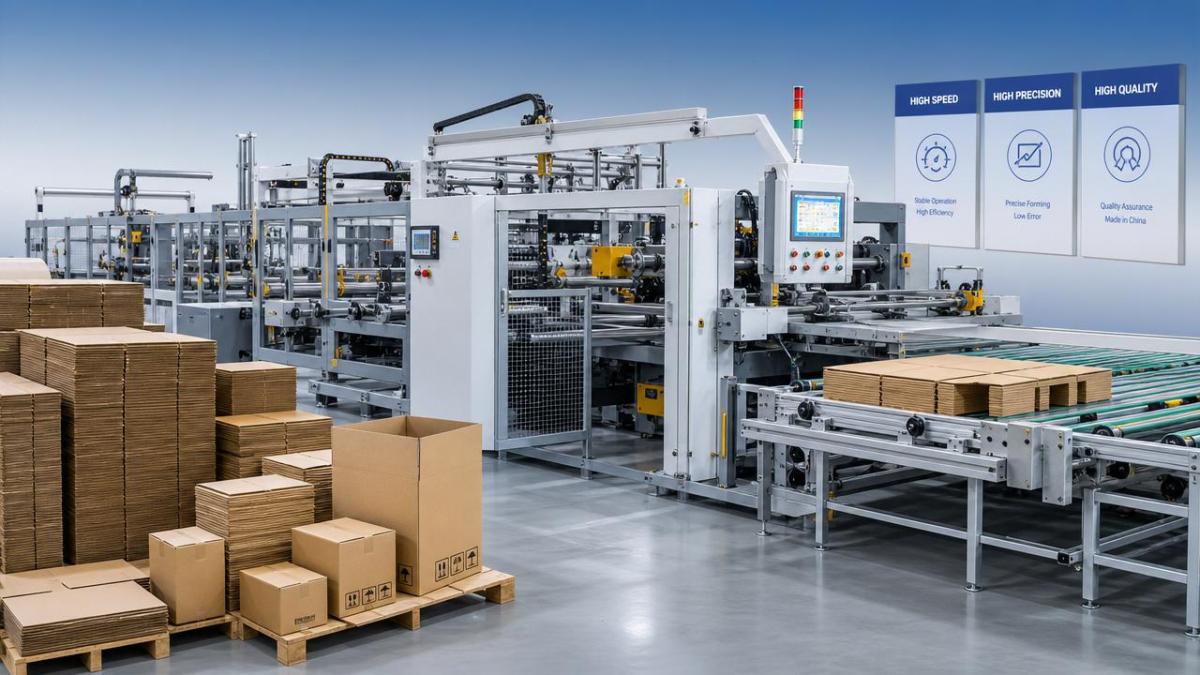
Start with your own factory, not the supplier’s brochure.
A capable corrugated packaging machinery manufacturer should ask detailed questions before offering a solution.
Those questions should cover board grades, flute types, box sizes, shift patterns, target speed, and order variability.
If a supplier recommends the same line to every buyer, that is a warning sign.
Plants serving e-commerce, fresh food, industrial shipping, and branded retail packs have very different needs.
For example, short-run mixed orders need fast changeover and smart controls.
Long-run commodity box production may value stability, energy efficiency, and lower maintenance more than extreme flexibility.
2. What Is Included in the Real Cost, Beyond the Purchase Price?
Price comparison is easy. Total cost comparison is harder, and far more important.
A reliable corrugated packaging machinery manufacturer should discuss total cost of ownership early in the process.
Look at the full cost stack:
- Machine price and optional modules
- Installation, commissioning, and operator training
- Power, steam, glue, and compressed air consumption
- Spare parts cost and replacement frequency
- Waste rates during start-up and changeover
- Downtime risk and service response time
A lower-cost machine can become expensive if it consumes more paper, glue, labor, or floor time.
Ask each corrugated packaging machinery manufacturer for a five-year cost model based on your expected output.
3. Can the Equipment Deliver Consistent Quality at Commercial Speed?
High rated speed looks impressive on paper.
What matters is stable output at the speed you can actually run every day.
A strong corrugated packaging machinery manufacturer should provide data on board flatness, bonding quality, registration accuracy, and defect rates.
Ask for factory acceptance test standards and recent production references.
If possible, watch a similar line running materials close to your own specification.
This step often reveals more than any presentation.
Pay close attention to:
- Warm-up stability
- Warp control across widths
- Changeover loss
- Operator intervention frequency
- Output quality near top speed
4. How Strong Are Engineering, Customization, and Integration Capabilities?
Standard machines fit standard factories, but many plants are not standard.
Space limits, utility conditions, labor skills, and downstream connections often require adaptation.
A dependable corrugated packaging machinery manufacturer should show proven engineering depth, not just sales flexibility.
That includes line layout design, automation options, software compatibility, and upstream or downstream integration.
In real operations, weak integration causes hidden cost.
Data gaps, manual handling, and mismatched conveyors slow the line and increase errors.
Ask practical questions such as:
- Can the system connect with MES or ERP?
- Can it support future printing, die-cutting, or folder gluer upgrades?
- Can the controls handle more SKU complexity later?
- Can the layout be adjusted for your existing building?
5. What Kind of Service Support Will You Receive After Installation?
After-sales support often separates a good purchase from a costly mistake.
Even the best equipment needs maintenance, troubleshooting, and occasional parts replacement.
An experienced corrugated packaging machinery manufacturer should define support terms clearly before the order is placed.
Review these points carefully:
- Remote diagnosis availability
- Local technician coverage
- Critical spare parts stock
- Response time commitments
- Training depth for operators and maintenance teams
- Software update policy
Do not accept vague promises like “fast support” without service metrics.
A serious corrugated packaging machinery manufacturer will show service cases, escalation paths, and parts planning methods.
6. Is the Manufacturer Financially Stable and Operationally Reliable?
This question is often skipped, yet it matters a lot.
You are not only buying a machine. You are entering a long-term supply relationship.
A stable corrugated packaging machinery manufacturer is more likely to honor warranties, maintain parts supply, and continue product development.
Check production capacity, export experience, lead times, quality systems, and customer concentration.
If one large market slows, can the supplier still support global customers well?
Ask for references from plants that have used the equipment for several years, not only recent deliveries.
Long-term reliability is easier to judge when you look beyond sales momentum.
7. Will This Corrugated Packaging Machinery Manufacturer Still Fit Your Business in Three to Five Years?
Buying only for today can create an expensive bottleneck tomorrow.
Demand patterns are changing fast, especially with e-commerce growth, shorter lead times, and sustainability pressure.
That means the right corrugated packaging machinery manufacturer should support both current output and future adaptation.
Look at upgrade paths for automation, digital controls, energy saving, and higher mix production.
Also consider material trends, including lightweight board, stronger performance targets, and compliance requirements.
The supplier should explain how its roadmap aligns with these changes.
If every future improvement requires a full replacement, the initial savings may disappear quickly.
A Simple Comparison Framework Before Final Approval
When comparing suppliers, a structured scorecard keeps the process objective.
This approach makes it easier to compare each corrugated packaging machinery manufacturer on practical business value.
Final Takeaway
The best corrugated packaging machinery manufacturer is rarely the one with the cheapest quote.
It is the partner that understands your production reality, supports quality at speed, and stays reliable after commissioning.
If you ask these seven questions early, you reduce risk and improve long-term return.
That is a smarter way to buy in a market where uptime, flexibility, and cost control matter more every year.
Before final approval, request clear technical data, reference visits, and a five-year cost model from each shortlisted supplier.
Related News
Get weekly intelligence in your inbox.
No noise. No sponsored content. Pure intelligence.
