
Industrial Packaging Automation for Mid-Volume Lines: How to Choose the Right Setup
Industrial Packaging Automation for Mid-Volume Lines: How to Choose the Right Setup
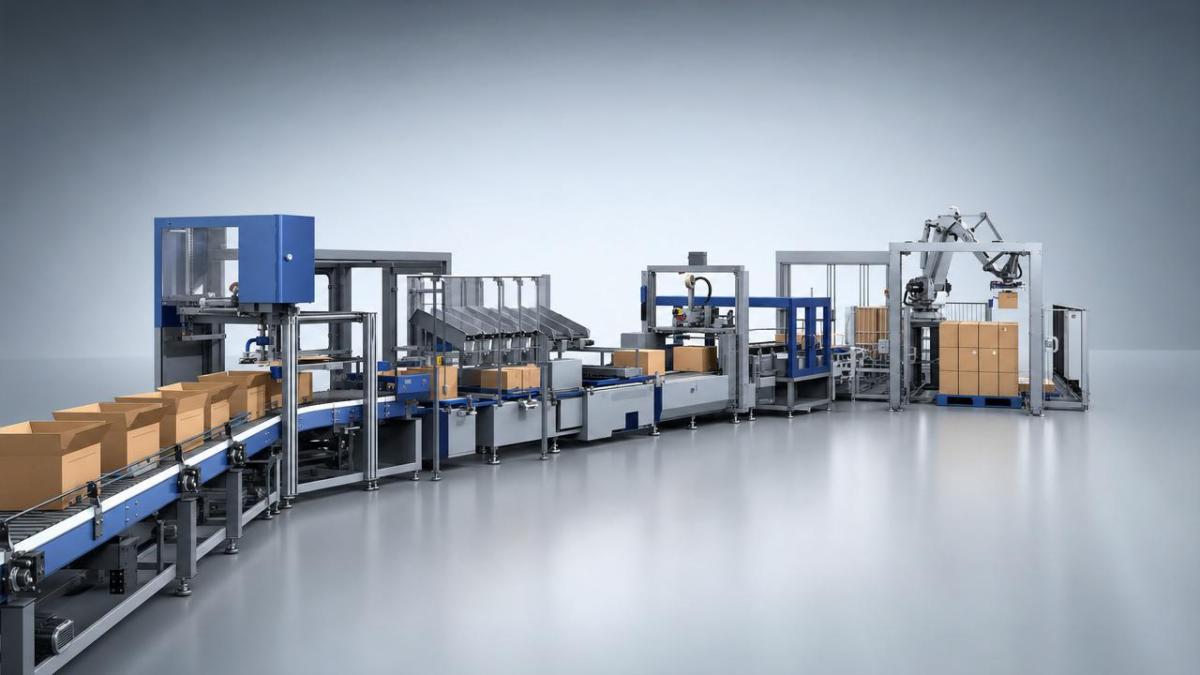
For project teams facing rising output pressure, industrial packaging automation has become a practical selection issue, not a distant upgrade topic.
Mid-volume lines sit in a tricky middle zone.
They are too busy for manual work, yet often not stable enough for oversized, rigid automation investments.
That is why choosing the right industrial packaging automation setup requires more than comparing machine speed.
The better question is simple: which system fits current volumes while staying flexible for the next growth phase?
In real operations, the answer usually depends on product mix, changeover frequency, labor structure, floor space, and data visibility.
For producers linked to corrugated converting, folding-gluing, printing, or downstream packing, those variables shape both daily efficiency and long-term return.
A solid decision balances throughput, uptime, integration risk, and future expansion without creating a system that looks advanced but performs awkwardly.
Why Mid-Volume Lines Need a Different Automation Logic
Large factories often justify full-line automation through massive repetition.
Smaller workshops survive with manual flexibility.
Mid-volume environments live between those two models, which changes how industrial packaging automation should be evaluated.
More often than not, the pain point is not headline speed.
It is inconsistency between upstream and downstream processes.
A fast die-cutter can overwhelm manual bundling.
A modern folder-gluer may still wait on carton loading, pack-off, or palletizing.
This also means the best setup is often modular.
Instead of automating everything at once, many plants gain more from solving one bottleneck after another.
That approach lowers capital pressure and reduces commissioning risk.
It also supports practical scaling when order profiles change.
Start with the Real Bottleneck, Not the Flashiest Machine
A common mistake in industrial packaging automation projects is buying around a machine brochure instead of a process map.
Before comparing suppliers, map the full packaging flow from infeed to finished pallet.
Look at actual stoppages, queue buildup, labor interventions, scrap causes, and changeover delays.
In many mid-volume lines, the true bottleneck hides in handoff areas.
Typical examples include:
- manual blank feeding that limits press or converting speed
- slow bundle counting after folder-gluer output
- unstable case packing caused by variable product dimensions
- palletizing delays during mixed-SKU production windows
- quality checks that rely on operator judgment only
When those points are visible, industrial packaging automation decisions become clearer.
You may not need a full robotic line.
You may need synchronized conveyors, automatic counting, servo changeover, or vision-based inspection first.
Core Selection Criteria for Industrial Packaging Automation
Once the bottleneck is clear, compare setups through operational criteria, not just equipment catalogs.
1. Throughput Matching
Every industrial packaging automation module should match realistic line speed, not peak laboratory speed.
Ask for sustained output data under normal changeover conditions.
If one unit runs much faster than the rest, it may simply create accumulation and stop-start waste.
2. Format Flexibility
Mid-volume plants often face varied box sizes, order lengths, and seasonal design changes.
That makes format range and changeover time critical selection points.
Industrial packaging automation should help flexibility, not punish it.
3. Integration with Existing Equipment
This is where many projects get expensive.
A new automation module must communicate with presses, die-cutters, folder-gluers, conveyors, scanners, and MES or ERP layers.
Ask about interface standards, recipe transfer, fault reporting, and remote diagnostics early.
4. Labor Efficiency and Skill Fit
Good industrial packaging automation reduces labor dependence without creating a technician shortage problem.
A highly automated cell still fails if only one specialist can reset alarms or adjust recipes.
5. Serviceability and Spare Parts
Downtime cost grows fast on mid-volume lines because staffing and order windows are tightly planned.
Choose industrial packaging automation with accessible components, clear maintenance routines, and local service coverage.
Compare Setup Options by Production Reality
Different factories need different automation depths.
A useful way to compare industrial packaging automation is to group options by operating complexity.
For many converters and packaging plants, the modular route is the most practical.
It allows stepwise industrial packaging automation without locking the site into one oversized leap.
What to Ask Suppliers Before Making the Decision
Supplier discussions should test operational truth, not presentation quality.
The strongest industrial packaging automation proposals answer very specific questions.
- What output range is proven on jobs similar to ours?
- How long do real format changes take with trained operators?
- Which upstream and downstream machines have you integrated before?
- What data can be shared with MES, ERP, or quality systems?
- What spare parts are critical during the first year?
- How much floor space is needed for safe material flow and maintenance access?
- What support is included during ramp-up and recipe stabilization?
These questions quickly separate polished sales language from deployable industrial packaging automation.
Common Risks That Distort Automation ROI
From recent market behavior, a clearer signal is that automation ROI often fails because assumptions were too narrow.
Industrial packaging automation should not be justified by labor savings alone.
Other gains may be just as important:
- better uptime through stabilized material flow
- lower waste from fewer handling errors
- more predictable scheduling
- higher consistency for retail or export packaging
- cleaner traceability for compliance and customer audits
At the same time, hidden risks can erode the business case.
The biggest ones are usually underestimating integration time, operator training, utility upgrades, and mixed-product complexity.
That is especially true in packaging environments linked to high-speed print finishing or variable corrugated output.
A Practical Selection Path for the Right Setup
If the goal is a reliable decision, keep the process disciplined.
A practical industrial packaging automation roadmap usually looks like this:
- Measure current losses by shift, product type, and handoff point.
- Define must-have flexibility, not just desired maximum speed.
- Shortlist setups that match real order mix and floor constraints.
- Validate integration details with existing converting or packing assets.
- Model ROI using uptime, scrap, labor, and schedule stability together.
- Plan ramp-up ownership, training, and spare parts before installation.
This method keeps industrial packaging automation grounded in production reality.
It also makes vendor comparisons far more objective.
For organizations navigating packaging, printing, or woodworking-linked product flows, that discipline matters even more.
The right setup is rarely the biggest one.
It is the one that removes today’s constraint, supports tomorrow’s volume, and stays manageable for the people who run it every day.
That is ultimately what good industrial packaging automation should deliver: measurable flow, controlled growth, and fewer operational surprises.
Related News
Get weekly intelligence in your inbox.
No noise. No sponsored content. Pure intelligence.
