
Paper Converting Technology Explained: Key Processes, Materials, and Quality Control Points
Paper converting technology sits at the center of modern packaging, where plain paper becomes corrugated board, printed cartons, labels, sleeves, and retail-ready structures. For industrial evaluation, it is not enough to see speed or output alone. What matters is how converting processes, substrate behavior, registration precision, and quality control interact under real production conditions.
Why paper converting technology deserves close attention
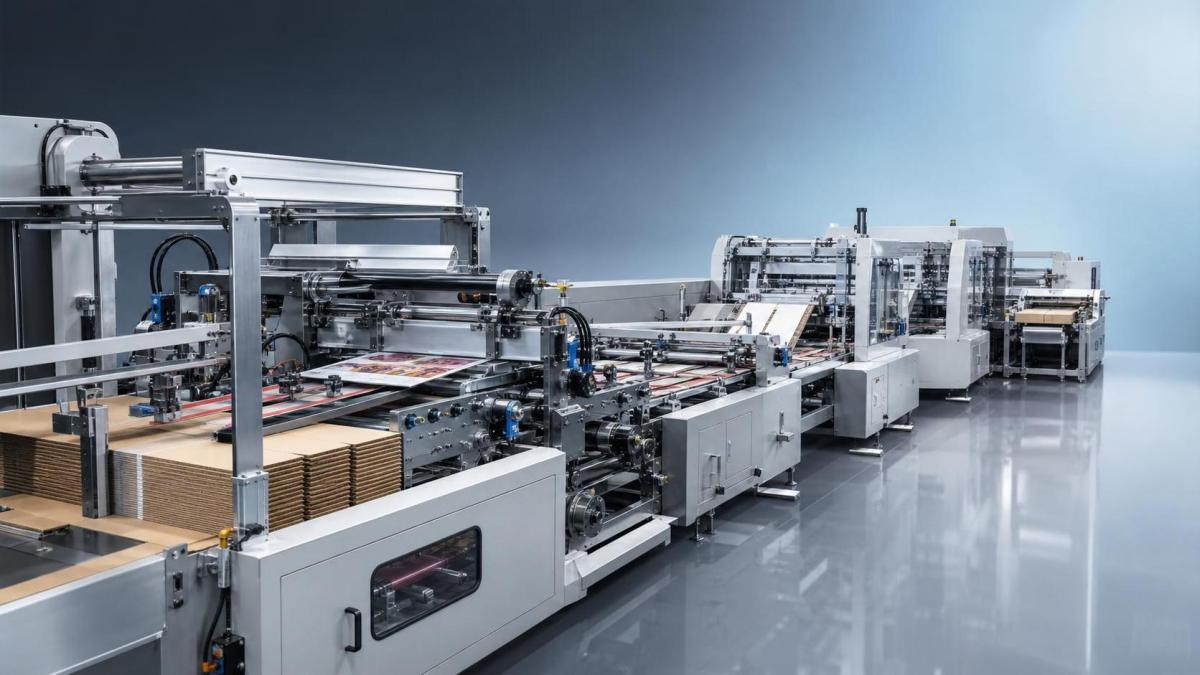
In packaging supply chains, paper converting technology determines whether a line can deliver repeatable box strength, visual consistency, and stable downstream performance.
That pressure has increased. E-commerce needs durable shipping formats. Consumer brands need cleaner graphics. Regulated sectors need traceability, low migration, and tighter defect control.
This is also why PWFS follows corrugated board lines, offset presses, die-cutters, and folder-gluers so closely. These systems do not operate as isolated machines. They form a connected converting chain.
A technically strong line creates value in two directions at once. It protects throughput and yield inside the plant, while supporting product protection, branding, and compliance outside it.
What paper converting technology actually includes
At a practical level, paper converting technology covers every operation that changes a paper web or sheet into a functional product.
The sequence varies by application, but most lines combine material conditioning, printing, coating, laminating, die-cutting, creasing, folding, gluing, inspection, and stacking.
For corrugated packaging, converting often starts earlier, with flute formation and board bonding. For folding cartons, printing and finishing may dominate the risk profile.
The important point is that each step changes the next one. Moisture affects flatness. Flatness affects print registration. Registration affects die-cut accuracy. Crease quality affects folding and glue performance.
That chain effect explains why paper converting technology should be judged as a process system, not only as a machine specification.
Materials shape converting performance more than many expect
Base paper is never perfectly uniform. Fiber mix, caliper, formation, coating weight, grain direction, porosity, and moisture all influence converting behavior.
In corrugated work, liner and medium quality affect flute stability, bond strength, warp tendency, and compression performance. A strong line cannot fully compensate for unstable substrate input.
In printed cartons, coated board may improve image quality, yet it also changes ink setting, rub resistance, and crease cracking behavior.
Adhesives and coatings add another layer of complexity. Starch, hot melt, water-based systems, UV coatings, and barrier layers each respond differently to speed, temperature, and dwell time.
A useful evaluation starts with material windows. When a supplier claims high speed, the real question is under which grammage range, board structure, coating type, and humidity condition.
Typical material-sensitive checkpoints
- Moisture balance before printing or bonding
- Caliper variation across the sheet or web
- Surface energy and ink or glue receptivity
- Fiber direction relative to fold lines
- Coating brittleness during creasing and folding
Key processes that define output quality
Not every converting step carries equal risk. In most paper converting technology projects, four process areas usually decide the final result.
Board formation and bonding
On corrugated board lines, steam, pressure, glue application, and tension balance must work together. Poor control shows up as warp, weak bonding, flute crush, or unstable board thickness.
Printing and color registration
High-precision offset presses reveal the mechanical discipline of the whole line. Plate mounting, blanket condition, ink-water balance, sheet transport, and drying all affect dot stability and registration.
PWFS often highlights micron-level registration because visual quality is not only aesthetic. Misregister can disrupt barcode readability, brand consistency, and finishing accuracy.
Die-cutting and creasing
This stage converts graphics into geometry. Cutting pressure, tooling wear, matrix selection, and sheet stability determine dimensional accuracy and edge quality.
In pharmaceuticals, cosmetics, and tobacco cartons, slight deviations can affect automatic packing compatibility as much as visual presentation.
Folding and gluing
A carton may pass earlier stages yet still fail in folding. Score depth, panel memory, adhesive open time, compression dwell, and line speed all affect squareness and bond reliability.
How quality control should be read on a converting line
Quality control in paper converting technology is most effective when it is built into the line, not left to end-of-shift inspection.
That means combining process monitoring with product verification. Operators need real-time signals, while management needs stable data for trend analysis and root-cause review.
More advanced plants link these signals with MES or inspection platforms. That helps move from defect sorting to process prevention, which is where real productivity gains appear.
Where paper converting technology creates business value
Paper converting technology is often discussed through equipment categories, but its value becomes clearer when linked to application outcomes.
In transport packaging, the priority is compression strength, bonding reliability, and dimensional consistency. In shelf packaging, print finish and structural precision move to the front.
For food, healthcare, and other regulated uses, traceability and migration-related controls become part of the technical evaluation, not an afterthought.
This is where PWFS adds context. Corrugated lines protect logistics. Offset systems convert appearance into purchase appeal. Die-cutting and folder-gluing turn printed sheets into usable three-dimensional formats.
In other words, paper converting technology connects material science, machine precision, and market function in one production logic.
A practical way to evaluate equipment and process stability
A sound evaluation should look beyond nameplate speed. Stable performance depends on how the line behaves under variation, not only under ideal samples.
- Review the usable substrate range, not only the maximum specification.
- Check changeover repeatability across different box or carton formats.
- Measure waste during startup, speed ramping, and long-run production.
- Look for integrated inspection, defect logging, and trend visibility.
- Assess tooling life, maintenance access, and operator dependency.
- Verify compliance readiness, including FSC traceability or low-migration needs where relevant.
It also helps to compare machine capability with actual product mix. A line optimized for long homogeneous runs may underperform in short batches with frequent SKU changes.
That tradeoff matters more as converters move toward flexible production, digital coordination, and tighter delivery windows.
What to watch next
The next phase of paper converting technology is less about isolated machine speed and more about connected control.
Expect stronger use of inline inspection, automated setup correction, digital job data, energy monitoring, and waste analytics tied directly to converting performance.
For anyone building a decision framework, the best next step is to map product requirements against process risk. Start with materials, then review converting steps, then test quality control depth.
That approach makes paper converting technology easier to compare across suppliers, easier to validate in trials, and far more useful in real production planning.
Related News
Get weekly intelligence in your inbox.
No noise. No sponsored content. Pure intelligence.
