
How to Evaluate Box Making Machines for Short Runs, Size Changes, and Floor Space
Why this evaluation matters now
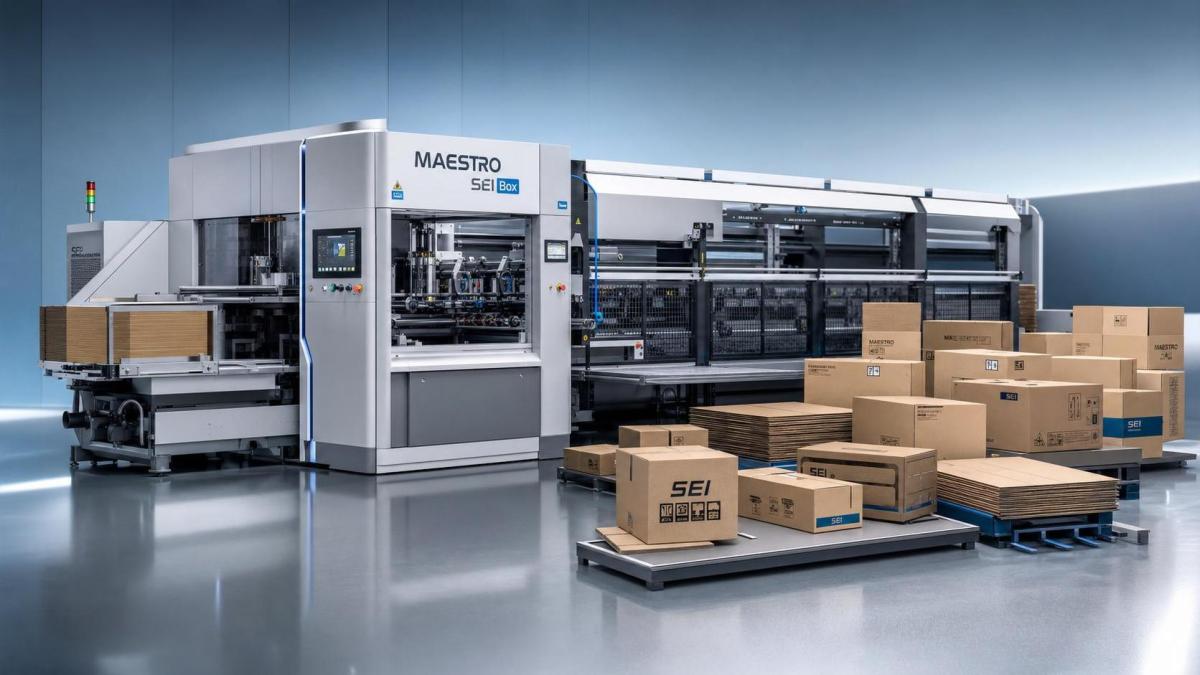
Choosing box making machines is no longer a simple speed comparison.
Shorter order cycles, expanding SKU counts, and tighter factory layouts have changed the buying logic.
A machine that performs well on long, stable jobs may struggle when size changes happen several times a shift.
That matters across corrugated packaging, retail-ready displays, protective transit boxes, and mixed-order fulfillment.
From the PWFS perspective, this sits inside a larger shift toward flexible manufacturing.
Corrugated lines, die-cutting systems, folder-gluers, and digital controls now have to support variety as much as volume.
In practical terms, the best box making machines help operations absorb demand volatility without wasting board, labor, or floor space.
What decision quality really depends on
When evaluating box making machines, output per minute is only one data point.
The more useful question is whether the equipment matches the order profile of the business.
A plant running frequent size changes needs a very different solution from one producing long runs of standard shippers.
This is why machine evaluation should connect three realities.
- How small the average order has become.
- How often dimensions, flute grades, or box styles change.
- How much physical room exists around feeding, conversion, packing, and maintenance zones.
If one of those conditions is misread, investment returns can erode quickly.
Short runs demand a different machine logic
Short-run production punishes hidden downtime.
On a twenty-minute job, setup time can matter more than rated production speed.
That is why advanced box making machines are often judged by job-to-job efficiency, not peak mechanical speed.
Look beyond nameplate throughput
Ask how many saleable boxes are produced within a real shift containing mixed orders.
Include feeder preparation, recipe loading, trial sheets, glue stabilization, and operator adjustments.
A slower machine with fast startup can outperform a faster one on fragmented schedules.
Focus on waste during setup
Board loss during short runs is often underestimated.
For operations serving e-commerce packaging or seasonal promotions, startup scrap directly affects margin.
Better box making machines reduce this through stable feeding, accurate scoring, digital position memory, and repeatable control logic.
Size changes reveal the real flexibility of box making machines
Frequent size changes test mechanics, software, and workflow at the same time.
It is not enough for a machine to accept different dimensions on paper.
It must shift sizes predictably, with minimal manual intervention and low risk of alignment drift.
Key signals of efficient changeover
- Stored job recipes for recurring box formats.
- Servo-driven adjustment rather than heavy manual reset points.
- Quick-access scoring, slotting, or cutting modules.
- Clear HMI guidance that reduces operator dependency.
- Consistent output quality immediately after restart.
This flexibility has strategic value.
It supports SKU proliferation without forcing every order onto oversized, inefficient standard cartons.
It also aligns with the broader PWFS view that digital connectivity and automation should reduce dependence on manual trial-and-error.
Floor space is more than a footprint number
Machine footprint alone can be misleading.
Compact box making machines may still create congestion if sheet loading, blank stacking, glue access, or maintenance clearance are poorly planned.
The right evaluation looks at usable space, not brochure space.
In space-constrained facilities, layout simulation before purchase often reveals more than a specification sheet.
Where box making machines fit in a wider production chain
These machines rarely work in isolation.
Their value depends on how well they connect with corrugated board supply, printing stages, die-cutting logic, downstream folding, and warehouse dispatch.
PWFS tracks this broader ecosystem closely because bottlenecks often appear between machines, not inside one machine.
For example, a flexible converting line loses value if upstream board quality varies too much.
Likewise, rapid box size changes become less useful if production data cannot flow from order entry into machine recipes.
Integration questions worth asking
- Can job data be imported from ERP or MES systems?
- Does the machine support traceable repeat orders?
- How easily can it align with digital printing or inline coding?
- Are quality and downtime records available for analysis?
These points matter more as factories aim for higher yield and lower labor dependency.
How to compare options without oversimplifying
A useful comparison framework combines commercial, technical, and operational factors.
This keeps box making machines from being judged only by purchase price or maximum speed.
A practical shortlist
- Measure average changeover time on real box sizes, not ideal samples.
- Review saleable output over a mixed-order shift.
- Check scrap rates during startup and after dimension changes.
- Map the true floor space requirement, including operator circulation.
- Evaluate software openness, recipe storage, and data export.
- Confirm spare parts response, training depth, and remote service capability.
Usually, the strongest candidate is the machine that protects consistency under imperfect daily conditions.
The business case behind a better fit
Well-matched box making machines improve more than unit economics.
They make it easier to accept varied orders, respond faster to packaging redesigns, and avoid overcommitting valuable factory space.
That becomes especially relevant when packaging demand is tied to e-commerce volatility, product launches, and custom fulfillment models.
In that environment, flexibility is not a premium feature.
It is part of capacity planning.
A disciplined evaluation should therefore start with actual order patterns, then move outward to layout, integration, and long-term adaptability.
The next step is straightforward: build a comparison sheet around short-run efficiency, size-change performance, and real floor-space use before narrowing any machine list.
Related News
Get weekly intelligence in your inbox.
No noise. No sponsored content. Pure intelligence.
