
Woodworking CNC Machines for Sale: How to Compare Axis, Table Size, and Spindle Power
Woodworking CNC Machines for Sale: What Matters Before You Compare Models
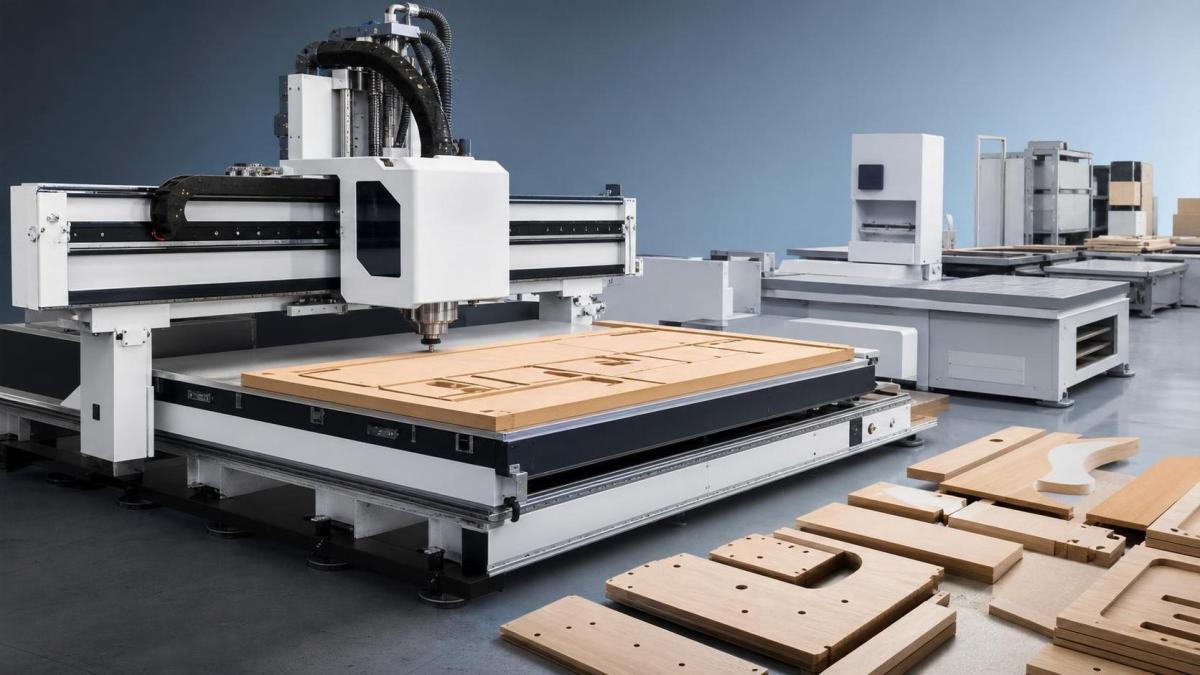
Choosing from woodworking CNC machines for sale is not only a budget decision. It is a production decision that affects speed, accuracy, labor use, and delivery reliability.
For furniture factories, panel processors, and custom cabinet workshops, the wrong machine creates hidden costs. These costs often appear later as scrap, bottlenecks, rework, and missed deadlines.
That is why comparing woodworking CNC machines for sale needs a practical framework. Axis configuration, table size, and spindle power should be reviewed together, not as isolated specifications.
In real buying decisions, machine fit matters more than the biggest number on a brochure. A balanced setup usually delivers better ROI than an oversized machine with underused capacity.
This guide explains how to compare woodworking CNC machines for sale in a way that supports output targets, product mix, and future expansion.
Start with Production Reality, Not the Catalog
Before reviewing any specification sheet, define the jobs the machine must handle every day. This step sounds basic, but it prevents expensive overbuying or painful underbuying.
From recent market changes, one clear signal stands out. More buyers now need flexibility for mixed orders, smaller batches, and faster turnaround in whole-house customization.
That means woodworking CNC machines for sale should be judged against real workpieces, material thickness, nesting plans, drilling needs, and shift schedules.
A simple internal checklist helps:
- What board sizes dominate current production?
- How often do curved cuts, grooves, and drilling appear together?
- Is the machine for nested-based manufacturing or batch part processing?
- How many hours per day will it run under full load?
- Will orders shift toward thicker panels, composites, or solid wood parts?
Once these answers are clear, comparing woodworking CNC machines for sale becomes much more objective. Specs start to connect directly with output goals.
How to Compare Axis Configuration
Axis configuration shapes what the machine can physically do. It also affects programming complexity, cycle time, and the range of products you can profitably produce.
3-axis: Best for standard panel work
Many woodworking CNC machines for sale use 3-axis motion for cutting, pocketing, grooving, and drilling on flat panels. This is often enough for cabinets, wardrobes, and standard furniture panels.
If your workflow is mainly sheet-based, a 3-axis router usually offers the best value. It is easier to program, train, maintain, and integrate into daily production.
4-axis: More flexibility for side work and complex contours
A 4-axis machine adds rotational capability. This helps with curved components, side processing, and certain decorative or shaped parts.
For buyers reviewing woodworking CNC machines for sale, 4-axis models make sense when product variation is increasing. They can reduce manual repositioning and improve consistency on shaped jobs.
5-axis: Built for advanced customization
5-axis machining is ideal for complex 3D surfaces, angled drilling, composite geometries, and parts requiring multi-face access. It is the premium choice for high-end custom production.
Still, not every plant needs it. Buying 5-axis woodworking CNC machines for sale without the right order mix can slow ROI and increase training demands.
A useful decision rule is simple:
- Choose 3-axis for mainstream flat panel processing.
- Choose 4-axis for greater shape flexibility and reduced repositioning.
- Choose 5-axis for premium customization and advanced geometry.
Why Table Size Changes Real Output
Table size is often underestimated during machine selection. In practice, it directly affects nesting efficiency, material handling, and daily throughput.
When comparing woodworking CNC machines for sale, start with your most common sheet dimensions. Then check whether the table supports efficient loading without wasting machine travel.
Small tables suit small batches
Compact tables work well for smaller components, sample making, and workshops with limited floor space. They can be cost-effective, but capacity becomes a limit quickly.
Full-sheet tables fit mainstream furniture production
For many woodworking CNC machines for sale, a full-sheet table is the practical standard. It supports common panel sizes and improves nesting yield for cabinets and wardrobes.
This also means fewer material transfers. Less handling usually leads to better accuracy, lower labor pressure, and safer shop-floor movement.
Oversized tables help only when volume supports them
Larger tables look attractive, but they are not automatically better. They consume more floor space, vacuum capacity, and loading support.
If sheet utilization does not improve, the extra size becomes idle investment. This is a common issue when buyers compare woodworking CNC machines for sale by dimensions alone.
Spindle Power: Where Speed and Material Meet
Spindle power should match material type, cutting depth, tool path, and expected duty cycle. Bigger power is useful only when the process can actually use it.
In many woodworking CNC machines for sale, spindle power looks like a headline feature. But power without balance can cause unnecessary energy use and higher machine cost.
Lower power for light panel processing
For MDF, plywood, and common laminated boards, moderate spindle power often performs well. It supports clean cutting when tooling, feed rate, and vacuum hold are correctly matched.
Higher power for heavy-duty or dense materials
Solid wood, thick boards, and aggressive cutting strategies usually need more spindle power. This improves cutting stability and reduces the risk of burn marks or stalled tools.
When evaluating woodworking CNC machines for sale, ask suppliers for test data using your real materials. This is more useful than relying on rated power alone.
Duty cycle matters as much as horsepower
A spindle that runs well for short periods may struggle under two-shift or three-shift production. Cooling method, bearing quality, and maintenance intervals matter here.
This is especially important for buyers sourcing woodworking CNC machines for sale for continuous nested production. Stable long-hour performance protects both output and tool life.
Questions That Reveal the Better Machine
A smart comparison goes beyond axis, table, and spindle. The better buying decision often appears through operational questions that expose hidden risks.
- How stable is the frame under long production runs?
- What vacuum zoning is provided for mixed sheet sizes?
- How fast is tool changing, and how reliable is it?
- Can the controller integrate with CAD, CAM, and MES workflows?
- What local service response time is actually guaranteed?
- Which wear parts are stocked regionally?
In actual business use, service support can outweigh a small price difference. Downtime on woodworking CNC machines for sale is far more expensive than a slightly higher purchase price.
A machine should also match the digital maturity of the factory. If the software workflow is weak, even a strong machine may fail to deliver expected efficiency.
A Practical Comparison Model for Better Decisions
A useful way to shortlist woodworking CNC machines for sale is to score each option against weighted business needs. This keeps the decision structured and easier to defend internally.
Consider weighting the following areas:
- Axis fit for current and future product complexity.
- Table size fit for dominant sheet dimensions.
- Spindle power fit for materials and shift intensity.
- Software compatibility with design and production systems.
- Service network, spare parts, and training support.
- Total cost of ownership, not just purchase cost.
This also helps align technical and financial teams. Instead of debating only price, the discussion shifts toward throughput, waste control, and delivery performance.
The best woodworking CNC machines for sale are the ones that fit process reality today while leaving enough room for tomorrow’s customization demands.
Final Takeaway
When comparing woodworking CNC machines for sale, start with production goals, then test axis flexibility, table size efficiency, and spindle power suitability as one system.
A good machine should reduce waste, support stable precision, and keep delivery commitments realistic. It should also fit your software flow, labor structure, and service expectations.
If you are reviewing woodworking CNC machines for sale now, ask suppliers for job-based demonstrations, material tests, and lifecycle cost details before making the final decision.
That approach leads to a more confident purchase, better long-term utilization, and a machine platform that can grow with changing furniture and panel processing demands.
Related News
Get weekly intelligence in your inbox.
No noise. No sponsored content. Pure intelligence.
