
How to Choose Woodworking CNC Machines for Cabinet, Door, and Panel Production
Why Woodworking CNC Machines Matter in Cabinet, Door, and Panel Production
Choosing woodworking CNC machines is no longer a simple price comparison.
The right setup affects output speed, cut quality, labor efficiency, and delivery reliability.
In cabinet, door, and panel production, small configuration gaps often become large operating costs.
That is why buyers need to evaluate woodworking CNC machines from both a technical and business angle.
The real question is not which machine looks powerful on paper.
The real question is which machine supports stable production, flexible orders, and long-term ROI.
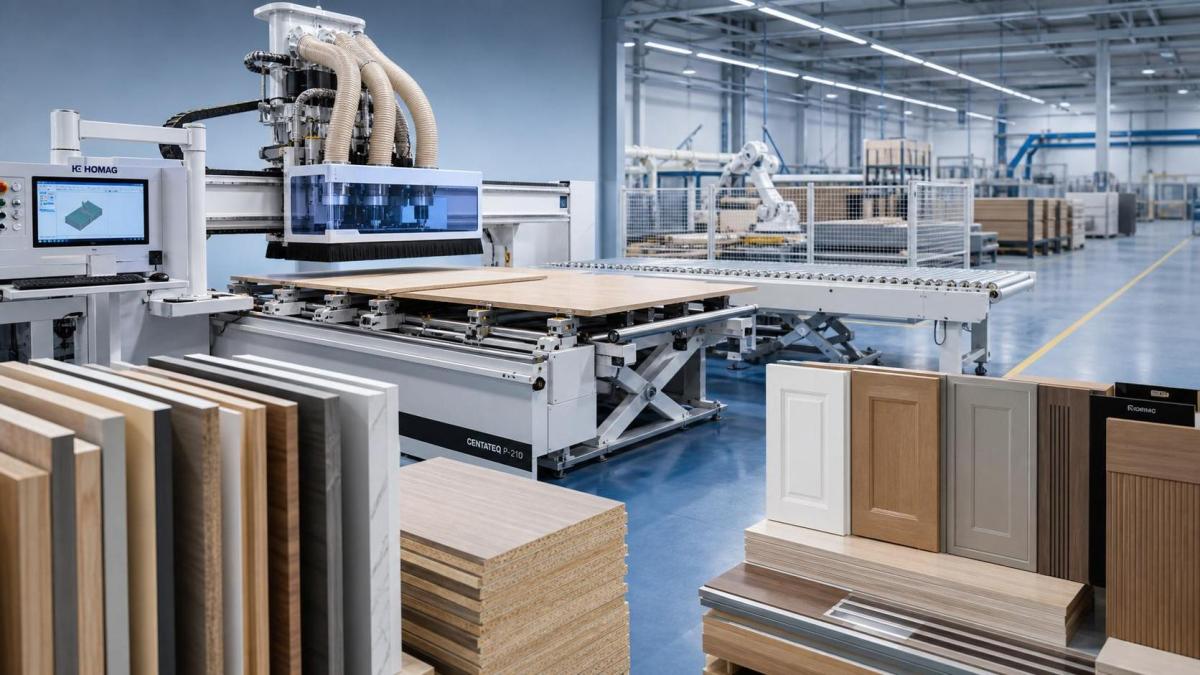
From recent market changes, one signal is especially clear.
Manufacturers need faster changeovers, higher customization, and fewer manual steps than before.
This also means woodworking CNC machines must fit software, material flow, and quality standards together.
A machine that cuts well but disrupts the line is rarely the best investment.
For industrial decision-making, that broader view is where better choices begin.
Start with Product Mix and Production Targets
Before comparing woodworking CNC machines, define what the line must actually produce.
Cabinet parts, interior doors, and decorative panels do not create the same machining demands.
Cabinet production often needs nested cutting, drilling, grooving, and label-based sorting.
Door production may require thicker materials, profile work, hinge boring, and better spindle stability.
Panel production usually prioritizes speed, repeatability, and clean edge quality for downstream banding.
In practical terms, your product mix determines machine structure more than brand slogans do.
Key questions to clarify early
- What percentage of orders are standard versus custom sizes?
- How many board types are processed each week?
- What is the target daily sheet volume?
- Which operations must happen in one pass?
- How important is fast order switching?
These answers help narrow the correct category of woodworking CNC machines quickly.
They also reduce the risk of overbuying features that stay unused.
Compare the Core Machine Configurations
Not all woodworking CNC machines are built for the same production logic.
A clear comparison of configurations makes evaluation more practical.
Nested-based CNC routers
These woodworking CNC machines are common in custom cabinet and closet production.
They support cutting, drilling, and grooving on one sheet with high material utilization.
They fit flexible manufacturing well, especially when order variety is high.
Point-to-point machining centers
These models are stronger for shaped components, doors, and complex drilling patterns.
They usually offer better accessibility and higher process precision for varied part geometry.
Automatic loading and unloading systems
Automation adds cost, but it can sharply improve throughput and labor consistency.
For medium and large factories, this is often where woodworking CNC machines create measurable payback.
5-axis solutions
For advanced doors, curved parts, and premium furniture components, 5-axis capacity matters.
Still, not every factory needs that level of complexity on day one.
A good buying decision balances future expansion with current order reality.
Focus on the Performance Indicators That Affect Daily Output
Spec sheets can look impressive, but daily production tells the truth.
When comparing woodworking CNC machines, several indicators deserve close attention.
What to check during evaluation
- Spindle power and stability under continuous loads.
- Tool change speed and tool magazine capacity.
- Positioning accuracy and repeatability.
- Drilling block layout for cabinet connectors and hardware holes.
- Vacuum table strength for different panel sizes.
- Dust extraction effectiveness and chip evacuation design.
- Feed speed under real cutting conditions, not empty travel only.
This is where many buyers find hidden differences between similar-looking woodworking CNC machines.
A faster advertised speed means little if tool wear rises or cut quality drops.
More importantly, performance should be judged across a full shift, not a short demo cycle.
Evaluate Software Integration and Data Flow
Modern woodworking CNC machines are not only hardware assets.
They are digital production nodes connected to design, planning, and execution systems.
This matters even more in whole-house customization and short-batch production.
If the software chain is weak, machine efficiency usually stays below expectation.
Digital questions worth asking suppliers
- Can the machine read standard CAD or CAM outputs directly?
- How does it connect with MES, ERP, or nesting software?
- Does it support barcode or label-driven job tracking?
- How easy is recipe management for repeat orders?
- Can remote diagnostics reduce downtime?
For growing factories, software compatibility often influences ROI as much as the spindle does.
It also supports the broader intelligence trend seen across print, packaging, and woodworking automation.
That is one reason PWFS continues to track digital integration as a major investment signal.
Look Beyond Purchase Price to Total Cost of Ownership
The cheapest woodworking CNC machines are not always the lowest-cost option.
This is where disciplined buyers usually gain an advantage.
A more useful comparison looks at total cost of ownership over three to five years.
In many projects, these items separate good woodworking CNC machines from expensive mistakes.
A lower upfront quote can hide slower cycles, unstable accuracy, or weak local support.
Over time, those issues are far more costly than the original machine price.
Assess Supplier Capability, Service, and Expansion Potential
A machine purchase is also a service partnership.
That point becomes obvious when a production line needs quick support.
Reliable suppliers of woodworking CNC machines should offer more than installation and manuals.
Supplier review checklist
- Request application cases close to your product type.
- Check response time for technical support and spare parts.
- Confirm operator and maintenance training depth.
- Review upgrade options for automation or software modules.
- Ask for real production data from reference users.
This step is especially important when woodworking CNC machines will anchor a larger smart factory plan.
Scalability matters because today’s cabinet line may become tomorrow’s integrated cell.
The best decision supports current production and leaves room for automation growth.
A Practical Buying Framework for Better Decisions
A practical selection process keeps woodworking CNC machines aligned with business goals.
It also makes supplier comparison more objective and less dependent on sales language.
- Define product mix, daily output, and customization level first.
- Match machine type to process needs, not just capacity claims.
- Test woodworking CNC machines with real materials and real drawings.
- Score software compatibility and automation readiness.
- Calculate labor, waste, maintenance, and tooling in ROI models.
- Validate after-sales service before final approval.
Choosing woodworking CNC machines for cabinet, door, and panel production is a strategic decision.
When the evaluation is structured well, the result is not just a machine purchase.
It is a stronger production system with better flexibility, better quality, and more reliable profit potential.
For buyers facing fast-changing demand, that is the outcome worth aiming for.
Related News
Get weekly intelligence in your inbox.
No noise. No sponsored content. Pure intelligence.
