Automated Woodworking Solutions for Panel Processing: Which Machines Fit Your Workflow?
Automated woodworking solutions start with workflow reality, not machine catalogs
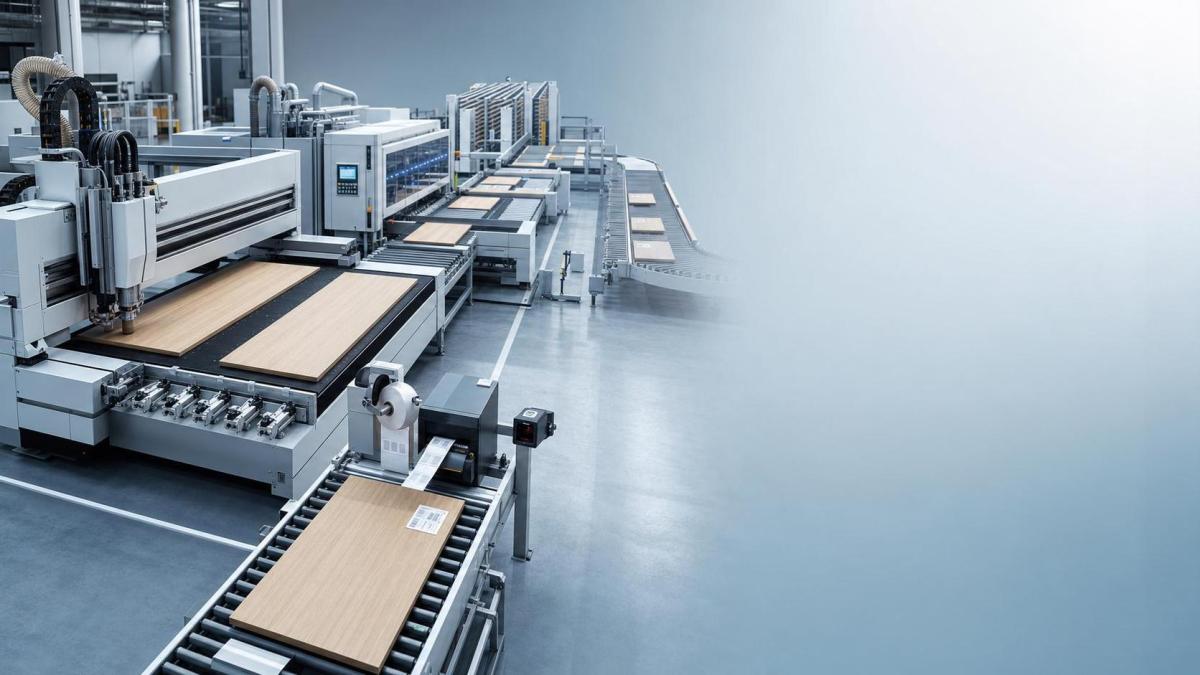
Automated woodworking solutions shape more than cutting speed. They affect delivery promises, finish consistency, rework rates, and the ability to absorb design changes without disrupting the floor.
In panel processing, the right fit rarely comes from choosing the fastest CNC router alone. Real results depend on how cutting, drilling, labeling, edging, sorting, and loading work together.
That is why two factories handling similar boards can need very different automated woodworking solutions. One may fight order volatility, while another struggles with edge quality, nesting waste, or bottlenecks after machining.
Within the broader PWFS view of paper and wood industrial systems, panel furniture equipment is part of the same larger shift toward connected, data-led, high-yield production.
The practical question is not whether automation matters. It is which machines fit the workflow already on site, and which upgrades create the cleanest path to flexible output.
Why panel processing needs vary more than many lines expect
Panel processing looks uniform from a distance. Boards arrive, get cut, drilled, edged, and packed. In actual production, the operating logic changes quickly with product mix and order structure.
A batch line producing standard cabinets values stable takt time. A custom furniture line values fast changeover, part identification, and reliable CAD-to-machine data transfer.
Material also changes the judgment. MDF, plywood, particleboard, and laminated boards behave differently under spindle load, chip evacuation, and edge sealing conditions.
This is where automated woodworking solutions become a workflow decision. Router power, drill block layout, edge banding technology, and handling automation must answer the line’s daily pressure points.
PWFS often frames this through a familiar industrial lens. Precision mechanics, digital continuity, and waste control matter in wood processing just as much as they do in printing, die-cutting, and corrugated conversion.
High-mix custom furniture lines usually need flexibility before raw speed
Whole-house customization is one of the clearest use cases for automated woodworking solutions. Orders shift daily, dimensions vary constantly, and one missing label can create expensive downstream confusion.
In this setting, nesting CNC routers with automatic loading often outperform simpler point-to-point setups. They reduce manual intervention and support frequent part variation with less planning friction.
The real bottleneck, however, often appears after cutting. Parts need clear identification, protected stacking, and fast transfer into edge banding and drilling without creating mixed-order errors.
More reliable automated woodworking solutions for this scenario usually include barcode labeling, intelligent buffering, and software links to design and MES platforms.
A common mistake is buying a powerful router while leaving sorting and return handling manual. The machine looks productive on paper, but the workflow loses rhythm after the first shift.
What matters most in custom order environments
- Fast recipe changes without repeated setup corrections
- Reliable label traceability from design file to packaged part
- Tool management that protects edge finish across varied materials
- Balanced capacity between routing, drilling, edging, and buffering
Standardized cabinet and office furniture lines often prioritize rhythm and yield
When SKUs are more stable, automated woodworking solutions should focus on flow consistency. The target is not endless flexibility, but predictable throughput with minimal scrap and fewer interruptions.
In these lines, beam saws paired with drilling cells can be more practical than universal routing-heavy layouts. Cycle stability and repeatability usually matter more than handling unusual geometries.
Edge banding also becomes a key selection point. EVA systems may be adequate for controlled indoor products, while PUR or laser edging is better when moisture resistance and premium seam appearance matter.
The strongest automated woodworking solutions here often combine dedicated equipment with straightforward material flow. Less complexity can produce better uptime when the product family remains stable.
Over-automation is possible in this scenario. If the order pattern rarely changes, advanced flexible modules may add maintenance burden without delivering proportional value.
When surface quality and sealing standards drive the equipment choice
Some panel processing lines compete on visible finish, indoor air expectations, or water resistance. In those cases, automated woodworking solutions should be judged by downstream quality stability, not upstream cutting speed.
Laser edge banding and high-grade PUR systems suit premium kitchens, bath furniture, and export-oriented lines where seam appearance and long-term bond performance matter.
Tool path strategy matters too. Poor chip evacuation or excessive heat can weaken edge readiness before the board even reaches sealing.
This is where automated woodworking solutions intersect with PWFS thinking around industrial precision. Yield comes from the chain of process control, not from one isolated machine parameter.
The strongest fit often depends on what happens between machines
Many investments fail because evaluation stops at machine specifications. Automated woodworking solutions perform well only when transfer logic, part orientation, stack rules, and software handshakes are clearly defined.
For example, an edge bander may be technically capable of high output, yet still sit idle if upstream drilling releases parts in the wrong sequence. The issue is not capacity. It is orchestration.
This matters even more in mixed factories that connect woodworking with packaging workflows. Finished panels may need immediate protective packing, labeling, or kit sequencing for shipment.
Seen from the PWFS perspective, woodworking automation is part of a broader factory intelligence model. Digital stitching across machines is what turns isolated assets into a responsive production system.
Questions worth answering before locking the line design
- Where does part flow slow down today: cutting, drilling, edging, or sorting?
- How often do order sizes, panel thicknesses, and finishes change?
- Which quality complaints come from machining, and which come from handling?
- Can current software pass correct data to every station without manual re-entry?
Misjudgments that make automated woodworking solutions look weaker than they are
One frequent misread is comparing only purchase price. Lower entry cost can hide higher tool consumption, more operator dependence, and weaker scalability when order complexity rises.
Another is assuming similar panels require identical setups. A wardrobe door, office partition, and moisture-sensitive bathroom cabinet may share dimensions but demand different machining and edging priorities.
Dust extraction is also undervalued. Poor extraction hurts cut cleanliness, shortens tool life, and can destabilize automated woodworking solutions that rely on consistent vacuum holding.
Implementation timing matters as well. Installing advanced cells without operator training, digital file discipline, or spare parts planning often delays the gains the equipment was meant to deliver.
A practical way to match machines to the workflow ahead
A better selection process starts with the order map. Track how many part numbers move each day, how often finishes change, and where rework starts.
Then compare automated woodworking solutions by workflow fit, not isolated horsepower. Ask whether each machine reduces friction at the exact stage where delays or defects now appear.
It also helps to model future conditions. If customization is rising, leave room for software integration, smart buffering, and more advanced edge sealing even if the first phase stays simpler.
The most durable automated woodworking solutions usually share four traits: balanced capacity, clean data flow, maintainable complexity, and process quality that holds under changing order pressure.
Before finalizing any configuration, map the real production scenario, verify interface points, confirm maintenance demands, and test whether the line still works well when orders become less predictable.
Related News
Get weekly intelligence in your inbox.
No noise. No sponsored content. Pure intelligence.
