
What to compare before buying print and packaging equipment
Before investing in print and packaging equipment, procurement teams should compare total production fit, not just the initial quote. The right machine improves uptime, quality consistency, labor efficiency, and delivery reliability. The wrong one creates hidden costs through waste, rework, bottlenecks, and service delays. For most buyers, the smartest approach is to compare equipment against actual job mix, plant capacity, staffing, maintenance ability, compliance needs, and expected return period.
For procurement professionals, the core search intent behind “what to compare before buying print and packaging equipment” is practical evaluation. They are usually not looking for basic industry definitions. They want a clear framework to compare suppliers, models, technical specifications, operating risks, and ownership costs before making a capital purchase decision.
What matters most to this audience is simple: which machine will perform reliably in real production, support the products they sell today, adapt to future demand, and pay back the investment with the least operational risk. That means article value should come from decision criteria, comparison logic, supplier due diligence, and warning signs that are often missed during equipment sourcing.
Start with production reality, not brochure specifications
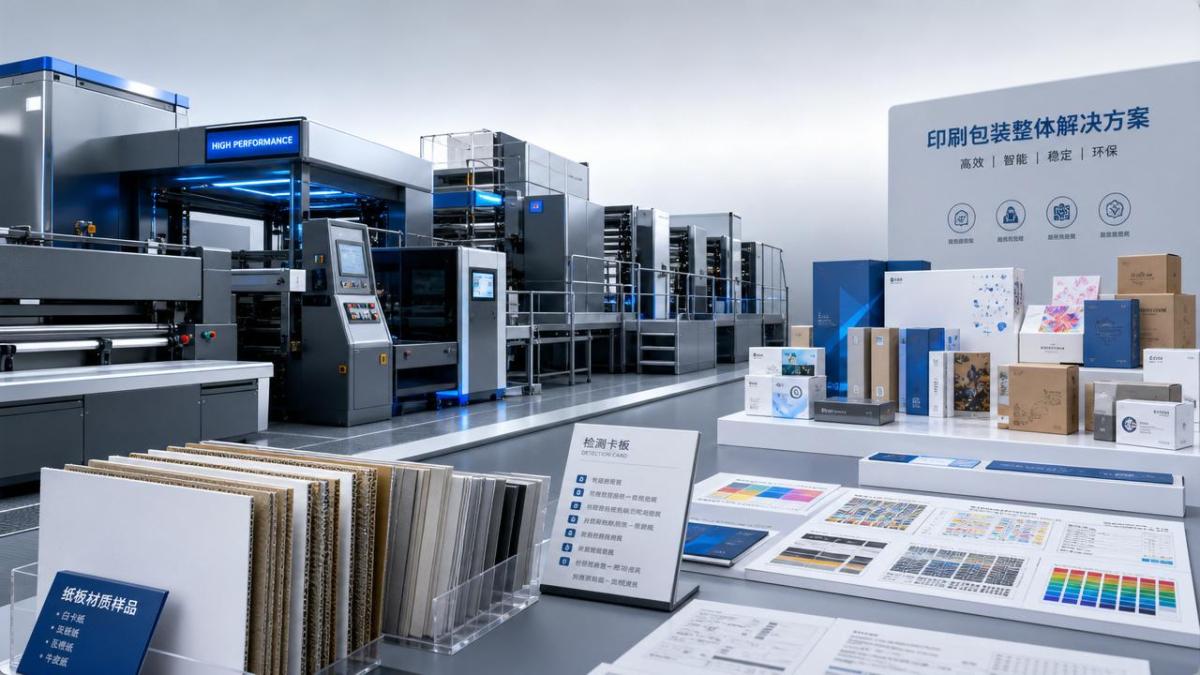
The first mistake many buyers make is comparing print and packaging equipment by maximum speed, headline automation, or price alone. A machine should be judged by how well it matches your actual production environment. That starts with understanding your daily and monthly operating reality.
Procurement teams should gather core plant data before requesting quotations. This includes average order size, peak order variation, number of changeovers per shift, substrate types, board thickness ranges, printing requirements, finishing steps, acceptable waste rates, labor availability, and current bottlenecks.
A high-speed press or converting line may look attractive on paper, but if your factory runs many short jobs with frequent SKU changes, setup time and job recovery matter more than top-rated speed. In contrast, long-run standardized packaging work may justify investment in faster, more automated systems.
In other words, compare machines against usable productivity, not theoretical productivity. The right question is not “How fast can it run?” but “How many sellable sheets, boxes, or parts can it deliver per shift under our real operating conditions?”
Compare output stability and quality consistency first
For most print and packaging equipment purchases, output stability is more valuable than peak performance. Procurement teams should focus on whether the machine can maintain quality across long runs, repeat jobs accurately, and reduce variation between shifts, operators, and substrate batches.
In printing applications, key points include registration accuracy, color consistency, ink transfer control, sheet handling stability, drying performance, and repeatability from one job to the next. A machine that produces excellent samples during a demo but drifts during long production runs creates hidden waste and customer complaints.
For die-cutting, folder-gluing, and corrugated converting, consistency means dimensional accuracy, clean creasing, stable pressure control, glue application precision, carton squareness, and reliable feeding at target speed. Slight instability in these areas can lead to downstream packing issues and rejected shipments.
Ask suppliers for measurable tolerances, not vague claims. Request data on registration variance, makeready waste, defect rates, repeat-job setup parameters, and quality performance at normal production speed. If possible, review customer references with similar product structures and shift patterns.
Look beyond machine speed to total effective capacity
One of the most misunderstood purchasing criteria in print and packaging equipment is speed. Rated speed is useful, but effective capacity depends on setup time, tool changes, wash-up, material loading, quality inspection pauses, and unplanned stops.
For procurement, the more useful comparison is OEE-related thinking: availability, performance, and quality output. Two machines with similar nominal speeds can produce very different weekly output if one has faster changeovers, easier fault recovery, and better operator interfaces.
Ask each supplier to estimate realistic production output using your own job samples. Include assumptions for order sizes, substrate changes, tooling replacements, cleaning cycles, and operator skill levels. This gives a more accurate basis for comparing machine utilization and ROI.
Also examine line balance. Buying a faster printer does not increase plant capacity if die-cutting, gluing, inspection, or packing remains the constraint. Equipment decisions should strengthen the whole process, not create a new bottleneck downstream.
Evaluate automation by labor impact and error reduction
Automation is not valuable just because it is advanced. It is valuable when it reduces dependence on scarce skilled labor, shortens setup, lowers operator error, improves consistency, and supports more predictable scheduling. Procurement teams should compare automation functions in these terms.
Useful features may include automatic registration control, recipe storage, servo-driven adjustment, automated feeder settings, pre-makeready functions, tool positioning assistance, vision inspection, glue detection, remote diagnostics, and integration with MES or ERP systems.
However, more automation is not always better if the plant lacks maintenance capability or the production mix does not justify the added cost. Buyers should compare which automation functions directly solve current operating pain points and which are merely attractive options.
A practical rule is to ask how many minutes, operators, errors, or waste sheets each automation feature can save. If the supplier cannot connect automation to measurable production outcomes, its value may be overstated.
Check substrate and product compatibility carefully
Many purchasing problems begin when buyers assume a machine can handle all planned materials and structures equally well. In reality, print and packaging equipment often performs differently across paper grades, corrugated flute profiles, coated stocks, laminated materials, specialty finishes, or varying board moisture conditions.
Procurement should compare supported substrate ranges, thickness limits, tension or feeding stability, drying compatibility, glue performance, cutting behavior, and tool wear patterns. This is especially important if the business serves multiple sectors such as cosmetics, food, e-commerce, pharmaceuticals, or premium retail packaging.
Future flexibility matters too. If the company expects more short-run work, sustainable materials, lighter-weight boards, or higher-value printed packaging, the selected system should support those shifts without expensive retrofits or unstable performance.
Request sample testing using your own materials, not only standard supplier substrates. A machine that runs perfectly with ideal samples may struggle with the real paper, board, or finishing combinations used in your factory every day.
Compare total cost of ownership, not only purchase price
Purchase price is only one part of the investment. The better comparison is total cost of ownership over five to ten years. This includes installation, tooling, energy use, consumables, spare parts, maintenance labor, software fees, operator training, downtime risk, and expected resale value.
Lower-priced equipment can become more expensive if it has high waste rates, frequent service issues, poor parts availability, or low energy efficiency. A more expensive machine may produce a stronger return if it reduces labor, improves sellable output, and minimizes unplanned stoppages.
Procurement teams should build a cost model using realistic assumptions. Include yearly run hours, expected maintenance intervals, replacement parts consumption, average waste percentages, utility costs, labor headcount impact, and likely financing terms. Then compare payback period and cost per finished unit.
It is also wise to calculate the cost of failure. If a key production line stops for several days, what is the value of delayed customer shipments, outsourced emergency production, and potential account loss? Equipment reliability often has a direct commercial value.
After-sales support can be as important as machine quality
Excellent equipment loses value quickly if service response is slow, spare parts are hard to source, or troubleshooting depends on overseas visits with long delays. For procurement buyers, supplier support should be treated as a critical comparison category, not a secondary issue.
Ask where service engineers are located, what response times are contractually available, which spare parts are stocked locally, and whether remote diagnostics can solve common faults. Clarify installation support, training scope, warranty terms, software update policy, and preventive maintenance programs.
It is also useful to assess supplier maturity. Do they have a stable installed base? Can they support your region long term? Are they experienced with your production segment? A technically strong machine from a weak service organization can create lasting operational risk.
Reference checks are essential. Speak with existing users about startup quality, parts lead time, technical support competence, and whether promised performance was achieved after commissioning.
Do not ignore plant readiness and integration requirements
Some equipment purchases underperform not because the machine is poor, but because the site is unprepared. Procurement should compare not only machine capability but also the conditions required for successful operation inside the factory.
Review power demand, compressed air, steam or thermal requirements, dust extraction, temperature and humidity control, floor loading, material flow space, operator access, and safety zoning. In woodworking or corrugated environments, extraction and waste handling may strongly affect actual efficiency.
Digital readiness matters as well. If the machine depends on barcode workflows, CAD/CAM data, color management systems, or MES integration, the plant must be able to support those interfaces. Otherwise promised automation benefits may never fully materialize.
Commissioning plans should include trial runs, acceptance criteria, operator training, maintenance training, and a defined stabilization period. This reduces the gap between installation and reliable commercial production.
Use a structured scorecard before making the final decision
To compare print and packaging equipment objectively, procurement teams should use a weighted scorecard. This helps prevent decisions from being driven by the loudest salesperson, the lowest quote, or a single impressive demonstration.
Typical scoring categories include production fit, quality stability, effective capacity, setup efficiency, automation value, substrate flexibility, energy use, maintenance demand, service support, total cost of ownership, compliance readiness, and supplier credibility.
Each category should be weighted according to business priorities. A converter focused on premium folding cartons may prioritize registration, repeatability, and finishing precision. An e-commerce corrugated producer may give more weight to uptime, throughput, and board handling stability.
When possible, require sample testing, factory visits, and reference validation before final award. A disciplined evaluation process usually reveals whether a machine is truly the best fit or simply the most aggressively marketed option.
Common buying mistakes procurement teams should avoid
Several recurring mistakes reduce investment returns. The first is buying oversized equipment based on hoped-for future demand instead of verified business volume. This often increases financial pressure without solving current production needs.
The second is underestimating changeover frequency. In many plants, setup losses matter more than top speed. The third is neglecting service quality and spare parts support. The fourth is accepting generic demo results instead of testing real jobs and substrates.
Another frequent problem is comparing technical features without linking them to business outcomes. Procurement should always ask how a specification affects sellable output, labor, waste, lead time, product range, or customer retention. If that link is unclear, the feature may not justify its cost.
Finally, avoid evaluating machines in isolation. The best equipment decision strengthens the entire manufacturing flow, from prepress or design input through printing, converting, packing, and shipment readiness.
Conclusion: buy the machine that fits your operation best
Before buying print and packaging equipment, procurement teams should compare what truly determines long-term value: production fit, quality stability, effective capacity, automation impact, material compatibility, total ownership cost, service strength, and site readiness.
The best purchase is rarely the cheapest machine or the fastest-rated one. It is the system that reliably produces your real products, with predictable quality, manageable labor requirements, strong supplier support, and a clear return on investment.
If buyers use a structured comparison process and test equipment against actual production needs, they can reduce risk, defend capital decisions more confidently, and choose print and packaging equipment that supports both current output goals and future growth.
Related News
Get weekly intelligence in your inbox.
No noise. No sponsored content. Pure intelligence.
