
Can micron-level color stay stable across long print runs?
Can micron-level color remain stable when offset presses run at full speed for hours? For quality control and safety managers, the answer depends on far more than ink settings alone. From register drift and substrate variation to roller pressure, humidity, and operator discipline, micron-level color stability is a system issue that directly affects yield, compliance, and brand trust across long print runs.
In packaging plants serving e-commerce, pharmaceuticals, cosmetics, tobacco, and food-related applications, even a small color shift can trigger rework, delayed shipment, customer complaints, or audit findings. On modern offset presses running 12,000 to 15,000 sheets per hour, stability is not created by one device. It is built by coordinated control across press mechanics, ink-water balance, substrate consistency, environmental discipline, and inspection routines.
For operations monitored by PWFS readers, the key question is not whether micron-level color can stay stable in theory. It is whether the plant has the process capability, measurement logic, and risk controls to hold registration and visual consistency over 4-hour, 8-hour, or multi-shift runs without exposing yield or compliance to avoidable variation.
Why micron-level color stability is a system issue, not a single press setting
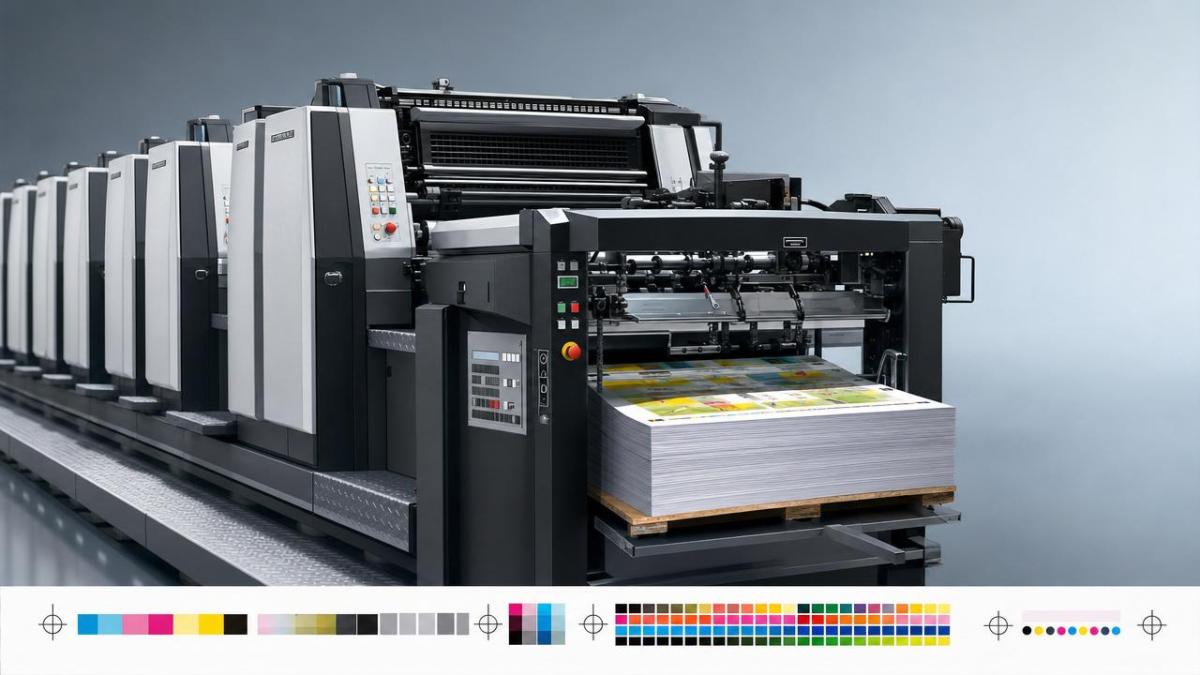
Micron-level color performance sits at the intersection of mechanical precision and process discipline. In high-precision offset printing, acceptable variation is often discussed in terms of register deviation, dot gain stability, density drift, and repeatability from the first 500 sheets to the last 50,000. A press may be mechanically capable of very fine registration, yet still lose control if paper moisture, blanket wear, or fountain solution conductivity shifts outside the operating window.
What “stable” really means in long-run production
For quality teams, stability should be defined in measurable terms. In many plants, long-run control includes register tolerance within a narrow micron band, color density held within a repeatable range, and visual acceptance maintained across multiple pallets or batches. Safety and compliance teams add another layer: printed packaging must remain legible, traceable, and suitable for downstream die-cutting, folding, and gluing without creating identification risk.
A run that looks acceptable at startup but drifts after 90 minutes is not stable. A run that holds cyan and magenta but loses black text sharpness after plate wear is not stable either. The practical target is controlled variation over time, not a single good sample at press approval.
The five main variables behind long-run drift
- Register movement caused by cylinder vibration, gear wear, or web/sheet transport inconsistency.
- Substrate variation such as paper thickness, coating unevenness, moisture content, or dimensional instability.
- Ink-water imbalance affecting dot reproduction, trapping, emulsification, and color density.
- Environmental fluctuation, especially room temperature changes of 3°C to 5°C or RH swings above 10%.
- Human factors including delayed sampling, inconsistent wash-up discipline, and poor shift-to-shift handover.
Why QC and safety managers should care early
When micron-level color starts drifting, the first visible symptom may be cosmetic. The real cost appears later. Downstream die-cutters may misalign to printed marks. Folder-gluers may process cartons with inconsistent crease appearance. Barcodes, dosage text, warning symbols, or lot coding zones may become less reliable. In regulated or export-oriented packaging environments, a 1% to 3% reject increase over a long run can erase the margin gained from running the press faster.
The table below summarizes the most common causes of instability and the production signals that QC teams should watch during long runs.
The key conclusion is simple: micron-level color does not fail in one dramatic event. It usually degrades through small, compounding shifts. Plants that sample only at startup often discover the problem too late, after several thousand sheets have already moved to converting or packing.
How to maintain micron-level color across 4-hour to 12-hour press runs
Reliable long-run stability requires a closed control loop. That loop includes pre-run qualification, in-run monitoring, and post-run traceability. For B2B packaging manufacturers, the goal is not perfection in a laboratory setting. It is repeatable output under real factory conditions, including operator changes, speed adjustments, and substrate replenishment.
1. Start with a tighter pre-run control window
Many color failures begin before the first approved sheet. Plates, blankets, rollers, and paper should be checked against a standard startup list. A practical approach is to verify at least 6 items before release: substrate batch identity, paper conditioning time, roller settings, fountain solution range, plate condition, and approved target sheet. Even a 20-minute pre-run check can reduce avoidable drift during the next 6 to 8 hours.
Recommended startup checks
- Condition paper in the pressroom for 12 to 24 hours where possible.
- Confirm temperature is broadly stable, often within 20°C to 26°C.
- Keep relative humidity in a controlled range, commonly 45% to 60%.
- Inspect blanket cleanliness and compression condition before loading.
- Verify fountain solution conductivity and pH against plant standards.
- Approve one signed reference sheet for every shift and every repeat order.
2. Measure drift by interval, not by guesswork
Long runs should be monitored at fixed intervals rather than only when operators suspect a problem. For example, sampling every 500 sheets on critical carton work, or every 15 to 30 minutes on high-speed commercial runs, gives QC enough data to detect trends before they become scrap. Automated inline inspection can push this much further, but even manual checks become more powerful when they follow a defined rhythm.
For quality and safety managers, interval-based inspection also strengthens traceability. If a complaint appears later, the plant can isolate whether the issue emerged at startup, after a wash-up, during substrate changeover, or during speed increase from 10,000 to 14,000 sheets per hour.
The following table shows a practical monitoring framework that many industrial print operations can adapt to their own product risk level.
This type of structure reduces dependence on memory or individual operator experience. It also helps plants compare performance across jobs, substrates, and shifts, which is essential when trying to improve micron-level color consistency over time.
3. Match press speed to process capability
Running at the machine’s maximum rated speed is not always the most profitable choice. If a job with fine text, heavy solids, and tight brand color tolerance generates 2% extra waste above 14,000 sheets per hour, the real throughput may be better at 12,500. For critical healthcare, premium cosmetic, or export packaging, quality managers should define speed bands based on job complexity, not on nominal press capacity.
Typical speed-risk logic
- Simple graphics on stable board: higher speed tolerance is often acceptable.
- Fine overprint detail or reverse text: tighter speed control is usually needed.
- Mixed substrate lots: run more conservatively until consistency is verified.
- High-risk regulated packaging: prioritize repeatability over peak output.
4. Build discipline between printing and converting
Micron-level color should not be evaluated in isolation from die-cutting, folding, gluing, or final pack-out. A sheet that passes visual inspection but creates registration issues on the die-cutter is not a true success. In integrated plants handling corrugated board lines, offset presses, and folder-gluers, cross-department checkpoints are especially valuable. One practical rule is to verify print-to-cut alignment at the first converting setup and again after any major stack or pallet change.
This is where PWFS-style intelligence matters. Printing precision, converting geometry, and production data should be linked rather than managed as separate silos. The more a plant connects color control with MES records, shift logs, and downstream defect trends, the faster it can identify whether instability comes from mechanics, material, or human execution.
Common mistakes that weaken long-run color control
Even well-equipped factories can lose micron-level color performance through process habits rather than hardware limits. In many cases, the press is capable enough, but the management method is not. Avoiding the following mistakes can protect both yield and audit readiness.
Treating the approved startup sheet as the final answer
A signed first-off sample is necessary, but it does not guarantee the next 30,000 sheets. Without interval verification, slow drift remains invisible. QC teams should treat first-off approval as the beginning of control, not the end of it.
Ignoring environmental movement during long shifts
Plants sometimes focus heavily on ink and roller settings while overlooking the room itself. A change in humidity after material doors open repeatedly, or a temperature rise during afternoon production, can affect paper behavior and print transfer. In operations with mixed board grades or coated stocks, these changes can become visible within 1 to 2 hours.
Relying on one highly experienced operator without standardization
Experience is valuable, but it should be translated into documented limits, checks, and escalation rules. If one shift delivers stable micron-level color and the next shift does not, the problem is usually not talent alone. It is the absence of a repeatable operating method. For safety and compliance managers, undocumented know-how is a hidden risk.
Separating print quality from compliance quality
Color stability is often seen as a brand issue, while compliance is treated as a separate topic. In reality, the two overlap. In packaging, unstable print can affect warning contrast, product identity, readability, and traceability zones. When procurement teams evaluate new offset press capability or inspection upgrades, they should include both visual quality criteria and compliance-critical print features.
What buyers and plant managers should evaluate before upgrading equipment or controls
If a factory regularly struggles to keep micron-level color stable across long runs, the solution may involve process changes, training, environmental control, inspection upgrades, or press refurbishment. Not every issue requires a new line, but every recurring defect requires a structured diagnosis.
Four evaluation dimensions for procurement
- Mechanical repeatability: cylinder, transport, and vibration stability at real operating speed.
- Control visibility: availability of inline inspection, alarm thresholds, and data logging.
- Material adaptability: ability to handle different paper grades, coatings, and board structures.
- Service support: response time, parts availability, calibration routines, and training depth.
Questions worth asking suppliers
Ask how the system performs over 5,000, 20,000, or 50,000 sheets, not only at startup. Ask what maintenance intervals are recommended for rollers and blankets. Ask what kind of traceability data can be exported into MES or quality records. Ask how the line behaves when substrate lots change mid-run. These questions are more useful than generic claims about speed or precision.
For converters working across corrugated packaging, premium cartons, and furniture-related print applications, suppliers that understand both print mechanics and downstream production flow usually deliver more practical value. The strongest partners do not sell isolated speed. They help plants balance registration physics, waste control, operator usability, and compliance risk.
Micron-level color can stay stable across long print runs, but only when the press, materials, environment, inspection method, and people are managed as one system. For quality control and safety managers, the most effective approach is to define measurable control windows, sample by interval, connect print results to downstream converting, and build traceable routines that survive shift changes and production pressure.
PWFS focuses on the real industrial link between high-precision offset presses, corrugated and carton production, die-cutting accuracy, and digital factory decision-making. If you are assessing equipment upgrades, process optimization, or quality risk reduction for long-run packaging production, contact us to get a tailored solution, discuss technical details, or explore more print and converting intelligence for your plant.
Related News
Get weekly intelligence in your inbox.
No noise. No sponsored content. Pure intelligence.
