
How wood panel processing affects finish quality and yield
For technical evaluators, wood panel processing is more than a machining step—it directly determines surface finish quality, dimensional accuracy, edge integrity, and material yield. From cutting stability and toolpath strategy to chip evacuation and edge sealing readiness, each processing variable influences downstream performance and cost. Understanding these interactions is essential for selecting equipment and processes that deliver consistent quality with minimal waste.
When buyers search for how wood panel processing affects finish quality and yield, they usually want a practical answer: which process variables matter most, how defects are created, and what equipment choices reduce waste without sacrificing throughput.
For technical evaluation teams, the key conclusion is straightforward. Finish quality and yield are not controlled by one machine specification alone. They result from the interaction of panel material, tooling, cutting parameters, machine rigidity, dust extraction, nesting strategy, and edge-finishing readiness.
A fast machine with poor chip evacuation can still produce tear-out, edge chipping, or burn marks. Likewise, an optimized nesting layout may improve sheet utilization, but if vibration or tool wear increases rejects, real yield still drops.
What technical evaluators should assess first in wood panel processing
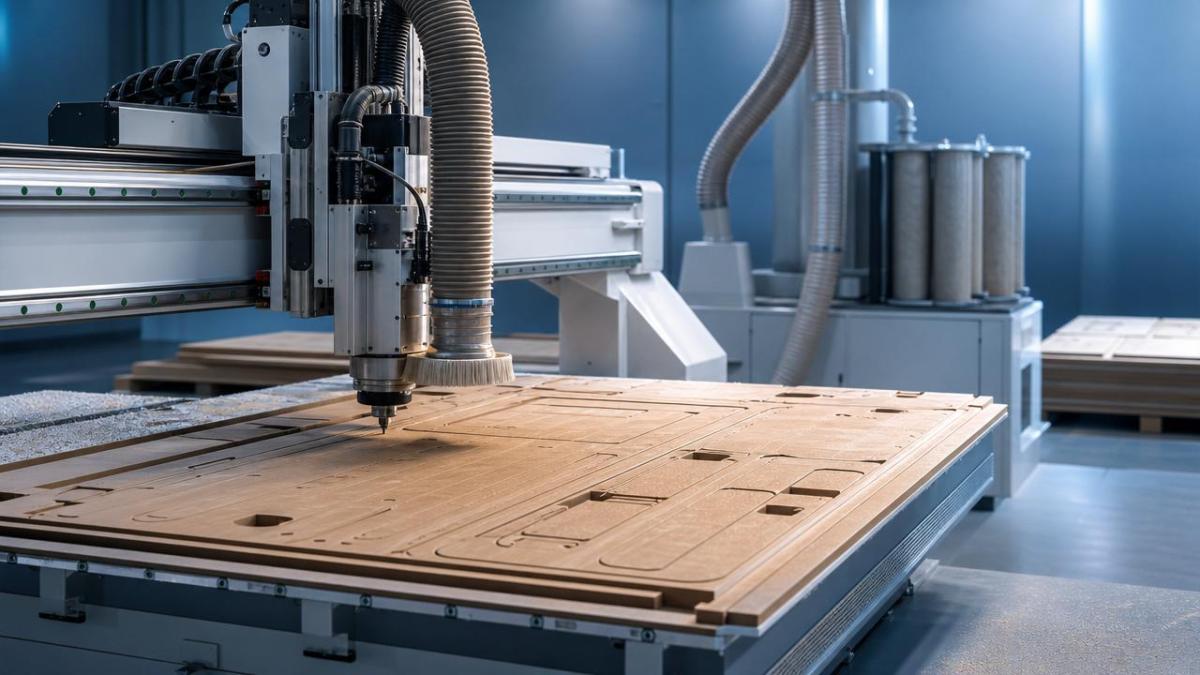
The first priority is to define yield correctly. In wood panel processing, yield is not only panel utilization per sheet. It also includes reject rate, rework rate, usable edge quality, and downstream acceptance for drilling, laminating, or edge banding.
Finish quality should also be defined in measurable terms. For most panel furniture and custom interior applications, evaluators should focus on top-surface cleanliness, edge smoothness, breakout level, dimensional repeatability, and surface readiness for coating or edge sealing.
This matters because different production environments value different outcomes. A cabinet panel line may accept minor underside breakout if edge banding covers it, while a visible decorative component may require near-perfect edges directly after CNC cutting.
Before comparing equipment, technical teams should ask four practical questions. What defects are most costly today, where in the process they originate, what quality level downstream operations actually require, and whether higher speed truly improves sellable output.
Why panel material and board structure have a direct impact on finish quality
Not all wood-based panels machine the same way. MDF, particleboard, plywood, HDF, melamine-faced boards, and veneered panels respond differently to cutting forces, heat, and chip evacuation. Material structure strongly influences both visible finish and usable yield.
MDF usually offers consistent density and cleaner machined edges, which supports stable finish quality. Particleboard is often more prone to edge breakout, especially with worn tools or weak extraction. Plywood introduces another challenge because alternating grain layers can splinter unpredictably.
Surface overlays also matter. Melamine, veneer, and laminated films can chip at entry or exit points if tool geometry and feed parameters are not matched to the board. In these cases, finish quality depends as much on process tuning as on machine capability.
For evaluators, this means machine trials should never rely on only one standard sample board. Testing should include the actual panel mix used in production, including thickness variation, decorative surfaces, and lower-grade boards that often expose process weaknesses.
How cutting stability influences edge quality, surface defects, and scrap rate
Machine rigidity is one of the most underestimated factors in wood panel processing. A spindle with good power ratings may still produce poor finish quality if the machine frame, gantry, or hold-down system allows vibration during high-speed routing.
Vibration creates visible and hidden problems. It can leave tool marks on decorative surfaces, increase edge fuzzing, enlarge dimensional deviation, and accelerate tool wear. These defects often appear gradually, making them easy to miss during short demonstrations.
Panel hold-down is equally important. If vacuum zoning is poorly designed, smaller nested parts may shift slightly during cutting. Even minor movement can damage edges, cause inaccurate hole positions, and reduce the number of sellable parts from each sheet.
Technical evaluators should therefore assess dynamic performance, not only catalog values. Useful checks include cut consistency at full feed speed, small-part stability during nesting, repeatability over long runs, and quality retention when processing thinner or more flexible panels.
Tool selection and wear: the fastest way finish quality can decline
In many factories, the largest gap between expected and actual quality comes from tooling rather than the base machine. Tool geometry determines chip formation, cutting force, heat generation, and edge cleanliness. Tool wear then changes all of these over time.
Compression tools are often preferred for laminated panels because they reduce top and bottom chipping. Upcut tools improve chip evacuation but may pull fibers upward. Downcut tools can protect the top surface while increasing heat or compacting chips in deep cuts.
As tools wear, edge quality usually declines before operators recognize the problem. Dull cutting edges increase friction, raise spindle load, darken edges, and create micro-chipping that later undermines edge band adhesion or coating appearance.
For this reason, tooling evaluation should include life-cycle stability rather than first-cut appearance alone. A process that looks excellent for ten sheets but degrades quickly may deliver lower real yield than a slightly slower setup with longer, more predictable tool life.
Feed speed, spindle speed, and chip load must be balanced, not maximized
Many production teams pursue throughput by increasing feed rate, but wood panel processing affects finish quality and yield through balance, not speed alone. Feed speed, spindle speed, depth of cut, and step-over all influence chip load and cut stability.
If feed is too high for the selected tool and material, edge breakout and dimensional inaccuracy increase. If feed is too low while spindle speed remains high, the tool may rub instead of cut efficiently, causing heat buildup, resin accumulation, and burn marks.
The best process window is usually the one that maintains stable chip formation. That reduces friction, preserves edge quality, and protects tool life. In practical terms, a balanced setup often produces more acceptable parts per shift than a nominally faster one.
Evaluators should request parameter envelopes from suppliers rather than single-point speed claims. The important question is not the maximum feed rate achieved in ideal conditions, but the stable operating range across common materials, thicknesses, and job types.
Chip evacuation and dust extraction are critical to both yield and downstream quality
Chip evacuation is often treated as a housekeeping issue, but it is actually a process-quality variable. When chips are not removed effectively from the cutting zone, they are recut, compressed into edges, or dragged across decorative surfaces.
This leads to rough edges, surface scratches, localized overheating, and inconsistent slot geometry. In nested-based manufacturing, poor extraction can also reduce vacuum effectiveness because waste material accumulates under or around the panel.
Dust extraction design should therefore be evaluated as part of machining performance. Hood geometry, airflow stability, table cleanliness, and separation efficiency all influence whether the machine can maintain finish quality during continuous operation.
This becomes especially important in high-mix production. Frequent material changes create different chip characteristics, from fine MDF dust to larger plywood fragments. A system that works for one panel type may underperform badly on another, reducing both quality and usable yield.
Nesting strategy can improve material yield, but only if cut quality remains stable
Material optimization software can raise theoretical sheet utilization significantly. However, technical evaluators should distinguish between digital nesting yield and effective production yield. A tightly packed layout is valuable only if parts remain stable and edges remain acceptable.
Small gaps between parts may improve material usage on paper, but they can also increase heat concentration, weaken hold-down, and complicate offloading. Fragile narrow components are particularly vulnerable to movement, edge damage, or breakage during the final cut.
Toolpath sequencing also matters. Poor sequence planning can release internal stresses too early, causing parts to move before finishing passes are complete. That can degrade edge quality and turn an apparently efficient layout into a source of hidden scrap.
The best nesting strategy is therefore application-specific. Evaluators should compare not just board utilization percentage, but final accepted parts, cycle stability, sorting efficiency, and how easily nested components enter drilling, edge banding, and assembly operations.
Why edge quality determines more than appearance in panel furniture production
In many woodworking applications, edge condition is the most commercially important result of processing. A panel may look acceptable immediately after cutting, yet still fail later if the edge is crushed, porous, chipped, or thermally damaged.
Edge banding performance depends heavily on edge preparation. Uneven or heat-damaged edges reduce glue wetting and bonding consistency. This can lead to weak adhesion, visible glue lines, corner lifting, or long-term durability problems in humid environments.
For evaluators, this is a crucial link between machining and downstream cost. A machine process that slightly reduces cutting speed but produces cleaner, denser, more consistent edges may improve total line efficiency because edge banding settings become more stable.
Testing should therefore include downstream verification, not only visual inspection at the router. Panels should be checked after edge sealing, drilling, and handling to determine whether initial cut quality actually supports reliable finished-product performance.
How to evaluate equipment for finish quality and yield without being misled by demonstrations
Supplier demos often show ideal results under controlled conditions. To make a sound decision, technical evaluators need repeatable test criteria. The most useful approach is to simulate real production rather than focus on maximum-speed showcase parts.
Bring representative materials, including difficult surfaces and common lower-cost boards. Run both large panels and small nested parts. Test several shifts or extended cycles where possible, because heat, tool wear, and dust loading often reveal issues absent in short trials.
Measure outcomes that connect directly to business value. These include edge chipping rate, dimensional tolerance, accepted parts per sheet, rework percentage, tool life consistency, changeover time, and edge-banding pass rate after machining.
It is also important to assess software and controls. Good process stability depends on more than mechanics. Tool compensation, nesting logic, vacuum management, condition monitoring, and operator guidance can all influence finish quality and yield in daily production.
The practical decision framework for technical buyers
For most technical evaluators, the best equipment choice is not the machine with the highest advertised speed. It is the platform that maintains acceptable finish quality across the widest process window while delivering predictable yield on the actual product mix.
A strong evaluation framework should weigh machine rigidity, spindle and tool compatibility, extraction effectiveness, hold-down stability, nesting software quality, and downstream edge readiness together. Looking at any one factor in isolation creates decision risk.
Wood panel processing affects finish quality and yield through cumulative interactions. Small weaknesses in several areas often create bigger losses than one obvious defect. That is why stable process integration usually outperforms isolated peak specifications.
In practical terms, buyers should prioritize repeatability, defect prevention, and downstream compatibility. These are the factors that convert machine capability into sellable output, lower scrap cost, and more reliable panel furniture production at scale.
Conclusion: focus on accepted output, not nominal machine performance
The central lesson is simple. In wood panel processing, finish quality and yield are inseparable. Better surfaces and cleaner edges reduce rework, support stronger edge banding, and turn more of every sheet into usable, saleable components.
For technical evaluation teams, the right question is not how fast a machine can cut under ideal conditions. The right question is how consistently the entire process can deliver acceptable parts across materials, job sizes, and production hours.
When material behavior, tooling, parameters, machine stability, chip evacuation, and nesting strategy are aligned, quality improves and waste falls together. That is the benchmark that matters most for equipment selection and long-term return on investment.
Related News
Get weekly intelligence in your inbox.
No noise. No sponsored content. Pure intelligence.
