
What slows automated packaging lines more than teams expect?
Many project leaders underestimate what actually disrupts automated packaging lines: not just speed limits, but hidden losses from changeovers, material variability, misalignment, maintenance delays, and poor data visibility. In high-output packaging environments, these small interruptions compound into major cost, delivery, and quality risks. Understanding where the real slowdowns come from is the first step toward building lines that are faster, more stable, and easier to scale.
Why do automated packaging lines slow down long before rated speed?
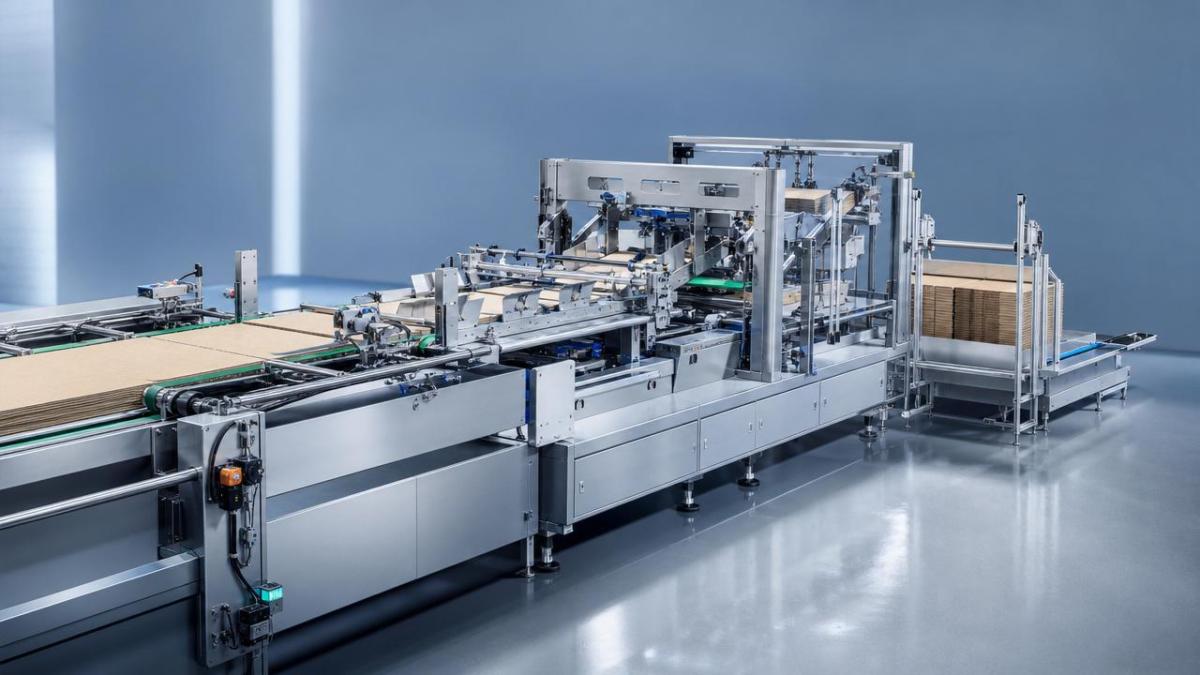
For project managers, the biggest misconception is treating line speed as the main productivity indicator. In reality, automated packaging lines often lose more output in short disturbances than in obvious machine stoppages.
This is especially true in corrugated converting, offset-fed carton production, folder gluer cells, and mixed-format packaging operations where product diversity is high and schedule pressure is constant.
The hidden difference between design speed and delivered throughput
A line may be specified for high mechanical speed, yet actual hourly output depends on feeding stability, registration control, glue performance, stack discharge, batch sequencing, and how quickly operators recover from minor faults.
- Mechanical speed shows what equipment can do under ideal conditions, not what it sustains over a full shift.
- Net throughput reflects setup losses, waste sheets, restart instability, and operator intervention frequency.
- Project ROI depends more on stable repeatability than on headline speed figures alone.
PWFS closely follows these realities across corrugated board lines, offset presses, die-cutting and folder-gluer systems, where micron-level registration and downstream synchronization often determine whether a line performs profitably.
Which losses create the biggest drag on automated packaging lines?
Before selecting upgrades or new equipment, project leaders need a structured view of where automated packaging lines lose time. The table below summarizes the most common slowdown sources in industrial packaging environments.
The key takeaway is simple: automated packaging lines do not usually fail because of one dramatic weakness. They slow down because multiple small losses stack up across the full production chain.
Why micro-stops deserve executive attention
A three-second feed hesitation may seem trivial, but repeated dozens or hundreds of times per shift, it can erase the output equivalent of a full production hour. These are the losses teams often fail to quantify.
In high-speed die-cutting and folder gluing, micro-stops also create restart instability. That means the line loses time twice: once during the disturbance and again while it regains acceptable quality.
Where do project managers usually misjudge line bottlenecks?
When automated packaging lines underperform, teams often blame the most visible machine. Yet the real bottleneck may sit upstream, downstream, or in the interface between systems.
Common misjudgments in packaging projects
- Assuming the fastest machine determines line output, while discharge, stacking, curing, or inspection actually cap throughput.
- Treating board or paper as a passive input, even though moisture, flatness, and surface behavior directly affect stability.
- Buying automation modules without confirming recipe integration, MES connectivity, and operator workflow fit.
- Focusing on machine acceptance speed instead of shift-level OEE, startup waste, and repeat-job recovery time.
PWFS tracks these cross-process interactions closely because packaging performance is rarely isolated. Corrugated formation, print precision, die-cut geometry, folding behavior, and gluing consistency all influence one another.
How material variability slows automated packaging lines in real production
Material variation is one of the most underestimated causes of speed loss. Even well-designed automated packaging lines struggle when incoming board or printed sheets vary beyond the process window.
Critical material variables to monitor
- Moisture balance. Corrugated sheets with uneven moisture may warp, affecting feeder separation and registration accuracy.
- Caliper consistency. Thickness variation changes nip pressure response, creasing behavior, and folding quality.
- Surface friction. Coatings, ink density, and paper dust influence transport, stacking, and glue adhesion.
- Dimensional stability. Heat, humidity, and storage practices affect print-to-cut fit and carton erection performance.
For project leaders, this means that line engineering must include material governance. Equipment alone cannot compensate for uncontrolled substrate behavior across every SKU.
What should you compare when selecting upgrades for automated packaging lines?
Selection decisions should compare not only machine speed but also changeover logic, operator burden, service access, data transparency, and fit with production mix. The matrix below helps teams evaluate upgrade priorities.
This comparison framework is especially useful when deciding between a speed-focused purchase and a flexibility-focused upgrade. In many plants, the second option delivers stronger payback.
A practical procurement rule
If your job mix includes many short runs, artwork changes, or board variations, prioritize repeatable setup and data visibility before chasing maximum theoretical speed. That is where many automated packaging lines recover the most real capacity.
How can better data visibility reduce slowdowns?
Without reliable event data, teams end up debating causes instead of fixing them. Stronger visibility allows project managers to distinguish chronic issues from isolated incidents.
What data should be captured first?
- Micro-stop frequency by module, not only major downtime events.
- Speed derating periods linked to job type, material batch, and operator shift.
- Startup scrap and first-pass quality after changeovers.
- Maintenance response time, spare part lead time, and repeat fault patterns.
In advanced packaging projects, MES connectivity and line-level diagnostics help convert machine status into process intelligence. That is a core area where PWFS offers value through cross-disciplinary understanding of mechanics, print behavior, and digital manufacturing flow.
What implementation steps improve automated packaging lines fastest?
Not every factory needs a full rebuild. Many automated packaging lines improve significantly through focused engineering, better sequencing, and disciplined maintenance planning.
Recommended improvement sequence
- Map the true bottleneck over a full production week, including micro-stops and restart losses.
- Group SKUs by setup similarity to reduce changeover frequency and stabilize daily scheduling.
- Define incoming material control points for flatness, moisture, print stability, and dimensional variance.
- Standardize setup recipes and operator checklists for repeat jobs.
- Build a preventive maintenance window around the highest-failure modules, not only around calendar intervals.
- Connect downtime codes to action ownership so recurring losses are reviewed with engineering, production, and purchasing together.
This stepwise approach is often more realistic for project owners working under budget pressure, delivery deadlines, and mixed equipment generations.
FAQ: what project leaders ask most about automated packaging lines
How do I know whether speed loss is caused by equipment or material?
Compare performance across shifts and material lots on the same SKU. If instability follows a substrate batch, the root cause may be moisture, flatness, caliper, or surface friction. If the issue follows one module regardless of material, inspect alignment, wear, settings, or control logic.
Are automated packaging lines suitable for short-run, high-mix production?
Yes, but only when changeover design is strong. Servo-assisted setup, stored recipes, barcode job calling, and fast verification routines matter more in short runs than peak speed. For many plants, flexibility is the real productivity driver.
What should be checked before approving a new packaging line project?
Review format range, board grades, daily SKU count, target waste rate, staffing assumptions, maintenance skills, plant utilities, digital integration needs, and acceptance criteria. Also confirm whether downstream packing, palletizing, or inspection can absorb the planned output.
Which compliance topics can affect packaging line performance decisions?
Depending on application, teams may need to consider FSC traceability, food-contact ink migration controls, safety guarding, dust management, adhesive handling, and documentation for quality systems. Compliance is not separate from throughput; it often shapes material choices and process windows.
Why choose us when evaluating automated packaging lines?
PWFS supports project managers and engineering leaders who need more than generic equipment descriptions. Our perspective connects corrugated board formation, offset precision, die-cutting kinematics, folder-gluer stability, and digital manufacturing coordination into one practical decision framework.
That matters when your challenge is not simply buying a machine, but building automated packaging lines that hold output, control waste, and scale across demanding order profiles.
What you can discuss with us
- Parameter confirmation for speed, substrate range, register tolerance, and line balancing.
- Equipment selection for corrugated converting, offset-fed cartons, die-cutting, folder gluing, and connected automation cells.
- Delivery planning, installation sequencing, and risk review for phased capacity expansion.
- Custom solution evaluation for mixed-SKU production, MES connectivity, and flexible manufacturing goals.
- Compliance-related discussion covering traceability, print application sensitivity, and process control expectations.
- Quotation communication based on actual production constraints rather than catalog assumptions.
If your automated packaging lines are missing output targets, struggling with frequent changeovers, or facing expansion decisions, a structured technical review is the fastest place to start. Bring your current process flow, product mix, and target capacity, and the conversation can move directly into selection logic, bottleneck analysis, and implementation priorities.
Related News
Get weekly intelligence in your inbox.
No noise. No sponsored content. Pure intelligence.
