
Precision die-cutting errors often start before the press
In precision die-cutting, many costly defects do not begin at the press. They start earlier, in setup drift, material variation, tooling wear, and unnoticed alignment issues. For maintenance work, spotting these upstream signals protects cut accuracy, reduces downtime, and keeps fast converting lines stable before small errors become scrap, jams, or customer complaints.
Why precision die-cutting problems often start upstream
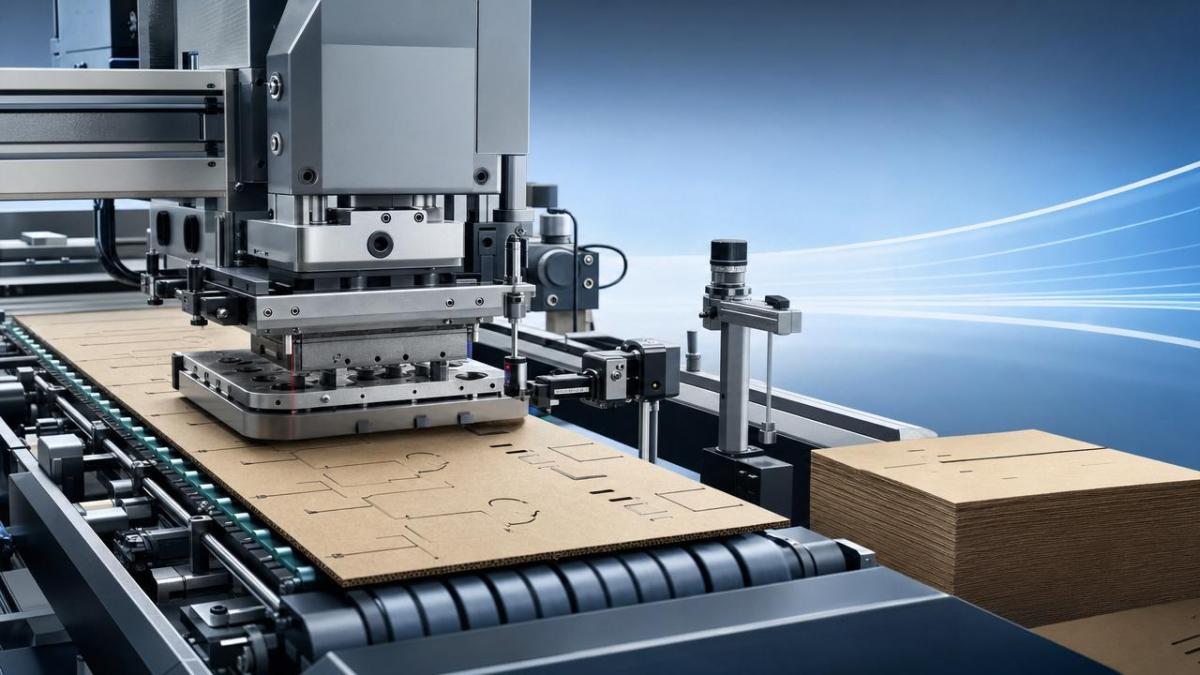
Precision die-cutting depends on a chain of linked conditions, not only on press force. Sheet flatness, print register, anvil condition, die height, feeder timing, and glue-line tolerance all interact. When one variable drifts, the cut edge may still look acceptable at first, but the defect expands at production speed.
This is why checklist-based diagnosis matters. A structured inspection routine turns vague symptoms into measurable causes. It also helps maintenance teams separate press-side faults from pre-press, tooling, or material issues, which is essential in packaging, folding carton, corrugated converting, and even related wood-composite finishing operations where dimensional repeatability drives yield.
Core checklist for preventing precision die-cutting errors
Use the following checklist before blaming the press. Each point targets a common upstream trigger of precision die-cutting instability.
- Verify sheet or board moisture before setup, because uneven moisture changes caliper, curl, compression behavior, and register stability during precision die-cutting at higher machine speeds.
- Measure material caliper across the full width, not only at the lead edge, since local thickness variation often causes incomplete cuts or crushed nicks.
- Inspect print-to-cut registration marks early, because small pre-print drift can appear as die-cutting error even when pressure settings remain technically correct.
- Check die board flatness and knife height consistency, as warped boards or mixed rule heights create uneven strike pressure and unstable waste stripping.
- Confirm anvil or counterplate wear pattern, because localized glazing, grooves, or hardness changes distort pressure transfer in precision die-cutting processes.
- Review feeder timing and side-guide contact, since early skew enters the die station as a cut accuracy issue rather than an obvious feeding fault.
- Examine stripping pins, rubber, and ejection balance, because poor waste release often masks itself as bad cutting instead of downstream handling interference.
- Compare current make-ready data with historical baseline values, so hidden setup drift can be identified before repeated adjustments increase downtime and scrap.
- Audit tooling life by impression count, not by visual guesswork alone, because micro-wear on rules and creasing matrix changes performance before visible damage appears.
- Record vibration, temperature, and lubrication condition around the die station, as mechanical instability can amplify borderline upstream defects into chronic precision die-cutting variation.
How the checklist changes by application scenario
Folding carton and offset-printed packaging
In offset-printed carton work, precision die-cutting is highly sensitive to print stretch, coating thickness, and sheet conditioning. Varnish buildup or uneven ink film can slightly alter surface friction, which affects feeding and register consistency.
For this scenario, prioritize register marks, gripper edge quality, die-rule sharpness, and matrix alignment. A cut that misses embossed graphics by fractions of a millimeter can turn premium packaging into instant waste.
Corrugated board converting
Corrugated materials add more variables. Flute direction, liner bonding, board warp, and crush resistance all affect precision die-cutting. A board that looks flat in stacks can behave differently once accelerated through transport belts and nip points.
Here, focus on moisture balance, flute deformation, anvil condition, and waste stripping behavior. Repeated edge bursting or hanging chads often point to board inconsistency or pressure distribution, not only dull tooling.
High-speed folder-gluer integrated lines
When die-cut blanks move directly into folding and gluing, minor dimensional drift becomes more visible. Poor blank squareness may first appear as glue flap misalignment, fishtailing, or carton popping during compression.
In these lines, precision die-cutting should be evaluated together with fold memory and glue application windows. If the cut is technically clean but the blank geometry shifts, the root cause may still sit in earlier die setup or material control.
Composite panels and related industrial finishing
In broader converting environments, including laminated boards and panel-based components, precision die-cutting principles still apply. Surface layers, adhesive cure, and substrate density variation can change cut behavior just like coated carton stock does.
The practical lesson is the same: do not isolate the cutting station. Upstream material preparation and downstream handling must be checked as one controlled system.
Commonly missed warning signs
Ignoring first-sheet perfection can be risky. Precision die-cutting may look correct during make-ready, then drift once heat, speed, and vibration rise after several thousand impressions.
Overcorrecting pressure is another common mistake. Extra force may hide symptoms briefly, but it accelerates rule wear, damages board structure, and increases future registration instability.
Skipping material batch comparison also causes repeat failures. If one lot cuts differently from another, tooling changes alone will not stabilize the process.
Treating waste stripping as a separate problem is misleading. In many precision die-cutting failures, poor stripping is only the visible result of earlier dimensional or pressure imbalance.
Relying on operator memory without trend records weakens troubleshooting. Historical setup data often reveals slow drift in bearings, timing, or die life long before a hard breakdown occurs.
Practical execution steps for maintenance teams
- Create a pre-run precision die-cutting check form covering material, tooling, feeder, pressure, stripping, and registration points.
- Set acceptable tolerance bands for caliper, moisture, register deviation, and make-ready time based on actual line history.
- Photograph repeat defects and link them to tooling ID, material batch, and impression count for faster root-cause review.
- Schedule die, matrix, and anvil inspections by production volume instead of waiting for visible cut failure.
- Review feeder and transport synchronization after every major format change, especially on high-speed precision die-cutting jobs.
- Use short controlled test runs after adjustments, then compare blanks at startup speed and full production speed.
Conclusion and next action
Precision die-cutting quality is rarely defined by the press alone. It is the result of disciplined control over material behavior, tooling condition, alignment logic, and machine stability before the first full-speed run begins.
The most effective next step is simple: turn recurring defects into a ranked checklist, measure the upstream variables every shift, and compare them against a fixed baseline. That approach makes precision die-cutting more predictable, reduces unplanned stops, and protects yield across packaging and industrial converting operations.
Related News
Get weekly intelligence in your inbox.
No noise. No sponsored content. Pure intelligence.
