
Is digital print integration worth the setup effort now?
For business decision-makers in packaging, printing, and woodworking, the real question is not whether digital print integration is innovative, but whether it can justify the setup effort with measurable gains. As production shifts toward shorter runs, faster turnaround, and smarter automation, understanding how digital print integration affects cost, flexibility, and long-term competitiveness has become essential.
The core search intent behind “digital print integration” is practical evaluation. Decision-makers want to know whether integration is worth the disruption, what returns are realistic, where the risks sit, and which production environments will benefit most right now.
For most companies, the short answer is yes—if digital print integration is tied to specific business goals such as reducing changeover loss, serving short-run demand, improving job visibility, or enabling faster customization. It is far less compelling when adopted as a technology upgrade without workflow discipline.
What business leaders are actually asking about digital print integration
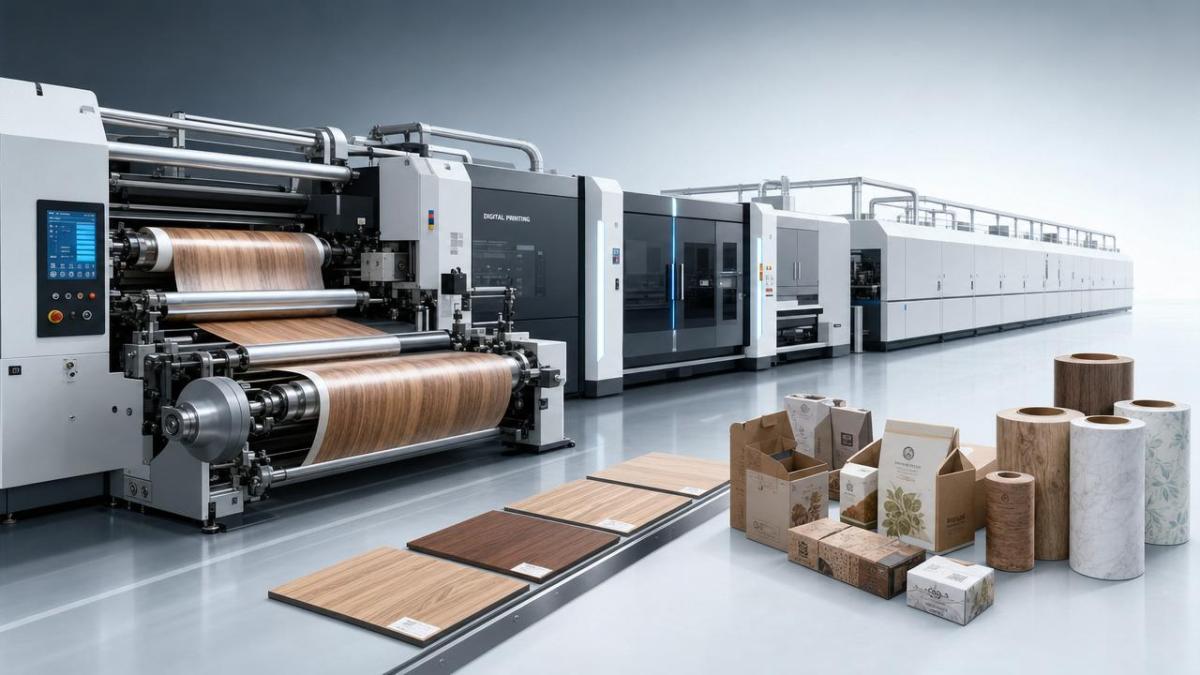
When executives search this topic, they are rarely looking for a basic definition. They are usually testing an investment decision. They want to know whether the setup effort will generate operational gains that offset software, hardware, training, and process redesign costs.
In packaging and industrial printing, those questions often sound familiar: Will integration reduce makeready waste? Can it improve speed for short and variable runs? Will it connect prepress, press, finishing, and MIS without creating new bottlenecks?
In woodworking and furniture production, the same logic applies differently. Leaders want to know whether digital print integration can support product personalization, faster order-to-production flow, cleaner data exchange with CNC equipment, and better synchronization between design intent and final output.
That means the article should focus less on abstract digital transformation language and more on decision criteria: cost structure, fit by production model, implementation complexity, measurable KPIs, and the conditions under which integration creates real strategic advantage.
Is digital print integration worth the setup effort now? The short answer
For many manufacturers, the answer in 2025 is more positive than it was a few years ago. Market conditions have changed. Orders are more fragmented, delivery expectations are tighter, SKU counts are rising, and customers increasingly expect versioning, localization, and short-run responsiveness.
Under those conditions, disconnected workflows become expensive. Manual file handling, repeated approvals, separate scheduling systems, and isolated finishing steps create delays that are hard to justify. Digital print integration addresses those frictions by turning separate production islands into a more continuous data-driven process.
Still, setup effort is real. Integration can involve DFE configuration, prepress workflow redesign, API connections to ERP or MIS, color management alignment, finishing coordination, operator retraining, and production rule standardization. The value comes not from buying software alone, but from orchestrating the workflow around it.
So the right executive judgment is this: digital print integration is worth the effort when your current operating model is already being penalized by complexity, short runs, customer variability, or high coordination cost. If those pressures are absent, the business case may be weaker.
Where the measurable value usually comes from
Decision-makers should resist vague promises and focus on where gains typically show up. In most operations, digital print integration creates value in five areas: labor efficiency, faster throughput, lower waste, better data visibility, and revenue opportunities from customized or time-sensitive work.
First, labor efficiency improves when job preparation becomes more automated. Instead of manually touching every order, integrated workflows can route files, apply templates, check imposition rules, trigger approvals, and push production instructions directly to equipment and finishing systems.
Second, throughput improves because integration reduces waiting time between workflow stages. Jobs move more quickly from quotation to file preparation, press scheduling, print execution, finishing, and dispatch. This matters especially in environments where customers buy speed as much as they buy print quality.
Third, waste often falls. Better file control, automated version management, and tighter color workflows reduce rework. In corrugated packaging and folding carton production, where substrate and finishing costs matter, preventing avoidable reruns can materially improve job profitability.
Fourth, management visibility becomes stronger. Integrated systems make it easier to track job status, queue conditions, press utilization, turnaround time, and exception points. For decision-makers, this is not merely informational. It supports pricing, staffing, equipment investment, and customer service decisions.
Fifth, revenue potential expands. Digital print integration enables economically viable short runs, personalized packaging, localized graphics, and more frequent design refreshes. In furniture and interior-related production, it can support customized décor surfaces, order-specific components, and faster design-to-output execution.
Why the timing matters more now than before
Even if the technology has existed for years, the urgency is stronger now because production economics have shifted. Across many sectors, average order lengths are shrinking while product variety is increasing. That trend erodes the efficiency advantage of traditional disconnected workflows.
E-commerce is one driver. Brands need more packaging variants, quicker campaign changes, and smaller replenishment cycles. Short lead times are no longer exceptional. They are becoming standard service expectations. That makes digital print integration more relevant as a business response, not just a technical upgrade.
Another driver is labor pressure. Skilled workflow operators, prepress specialists, and experienced press staff are harder to replace. Integration reduces dependence on repetitive manual coordination and helps standardize knowledge into systems rather than leaving it inside individual operators.
A third factor is the rise of connected manufacturing. When print, finishing, order management, and production analytics remain isolated, managers lose the ability to optimize at the system level. Integration becomes the foundation for automation, not the final step after automation.
When digital print integration is most likely to pay off
Not every company will see equal benefit. The strongest business case usually appears in operations with high job variety, frequent changeovers, multiple handoffs, recurring file errors, or customer demand for short runs and versioned output.
For packaging converters, this includes folding carton plants handling many SKUs, corrugated producers serving promotional or regional campaigns, and hybrid environments where offset and digital must coexist without constant administrative friction.
For commercial printers, return on integration is often strong when turnaround time is a competitive differentiator. If sales teams routinely promise urgent delivery, workflow delays become margin killers. Integration helps convert service promises into operational capability.
For woodworking and furniture manufacturers, the case is strongest where digital décor printing, mass customization, or CAD-to-machine execution already plays a role. If order-specific production is increasing, integrated print and production data flows can improve both speed and consistency.
By contrast, if a plant runs long stable jobs with limited variation, low customer complexity, and already efficient processes, the payoff may be slower. In that case, targeted automation may produce better returns than full digital print integration in the near term.
The setup effort: what executives often underestimate
The most common mistake is assuming integration is mainly an IT project. In reality, it is an operating model project. Software connections matter, but they do not solve inconsistent job data, unclear approval paths, weak naming conventions, or undefined handoff rules.
Another underestimated area is color and quality governance. Digital print integration can move data faster, but if color profiles, substrate settings, and finishing tolerances are not standardized, automation may simply accelerate inconsistency. Strong process discipline is a prerequisite for reliable value.
Change management is equally important. Operators, planners, prepress teams, and sales staff often work around old system limits through informal habits. Once integration begins, those workarounds surface. Companies need training, ownership clarity, and realistic pilot phases to avoid resistance or confusion.
Finally, many firms underestimate exception handling. It is easy to automate standard jobs. The real test is what happens when files are incomplete, versions change late, substrates vary, or finishing capacity shifts. Successful integration plans include decision rules for non-standard scenarios, not just ideal workflows.
How to evaluate the ROI without guessing
Executives should not approve digital print integration on enthusiasm alone. The better approach is to build a focused business case around current operational pain points. Start by identifying where margin is lost today: touch labor, delays, rework, idle press time, waste, or missed short-run opportunities.
Next, quantify baseline metrics. Useful measures include average job onboarding time, number of manual touches per order, approval turnaround, makeready waste, rerun rate, on-time delivery performance, press utilization, and the percentage of profitable short-run jobs accepted or rejected.
Then model a phased improvement scenario. For example, what happens if touchpoints drop by 30 percent, job setup time falls by 20 percent, rework declines by 15 percent, and short-run capacity increases enough to win new business? ROI becomes much clearer when linked to known bottlenecks.
It is also important to separate direct cost savings from strategic return. Some value is immediate, such as labor reduction or waste control. Other value is competitive, such as faster quoting, better service reliability, and the ability to support product variation without operational chaos.
A practical decision framework for packaging, printing, and woodworking firms
If you are evaluating digital print integration now, ask five practical questions. First, is production complexity rising faster than your current workflow can absorb? If yes, integration may be becoming necessary rather than optional.
Second, are manual handoffs slowing revenue? If customer demand exists but operational coordination limits response speed, the opportunity cost may already justify action. This is especially relevant in short-run packaging, customized print, and configured furniture production.
Third, do your systems and teams use consistent job data? If not, fix the data foundation before scaling integration. Clean master data, standardized specifications, and controlled workflows are essential for stable results.
Fourth, can you pilot integration in one product line or workflow cell before expanding? A focused pilot reduces risk and reveals process issues early. It also gives leadership credible internal proof rather than vendor-driven assumptions.
Fifth, are you pursuing integration to solve a defined business problem? The strongest projects begin with goals such as reducing turnaround time, improving short-run economics, or connecting design-to-production flow. The weakest projects begin with a generic desire to “go digital.”
What a sensible rollout looks like
A disciplined rollout usually starts with workflow mapping. Document how orders move today from sales intake to prepress, printing, finishing, packing, and shipment. The goal is to identify delays, duplicate entry, approval friction, and avoidable exceptions.
Then prioritize one high-impact use case. This might be short-run folding cartons, versioned corrugated jobs, variable-data promotional packaging, or custom furniture component workflows. Limiting initial scope makes integration manageable and easier to measure.
After that, align systems and process rules. Connect MIS, prepress workflow, digital front end, production scheduling, and finishing instructions where possible. At the same time, define ownership, escalation rules, and quality checkpoints so the integrated workflow remains operationally accountable.
Finally, measure before expanding. Track throughput, waste, labor touches, customer lead time, and error rates against the baseline. If the pilot proves value, scale gradually to adjacent workflows. Integration becomes sustainable when each phase produces operational confidence, not just technical connectivity.
Conclusion: worth it, but only when linked to a clear operating advantage
Digital print integration is not automatically worth the setup effort for every company, but for many packaging, printing, and woodworking businesses, the economics are becoming increasingly favorable. The more your business depends on speed, flexibility, short runs, and customization, the stronger the case becomes.
For decision-makers, the key is to treat digital print integration as a business system decision rather than a standalone technology purchase. Its value lies in reducing friction, improving visibility, enabling profitable complexity, and supporting a more resilient production model.
If your plant is already feeling pressure from fragmented demand, rising SKU counts, labor constraints, or inconsistent workflow handoffs, waiting may cost more than acting. In that context, the setup effort is not merely justified. It may be the price of staying competitive.
Related News
Get weekly intelligence in your inbox.
No noise. No sponsored content. Pure intelligence.
