
How to compare industrial cutting solutions without overspending
For procurement teams, comparing industrial cutting solutions is not just about upfront price. It is about uptime, cut quality, labor efficiency, waste control, and future production flexibility.
In packaging, print finishing, and woodworking, a poor fit often looks affordable at first. Later, it creates bottlenecks, rework, tool wear, and hidden operating costs.
This guide explains how to compare industrial cutting solutions without overspending. It focuses on practical scenarios, measurable criteria, and budget-aware sourcing decisions.
When budget pressure meets output targets
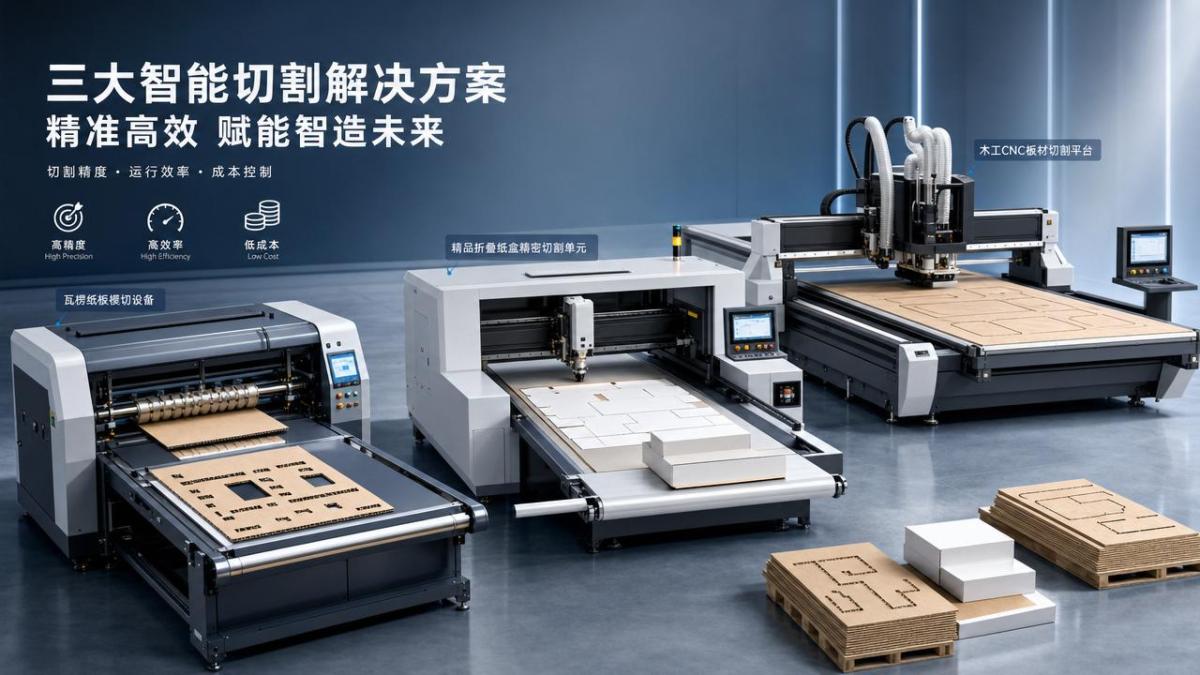
Not all industrial cutting solutions serve the same production reality. A carton converting line needs different strengths than a CNC cell for custom furniture panels.
The smart comparison starts with the real production scene. Material type, order mix, speed targets, tolerance requirements, and labor conditions all shape the right choice.
PWFS follows these differences closely across corrugated lines, die-cutting systems, folder-gluers, offset workflows, CNC routers, and edge processing equipment.
That wider view matters. Industrial cutting solutions rarely work alone. They affect print registration, folding accuracy, board utilization, downstream assembly, and delivery timing.
Scenario 1: High-volume corrugated packaging needs speed and repeatability
For shipping boxes and transit packaging, throughput often matters more than extreme shape complexity. The best industrial cutting solutions here must support stable runs and low stoppage rates.
Key checks include sheet feeding reliability, die life, changeover time, cut consistency, and compatibility with board flute profiles. Scrap spikes can quickly erase any low purchase price.
What matters most in this scenario
- Sheets per hour under normal factory conditions
- Real die-cut accuracy at production speed
- Makeready time between box formats
- Waste rate during startup and changeover
- Maintenance intervals and spare part access
A lower-cost machine can still be the right fit if SKU variation is limited. In this case, simple mechanics and easier maintenance may outperform a highly automated premium option.
Scenario 2: Folding carton work needs precision, not just low machine price
Cartons for cosmetics, pharmaceuticals, or premium consumer goods often involve fine graphics and tight registration. Here, industrial cutting solutions must protect visual quality and dimensional accuracy.
A weak cutting stage can cause edge fuzz, cracking, registration drift, and folding problems later. That means more than cutting cost. It can damage the full print-to-pack process.
Core decision points
- Tolerance stability across long runs
- Pressure control for delicate substrates
- Registration consistency with printed graphics
- Ease of integrating with folder-gluers
- Ability to handle coated and specialty boards
In this environment, the cheapest industrial cutting solutions often create downstream losses. Better crease quality and fewer rejects usually justify a higher but controlled investment.
Scenario 3: Custom woodworking requires flexibility and software compatibility
For panel furniture and whole-house customization, order variety is high. One day may involve wardrobes, cabinets, shelving, and shaped parts with different drilling patterns.
In this case, industrial cutting solutions should be judged by nesting efficiency, CAD/CAM integration, toolpath optimization, and quick adaptation to custom designs.
Critical checks for CNC-based cutting
- Software openness and post-processor support
- Tool change speed and spindle stability
- Dust extraction effectiveness
- Panel yield and nesting performance
- Operator learning curve and remote service access
A machine with a lower list price may become expensive if software is closed, service is slow, or tool consumption rises. Flexible industrial cutting solutions reduce those hidden penalties.
How different production scenes change the comparison logic
The same equipment scorecard should not be used for every factory. The table below helps compare industrial cutting solutions by production context.
A practical framework to compare industrial cutting solutions without overspending
Use a weighted method instead of choosing by quote alone. This keeps visible and hidden costs in one view.
Step 1: Define the real workload
List materials, thickness ranges, monthly volume, average batch size, and target lead times. Also include future growth, not only current demand.
Step 2: Compare total operating cost
Review energy use, tooling, labor, consumables, maintenance, scrap, and expected downtime. These cost lines often outweigh the initial discount.
Step 3: Test real production samples
Request trials using actual board grades, printed sheets, or wood panels. Evaluate finished quality, setup time, and output under realistic conditions.
Step 4: Score service strength
Good industrial cutting solutions need good support. Check spare parts lead time, remote diagnostics, training, and local technical coverage.
Step 5: Protect expansion options
Choose a platform that can connect with MES, CAD/CAM, or automation modules later. This prevents costly replacement when output complexity increases.
Recommended matching strategies by budget level
- Entry budget: Focus on dependable core performance, common spare parts, and simple maintenance.
- Mid budget: Prioritize automation that cuts labor and setup time.
- Growth budget: Select industrial cutting solutions with software scalability and process integration.
- Premium budget: Pay for measurable quality stability, not for unused features.
A balanced choice often beats both extremes. Underbuying hurts productivity, while overbuying ties capital to functions that never produce return.
Common mistakes that distort the evaluation
One frequent mistake is comparing machine price without comparing finished output quality. Another is accepting peak-speed claims without verifying stable speed on actual jobs.
Many buyers also overlook tooling cost, software fees, operator dependence, and material waste. These factors strongly shape the real value of industrial cutting solutions.
A third mistake is ignoring line compatibility. Cutting performance should match printing, gluing, edge banding, handling, and digital planning systems.
What to do next for a smarter comparison
Build a comparison sheet with five weighted areas: output, quality, operating cost, service, and upgrade potential. Then score each candidate using real samples and realistic workloads.
If the production mix spans corrugated packaging, folding cartons, and woodworking panels, compare industrial cutting solutions as part of the wider converting workflow.
PWFS supports this perspective by connecting machine intelligence with practical factory realities. That helps reduce decision noise and improve long-term ROI without unnecessary spending.
The best industrial cutting solutions are not always the cheapest or the most advanced. They are the ones that fit the production scene, control hidden costs, and stay productive as demand changes.
Related News
Get weekly intelligence in your inbox.
No noise. No sponsored content. Pure intelligence.
