
How industrial printing solutions improve color consistency
For quality control and safety teams, color variation is more than a visual issue—it can signal unstable processes, rework risk, and compliance concerns. Industrial printing solutions help standardize color output through precise registration, controlled ink delivery, automated inspection, and data-driven process management. In high-volume packaging and board production, these systems create the consistency needed to protect brand integrity, reduce waste, and support safer, more reliable operations.
In corrugated packaging, offset printing, folding-carton converting, and related board production, even a small color drift can trigger a chain reaction. A shift of Delta E beyond an agreed tolerance, inconsistent solids, or unstable overprint can force line stoppages, increase material scrap, and raise doubts about process control.
For teams responsible for quality and operational safety, the value of industrial printing solutions goes far beyond appearance. These systems create measurable control over ink, substrate, speed, drying, registration, and inspection, turning color consistency into a repeatable production outcome rather than a daily adjustment battle.
Why color consistency matters in industrial print operations
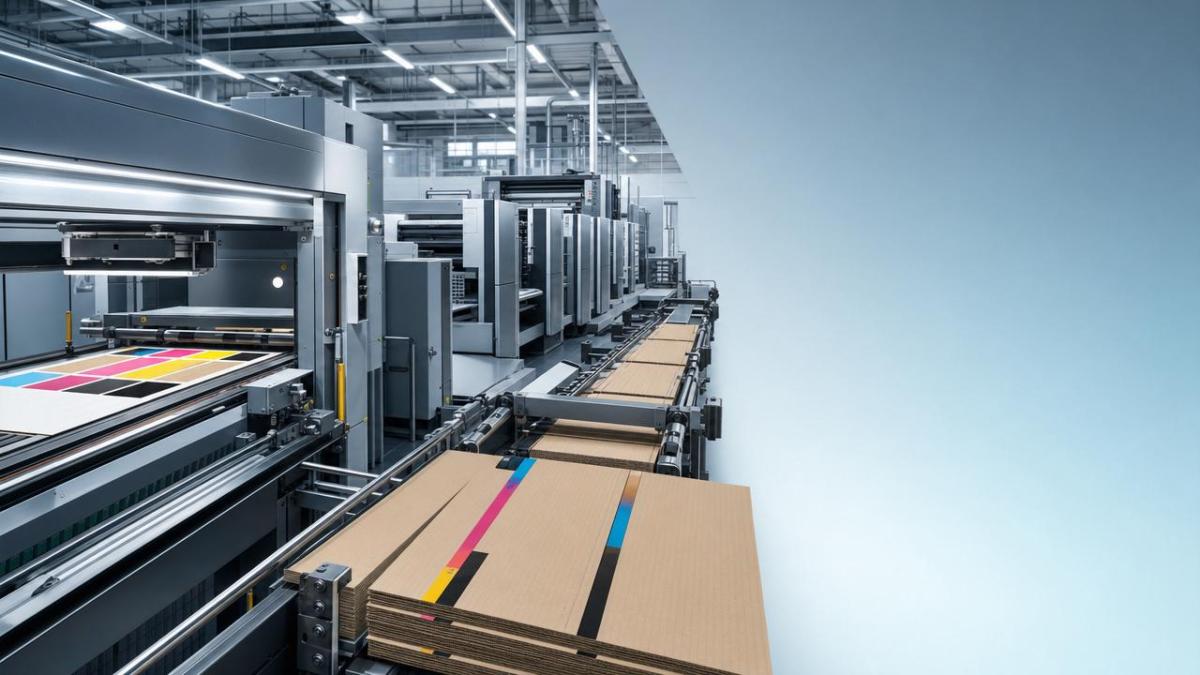
In industrial environments, color consistency affects 4 critical areas at once: brand recognition, waste control, compliance readiness, and line efficiency. On a fast offset press running 10,000 to 15,000 sheets per hour, small color changes can multiply into thousands of nonconforming sheets within minutes.
For corrugated board plants serving e-commerce packaging, consistency is especially important because large print runs often include repeated SKUs, retailer-specific color targets, and frequent substrate changes. If color variation appears between morning and night shifts, the issue is usually not visual taste but process instability.
The main risks behind unstable color
Color inconsistency usually comes from a combination of variables rather than a single defect. The most common sources include ink viscosity drift, plate wear, roller pressure change, substrate moisture variation, drying imbalance, and operator-dependent adjustments made without data reference.
- Ink density changes during long runs of 2 to 6 hours
- Registration deviation at high speed, often measured in tenths of a millimeter
- Board surface variation between paper batches or flute combinations
- Drying inconsistency that changes gloss and perceived color
- Manual inspection limits during lines running hundreds of units per minute
Why QC and safety teams care
Quality teams need predictable output because customer approvals, batch traceability, and complaint prevention all depend on repeatability. Safety managers also have a direct interest, because unstable print processes can lead to more emergency interventions, more manual corrections near moving equipment, and more unplanned cleanup of ink or adhesive systems.
When industrial printing solutions stabilize color, they also reduce the number of unscheduled adjustments, rushed operator interventions, and restart cycles. In practice, fewer disruptions often mean a safer shop floor and more reliable standard operating procedures.
The table below shows how color inconsistency typically affects different areas of industrial print and converting operations.
The key takeaway is simple: color variation is rarely an isolated visual issue. In most plants, it is an early warning sign that process control, maintenance discipline, or inspection coverage is not strong enough for current production speed and volume.
How industrial printing solutions deliver repeatable color output
Modern industrial printing solutions improve color consistency by controlling the full print window, not just the final appearance. They connect mechanical precision, ink management, inline measurement, automation logic, and production data into one repeatable system.
Precise registration and mechanical stability
Accurate registration is the foundation of consistent color build, especially in CMYK and spot-color packaging. When units stay aligned within tight tolerances such as ±0.1 mm to ±0.2 mm, halftone dots overlap as intended and the printed result remains stable across the run.
This matters most on high-precision offset presses and advanced corrugated printers, where vibration, roller wear, and sheet transport instability can all change perceived color. A mechanically stable line reduces the need for constant operator correction and creates a better baseline for quality inspection.
Controlled ink delivery and closed-loop adjustment
Stable ink film thickness is one of the biggest advantages of industrial printing solutions. Automated ink key control, viscosity monitoring, temperature stabilization, and recipe management reduce human variation and keep density inside pre-set operating limits.
In many packaging plants, a practical target is to maintain density drift within a narrow control band during a production window of 30 minutes to 3 hours. Closed-loop systems do this by reading color patches or process bars and correcting output before visible drift becomes reject material.
Typical control points
- Ink viscosity check intervals of 15 to 30 minutes for demanding jobs
- Pressroom temperature control within a practical range such as 20°C to 25°C
- Standardized ink recipes for repeat orders and multi-shift production
- Automated alarm triggers when measured values move beyond tolerance
Automated inspection at production speed
Manual visual checks remain useful, but they are not enough for high-volume industrial lines. Automated inspection cameras and spectrophotometric systems detect color drift, streaks, hickeys, registration errors, and missing print at speeds no human team can match consistently.
For QC and safety managers, the benefit is not only better defect detection. Automated inspection also reduces the number of times operators must approach running sections for close visual checks, especially on fast board or carton lines where access points and moving parts create obvious risk.
Data-driven process management
The strongest industrial printing solutions record job parameters, inspection results, fault history, and operator actions. This makes repeatability possible across shifts, machines, and reorder cycles. Instead of relying on individual experience, plants build a controlled production memory.
When integrated with MES or production dashboards, the system can compare actual output against approved standards in real time. That helps quality teams shorten root-cause analysis from days to hours and gives management clearer evidence for maintenance or process improvement decisions.
Where color consistency delivers the biggest value in packaging and board production
Not every plant has the same risk profile. The value of industrial printing solutions depends on production volume, substrate variation, compliance pressure, and the cost of downstream scrap. In packaging and board manufacturing, several use cases stand out as particularly high impact.
Corrugated shipping boxes and retail-ready packaging
Corrugated plants often handle long runs, changing board grades, and large-area graphics. Brand owners want the same visual output across multiple purchase cycles, even when production is split between shifts or sites. Industrial printing solutions help normalize these variables through standardized color targets and inspection routines.
This becomes especially important in e-commerce packaging, where 1 design may be repeated across tens of thousands of boxes and any color inconsistency is visible at scale.
Folding cartons for regulated products
In pharmaceutical, food, and personal care cartons, color consistency supports both brand integrity and process credibility. If print quality changes across batches, auditors and customers may question whether other controls, such as ink handling or material segregation, are equally unstable.
For these jobs, industrial printing solutions should support traceable job records, inspection image retention, and clearly defined approval checkpoints before die-cutting and folder-gluing begin.
Multi-stage converting environments
When printed sheets move from press to die-cutter to folder-gluer, a defect caught late costs much more than one caught early. By improving print stability and inspection accuracy upstream, plants avoid adding value to defective material through cutting, folding, and gluing steps that consume labor, energy, and machine time.
The following comparison helps teams identify which solution elements are most useful in different industrial print environments.
The right configuration depends on the plant’s defect cost and process maturity. For many facilities, the best return comes not from the most complex technology, but from combining 3 essentials: stable mechanics, automated inspection, and disciplined data capture.
How to evaluate industrial printing solutions before purchase
Procurement decisions should be based on measurable control capability, not broad claims. Quality control and safety managers should take part early, because equipment that looks productive on paper may still create unnecessary inspection risk, cleanup burden, or unstable output in real operation.
Four evaluation dimensions that matter most
- Color control capability: ask for typical tolerance performance, inspection method, and repeat job consistency.
- Mechanical and process stability: review registration precision, maintenance points, and behavior at target production speed.
- Data and traceability: confirm whether the system records alarms, settings, job history, and inspection evidence.
- Safety and usability: check guarding access, cleaning routines, operator intervention frequency, and training requirements.
Questions to ask suppliers during technical review
A strong supplier should explain how the industrial printing solution performs under real conditions, including substrate variation, shift changes, and long-run production. General statements about “high quality” are not enough for serious B2B evaluation.
- How is color measured and corrected during a run?
- What is the recommended inspection frequency for critical jobs?
- How many operator touchpoints are required per shift?
- What maintenance intervals are typical: daily, weekly, and monthly?
- Can the system store approved recipes for repeat packaging orders?
- How does the equipment support safer cleaning and faster fault diagnosis?
Common buying mistakes
One common mistake is choosing a press or inspection package based only on top speed. If the machine can run at 12,000 sheets per hour but color stays stable only at 8,000, the real production value is lower than expected. Another mistake is treating color control as a press issue only, while ignoring board quality, drying, and downstream handling.
A third mistake is leaving QC and safety teams out of the project until installation. Their input is essential for defining acceptance criteria, intervention limits, and documentation needs before capital approval is finalized.
Implementation, maintenance, and continuous improvement
Even the best industrial printing solutions require disciplined implementation. Plants usually see better results when rollout follows a structured 5-step path: baseline measurement, target definition, equipment setup, operator training, and ongoing performance review.
A practical implementation sequence
1. Measure the current state
Track key values for 2 to 4 weeks, including waste percentage, complaint frequency, rerun hours, and color deviation trends by job type. Without a baseline, improvement claims are hard to verify.
2. Define realistic control limits
Set tolerances by product group, customer expectation, and substrate type. A premium folding carton and a standard shipping box do not need identical control bands.
3. Standardize operating methods
Create clear SOPs for startup approval, ink adjustment, cleaning, and defect escalation. Good systems fail when shift practices differ too much.
4. Train across functions
Operators, maintenance technicians, QC staff, and safety personnel should train together. Cross-functional understanding reduces blame cycles and shortens response time when drift appears.
5. Review and refine monthly
A monthly review of 6 to 8 key indicators often reveals whether the issue is equipment wear, material variability, or inconsistent execution.
Maintenance discipline supports color discipline
Rollers, anilox components, sensors, feeders, and drying units all affect final color stability. Preventive maintenance should include scheduled cleaning, calibration checks, wear inspection, and documented replacement criteria. In many plants, weekly inspection routines catch the root causes of drift before the customer does.
For safety teams, maintenance quality also influences exposure risk. Equipment that needs frequent reactive intervention usually creates more lockout events, more solvent handling, and more urgent manual access near moving sections.
Frequently asked operational question
Can color consistency improve without replacing the entire line?
Often, yes. Many plants improve results by upgrading inspection, stabilizing ink management, tightening maintenance routines, and introducing digital job recipes before investing in a full new press. The right path depends on current machine condition, defect cost, and required quality level.
For quality control and safety leaders, industrial printing solutions are most valuable when they turn color from a subjective judgment into a controlled production parameter. In packaging, corrugated board, and high-speed converting, that means fewer rejects, steadier compliance performance, safer interventions, and more reliable repeat orders.
PWFS follows the technologies and operating logic behind high-precision offset presses, corrugated board lines, die-cutting and folder-gluing systems, and connected production management. If you are evaluating industrial printing solutions for stronger color consistency, lower waste, and better process control, contact us to discuss your application, request a tailored solution path, or learn more about practical equipment strategies for your plant.
Related News
Get weekly intelligence in your inbox.
No noise. No sponsored content. Pure intelligence.
