
Is digital print packaging worth the setup cost?
For finance leaders evaluating capital expenditure, digital print packaging is not simply a design upgrade—it is a question of utilization, waste reduction, inventory control, and faster revenue response.
While setup costs can appear high, the real decision depends on run length, SKU complexity, changeover frequency, and the value of on-demand customization.
This article examines when the investment makes financial sense, where hidden savings emerge, and how packaging operations can calculate ROI beyond the press price.
When digital print packaging becomes a scenario-based cost decision
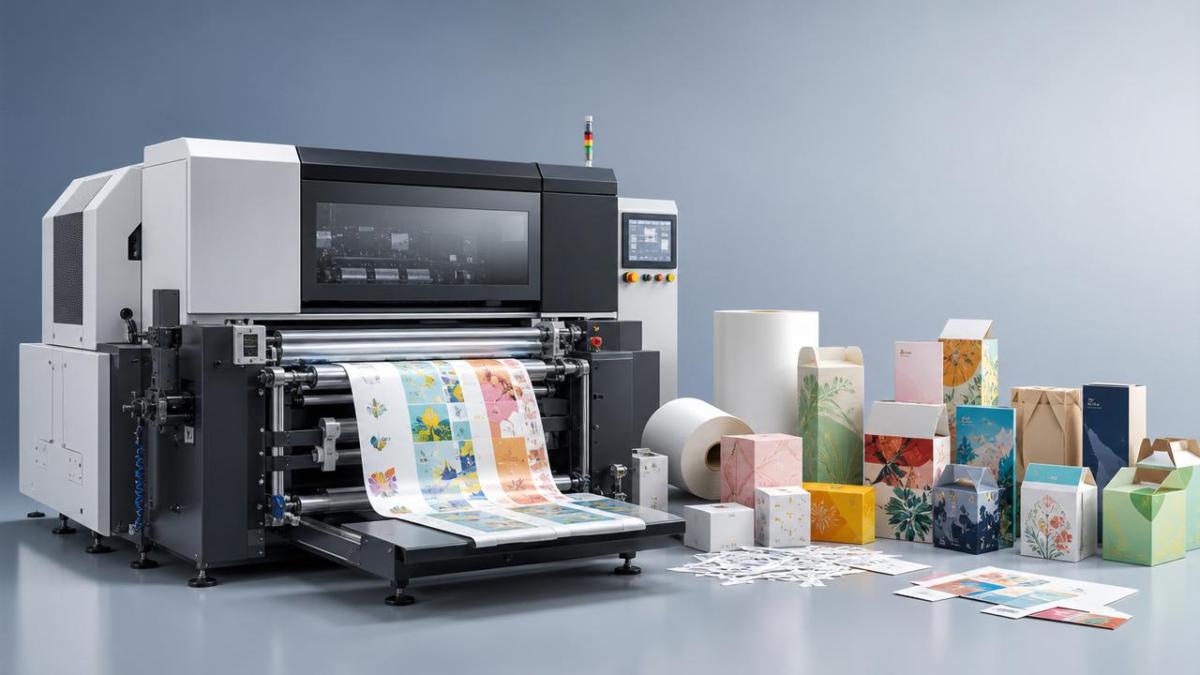
The setup cost of digital print packaging should never be judged only against a machine quotation.
It must be compared with the cost of plates, make-ready sheets, ink adjustment, warehousing, obsolete stock, and delayed market response.
In traditional offset or flexo workflows, long runs absorb setup cost efficiently.
However, many packaging programs now fragment into smaller campaigns, regional designs, e-commerce packs, and seasonal promotions.
That shift changes the financial logic behind digital print packaging.
A high-speed press may look expensive, yet it can protect margin when changeovers happen daily.
The scenario matters more than the headline setup cost.
Scenario 1: Short-run launches and market testing
Digital print packaging is often strongest when demand is uncertain.
A new product launch rarely has perfect volume forecasts, especially in cosmetics, food, supplements, and consumer electronics accessories.
Traditional production may force large minimum orders to justify plates and setup time.
If the product fails, packaging inventory becomes waste.
If it succeeds, redesigns may still make the first batch obsolete.
Digital print packaging reduces that risk by allowing smaller production windows.
It supports test markets, influencer editions, regional compliance text, and rapid color refinements without repeating plate costs.
The key judgment point is not unit price alone.
The better metric is total launch cost, including unused cartons, design revisions, and speed to shelf.
Scenario 2: High-SKU operations with frequent artwork changes
SKU complexity is one of the clearest triggers for digital print packaging.
A plant producing many similar boxes may suffer from constant setup interruptions.
Each version may need different language panels, nutrition tables, barcodes, batch claims, or promotional graphics.
Conventional printing can handle this, but every change adds planning pressure.
Plates must be stored, inspected, mounted, cleaned, and managed.
Digital print packaging turns many artwork changes into file changes.
This is especially valuable in private label retail, pharmaceutical cartons, export packaging, and subscription commerce.
The core judgment point is annual changeover frequency.
When setup hours become a bottleneck, digital print packaging can create capacity without expanding the whole factory.
Scenario 3: E-commerce packaging and variable demand cycles
E-commerce demand is volatile, promotional, and often geographically uneven.
Packaging may need fast changes for marketplace campaigns, return instructions, QR codes, or limited-time bundles.
Digital print packaging fits this rhythm because it reduces dependence on long forecast horizons.
For corrugated boxes, it can also support brand experience at lower volumes.
Plain shipper cartons may still be cheaper through conventional routes.
Yet branded inserts, subscription boxes, seasonal mailers, and customer-specific packs often justify digital print packaging.
The decision depends on how much value is created after printing.
If graphics improve unboxing, retention, cross-selling, or compliance accuracy, the setup cost deserves a broader ROI calculation.
Scenario 4: Regulated packaging with compliance variation
Regulated packaging often changes faster than production teams prefer.
Food contact declarations, allergen statements, traceability codes, recycling marks, and market-specific legal text can vary by region.
Digital print packaging helps when compliance variation is frequent and volumes are uneven.
It can reduce the risk of holding outdated printed stock after a label rule changes.
However, compliance also raises technical requirements.
Ink migration, color verification, barcode readability, and substrate compatibility must be validated before approval.
In this scenario, digital print packaging is worth considering only with disciplined process control.
The setup cost must include testing, documentation, operator training, and repeatable color management.
Scenario 5: Personalized, localized, and premium packaging programs
Personalization is where digital print packaging creates value beyond operational savings.
Names, store locations, serialized graphics, loyalty codes, and community campaigns can turn packaging into a data-linked media surface.
This does not suit every category.
Commodity packaging with stable artwork may not recover the setup cost quickly.
Premium gifting, beverages, luxury accessories, health products, and event merchandise can benefit more clearly.
The judgment point is whether variable graphics generate measurable commercial return.
Digital print packaging is most convincing when personalization links to higher sell-through, stronger loyalty, or reduced campaign waste.
How needs differ across packaging scenarios
This comparison shows why digital print packaging should not be judged as universally cheaper or more expensive.
It is a scenario tool, strongest where uncertainty, complexity, and speed have measurable financial value.
Cost categories that decide whether setup pays back
A realistic ROI model should include more than equipment price, installation, and financing.
Digital print packaging changes cost behavior across the entire converting workflow.
- Plate elimination: fewer physical plates, lower storage, and less mounting time.
- Make-ready reduction: fewer wasted sheets during color and registration adjustment.
- Inventory reduction: less finished packaging held before demand becomes clear.
- Artwork agility: faster switching between languages, regions, and campaign versions.
- Cash flow improvement: smaller batches reduce capital trapped in slow-moving stock.
- Revenue responsiveness: faster packaging availability can protect launch windows.
The setup cost becomes easier to justify when several categories improve at once.
If only one cost line improves, the payback period may be longer.
Where conventional printing still wins
Digital print packaging is not always the right answer.
Long, stable runs with limited artwork changes can still favor offset, flexo, or gravure.
These processes often deliver excellent unit economics after setup is absorbed.
They may also offer established finishing compatibility, mature color expectations, and predictable substrate behavior.
For plain corrugated shippers, heavy-volume folding cartons, or repeated retail displays, conventional platforms can remain more economical.
The practical approach is rarely a full replacement strategy.
Many operations gain more by using digital print packaging beside offset presses, die-cutters, folder-gluers, and corrugated lines.
This hybrid model sends volatile work to digital and stable volume to conventional assets.
Scenario-fit checklist before approving investment
A structured checklist prevents emotional buying and narrow cost comparison.
Before approving digital print packaging, evaluate the following operational signals.
- How many jobs require artwork changes each month?
- What is the average run length by SKU?
- How much substrate is lost during make-ready?
- How often does printed inventory become obsolete?
- Can finishing equipment handle digitally printed sheets consistently?
- Are color standards measurable and repeatable across batches?
- Will MES or workflow software support variable data control?
- Can operators manage files, color profiles, and inspection procedures?
If most answers reveal high variation and high waste, digital print packaging deserves serious financial modeling.
If demand is stable and artwork rarely changes, setup cost may be harder to recover.
Common misjudgments that distort ROI
The first mistake is comparing only printed unit cost.
That ignores warehouse space, expired packaging, emergency reprints, and missed campaign windows.
The second mistake is assuming every job belongs on digital equipment.
Digital print packaging performs best when selected work matches its strengths.
The third mistake is ignoring finishing and converting constraints.
A press may be fast, but die-cutting, folding, gluing, coating, and inspection must stay synchronized.
The fourth mistake is underestimating data discipline.
Variable packaging requires file governance, barcode validation, color verification, and traceable production records.
Without these controls, digital print packaging can create speed without reliability.
A practical payback model for digital print packaging
A useful model starts with current annual waste and opportunity cost.
Calculate plate expenses, make-ready waste, overtime, obsolete stock, reprint events, and urgent freight.
Then estimate which portion shifts to digital print packaging without disrupting high-volume conventional work.
Next, include new revenue from shorter lead times, versioned campaigns, and low-risk product trials.
Finally, subtract added costs such as ink, maintenance, software, operator training, inspection, and approved substrates.
This creates a more honest payback picture.
The strongest projects often show value in both cost reduction and revenue acceleration.
Final recommendation: invest when flexibility has measurable value
Digital print packaging is worth the setup cost when variability is expensive under the current workflow.
It is especially compelling for short runs, SKU fragmentation, localized designs, e-commerce campaigns, and controlled personalization.
It is less compelling when stable artwork, high volumes, and mature conventional lines already deliver low total cost.
The next step is to map one year of packaging jobs by run length, changeover frequency, waste, and inventory risk.
Then separate work into digital, conventional, and hybrid categories.
With that evidence, digital print packaging becomes a strategic investment decision, not a speculative equipment purchase.
Related News
Get weekly intelligence in your inbox.
No noise. No sponsored content. Pure intelligence.
