
Industrial Printing Equipment Buying Guide: Key Specs, Workflow Fit, and ROI Factors
Industrial Printing Equipment Buying Guide: Key Specs, Workflow Fit, and ROI Factors
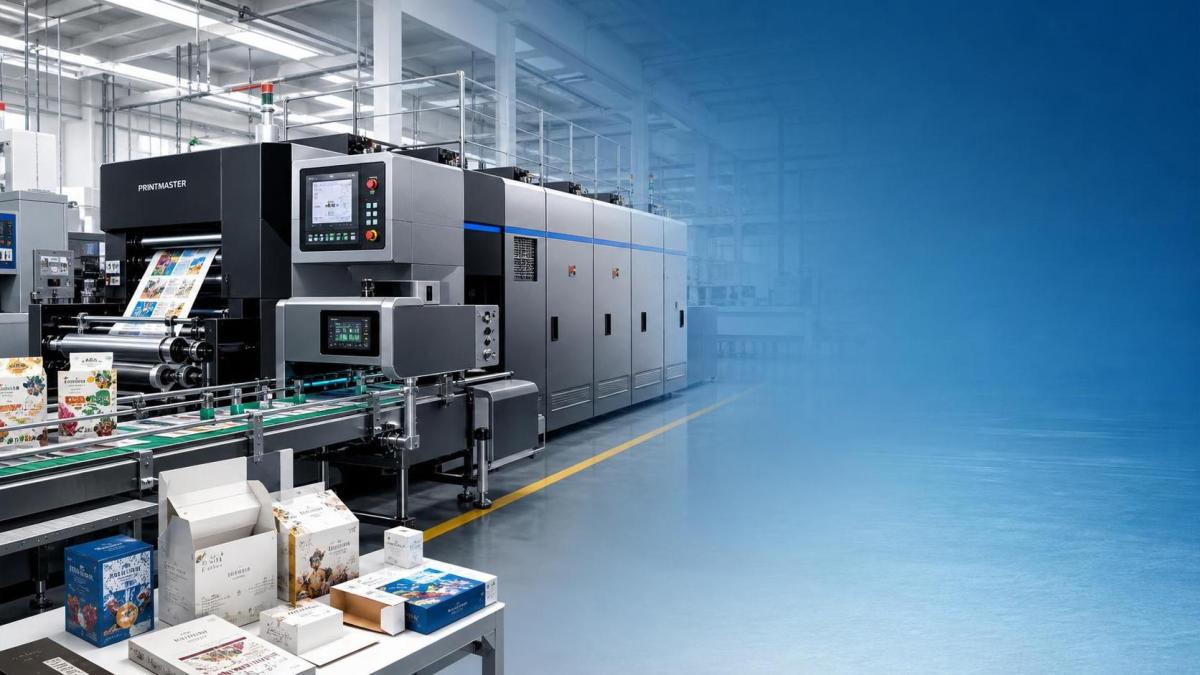
Choosing industrial printing equipment is rarely just a machine decision. It is a business model decision.
The wrong line can lock a plant into waste, delays, and unstable quality for years.
The right setup improves output, protects margins, and supports future product changes without constant reinvestment.
That is why buying industrial printing equipment should start with workflow reality, not brochure speed.
In practice, most buyers compare print quality first. That matters, but it is only one piece.
A better approach is to look at three things together: key specs, production fit, and return on investment.
This guide breaks down how to evaluate industrial printing equipment with a sharper commercial lens.
Start with Workflow Fit Before Machine Specs
A high-end press can still be a poor investment if it does not match daily production behavior.
Before comparing industrial printing equipment, map the real flow from prepress to finishing and delivery.
Look at job change frequency, batch size, substrate range, color complexity, and downstream bottlenecks.
If your plant runs many short jobs, fast makeready may matter more than peak hourly output.
If packaging demand is stable and volumes are high, throughput and uptime may become the main value drivers.
This is especially true in corrugated and folding carton operations, where one weak link slows the whole line.
Questions that clarify workflow fit
- How many SKUs run each week?
- What is the average order size by product family?
- How often do substrates, coatings, or formats change?
- Where do delays happen now: printing, drying, die-cutting, or folding?
- How much labor is tied to setup, inspection, and material handling?
These answers help narrow the right industrial printing equipment faster than generic specification sheets.
Key Specs That Actually Affect Performance
Specifications matter, but only when they connect directly to production goals and cost control.
When reviewing industrial printing equipment, focus on the specs that influence consistency, speed, and usable output.
1. Print format and substrate range
Check maximum and minimum sheet or board sizes, thickness range, and substrate compatibility.
A wider range gives flexibility, but only adds value if sales demand really supports it.
2. Speed versus stable speed
Vendors often highlight maximum speed. Buyers should ask for stable production speed under normal jobs.
There is a big difference between a line rated at 15,000 sheets per hour and one that sustains it.
3. Registration accuracy and repeatability
For premium packaging, micron-level stability affects waste, brand appearance, and customer acceptance.
Ask how the industrial printing equipment performs over long runs, not just during demo conditions.
4. Makeready time and automation
Preset systems, automated plate change, camera inspection, and closed-loop color control can transform economics.
This is often where modern industrial printing equipment creates the biggest labor and waste savings.
5. Integration with converting and MES
A press that cannot exchange data with die-cutters, folder-gluers, and production software creates hidden friction.
In current operations, digital connectivity is no longer a nice extra. It is a buying criterion.
Compare Equipment by Business Scenario
Different applications need different industrial printing equipment priorities.
A useful buying guide should translate technical choices into operating scenarios.
This scenario view makes industrial printing equipment evaluation more practical and less emotional.
ROI Factors Buyers Often Miss
Price is visible. Total ownership cost is usually not.
A cheaper industrial printing equipment package can become the more expensive option within two years.
From recent market shifts, the strongest signal is clear: profitable plants measure output quality and production friction together.
Build ROI around these cost drivers
- Setup waste in paper, board, ink, and coatings
- Unplanned downtime and spare part lead times
- Operator headcount per shift
- Energy consumption at normal production loads
- Maintenance complexity and service dependency
- Rejected jobs, rework, and customer claims
If one machine reduces makeready by 12 minutes per job, the annual impact can be substantial.
That matters even more in mixed-order environments with frequent changeovers.
The same logic applies to inline inspection and closed-loop controls that reduce quality drift.
When comparing industrial printing equipment, request ROI models based on your own job history.
A simple ROI check
Estimate annual savings from labor, waste, uptime, and extra sellable capacity.
Then compare that figure against financing cost, maintenance, and implementation expense.
This creates a much clearer investment picture than unit price alone.
Supplier Evaluation Should Go Beyond the Demo
A polished demonstration does not guarantee stable plant performance.
Strong industrial printing equipment buying decisions include vendor capability, local service, and implementation discipline.
This is where many projects either gain momentum or lose it.
What to verify before signing
- Reference sites running similar job mixes and volumes
- Guaranteed acceptance standards for speed, waste, and quality
- Local technician availability and spare part response time
- Operator training depth and digital support tools
- Software update policy and integration support
- Consumable requirements and approved material windows
In real operations, support quality often shapes ROI as much as machine quality.
That is especially true for automated industrial printing equipment with connected inspection and workflow systems.
A Practical Buying Framework for Industrial Printing Equipment
To simplify the decision, use a structured scorecard.
This keeps teams focused on measurable value rather than isolated technical claims.
- Score workflow fit against current and planned product mix
- Score critical specs against actual job requirements
- Score ROI using plant-specific data, not vendor assumptions
- Score supplier reliability, service reach, and training support
- Score digital readiness for MES, traceability, and reporting
When industrial printing equipment is reviewed this way, decisions become faster and easier to defend internally.
It also helps align finance, operations, production, and quality teams around the same criteria.
Final Takeaway
The best industrial printing equipment is not always the fastest or the most automated.
It is the system that fits your workflow, protects quality, reduces friction, and earns back capital with confidence.
If you are comparing presses, die-cutting systems, or integrated converting lines, start with plant data.
Then test every industrial printing equipment option against real jobs, real constraints, and real growth plans.
That approach leads to better procurement decisions and much stronger long-term returns.
Related News
Get weekly intelligence in your inbox.
No noise. No sponsored content. Pure intelligence.
