
How to Evaluate a Corrugated Box Machinery Supplier: Capacity, Service, and Lead Time Checklist
How to Evaluate a Corrugated Box Machinery Supplier: Capacity, Service, and Lead Time Checklist
Choosing the right corrugated box machinery supplier can determine whether production scales smoothly or stalls under hidden bottlenecks.
Capacity, after-sales support, and lead time affect output stability, delivery confidence, and long-term return.
That is why a structured evaluation matters more than a low quoted price.
In real sourcing work, the best corrugated box machinery supplier is rarely the cheapest.
It is the supplier that keeps lines running, parts arriving, and expansion plans realistic.
The checklist below helps reduce sourcing risk and sharpen procurement decisions.
Start with Capacity, Not Brochure Claims
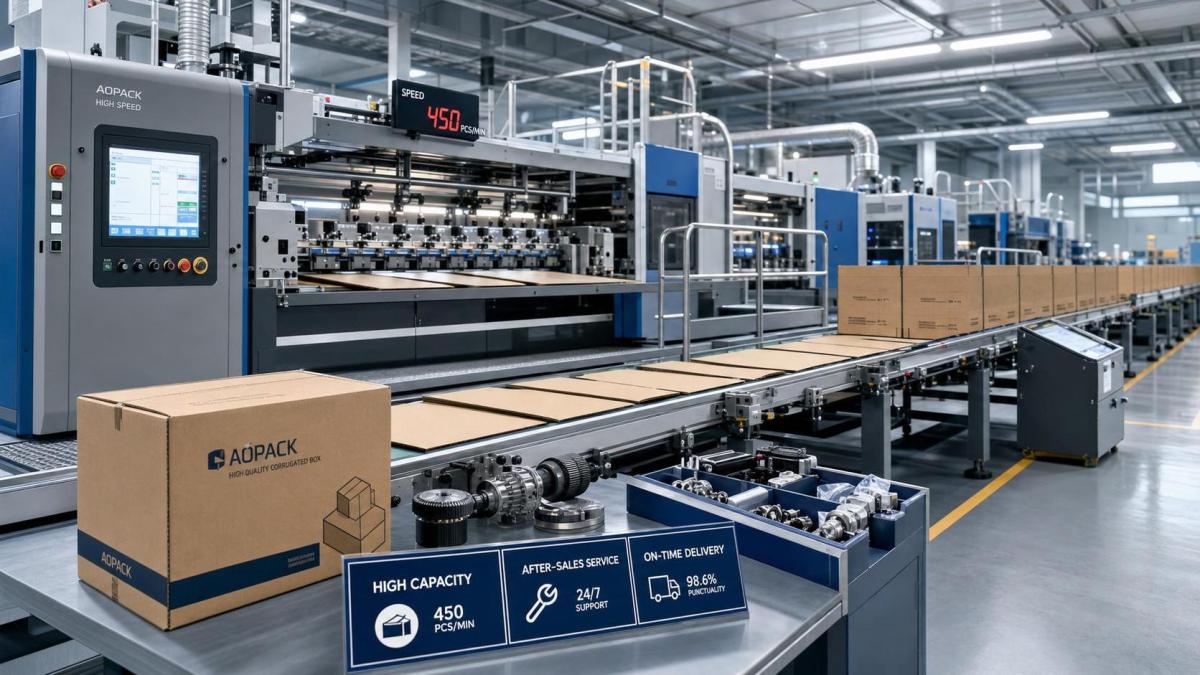
A capable corrugated box machinery supplier should prove output, not just promise it.
Start by comparing machine speed, board range, automation level, and uptime under production conditions.
Ask what happens at full load, mixed order sizes, and frequent job changes.
This is where weak suppliers often become visible.
Capacity Questions That Reveal Real Performance
- What is the rated speed versus stable operating speed?
- What board flute types and thickness ranges can the line handle?
- How many size changeovers can be completed per shift?
- What is the average waste rate during startup and order switching?
- Can the machine support future automation or MES integration?
A reliable corrugated box machinery supplier should answer with data, videos, and customer references.
If the answers stay vague, the capacity may be weaker than the catalog suggests.
Look Beyond Single Machines
A smart evaluation also checks system matching.
A fast printer with a slow feeder creates a hidden bottleneck.
An advanced folder gluer without stable upstream quality causes rework.
The right corrugated box machinery supplier should understand line balance, not just equipment sales.
Evaluate Service Like a Risk-Control Function
After-sales service is often treated as a secondary item.
In practice, it directly protects cash flow, customer delivery, and plant reputation.
A corrugated box machinery supplier with weak service can turn a small fault into a costly shutdown.
Core Service Areas to Check
- Installation support and commissioning schedule.
- Operator training depth and maintenance training coverage.
- Remote diagnostics and response time commitments.
- Critical spare parts stock and shipping speed.
- Warranty terms, exclusions, and escalation process.
It helps to request a sample service workflow.
Ask how the supplier handles emergency stops, recurring faults, and software updates.
A mature corrugated box machinery supplier usually has documented procedures.
Service Red Flags
- No local or regional technical support network.
- No spare parts list for the first year.
- Training limited to one quick startup session.
- Support promises without response-time language in contract.
- Heavy dependence on one engineer or one factory contact.
If service feels informal during bidding, it will likely feel slower after payment.
Lead Time Is More Than a Delivery Date
Lead time is often underestimated in procurement planning.
Yet for any corrugated box machinery supplier, lead time affects market entry, customer commitments, and financing pressure.
A quoted date means little without understanding the full path behind it.
Break Lead Time into Stages
Ask the supplier to separate each milestone clearly.
This level of detail shows whether the corrugated box machinery supplier manages projects professionally.
It also reveals where delays are most likely to happen.
Ask What Delays Usually Come From
Good suppliers do not claim that delays never happen.
They explain typical risks and how they control them.
That might include motor shortages, drawing changes, shipping congestion, or customer site delays.
A transparent corrugated box machinery supplier is easier to trust than one offering perfect dates with no explanation.
Use a Practical Supplier Evaluation Checklist
To compare suppliers fairly, score them against the same criteria.
This prevents one polished sales meeting from distorting the decision.
Recommended Scoring Areas
- Technical fit for current box styles and future order mix.
- Verified production capacity and operating stability.
- Service responsiveness and spare parts assurance.
- Lead time realism and project execution discipline.
- Total cost of ownership, not just purchase price.
- Reference quality from similar plants and regions.
It also helps to weight the categories.
For many projects, service and uptime matter more than a small capital saving.
That is especially true when delivery performance drives customer retention.
Questions to Ask During Final Review
- What measurable result will this machine improve in six months?
- What support is guaranteed after commissioning?
- Which parts have the longest replacement cycle?
- What assumptions are built into the quoted lead time?
- Which current customers run a similar application?
Why This Matters in a Fast-Changing Packaging Market
From recent market shifts, one signal is clear.
Shorter runs, faster delivery, and labor pressure are reshaping corrugated box investment decisions.
That means a corrugated box machinery supplier must offer more than hardware.
The supplier should support automation, digital visibility, training, and predictable lifecycle cost.
This is where industry intelligence becomes valuable.
Platforms like PWFS track how corrugated board lines, printing systems, die-cutting equipment, and finishing technologies evolve together.
That broader view helps buyers judge whether a supplier fits today’s needs and tomorrow’s expansion path.
Final Decision: Choose the Supplier That Lowers Operational Friction
A strong corrugated box machinery supplier should make production more predictable, not more complicated.
Capacity should be proven, service should be structured, and lead time should be transparent.
When those three areas align, procurement decisions become easier to defend internally.
They also become more likely to deliver real cost control and long-term output gains.
Before signing, turn this checklist into a scorecard, verify claims with references, and challenge every hidden assumption.
That final step often separates a risky purchase from a resilient packaging investment.
Related News
Get weekly intelligence in your inbox.
No noise. No sponsored content. Pure intelligence.
