
Corrugated Board Production Line Setup: Key Machines, Capacity Planning, and Quality Risks
Why corrugated board production setup changes with business reality
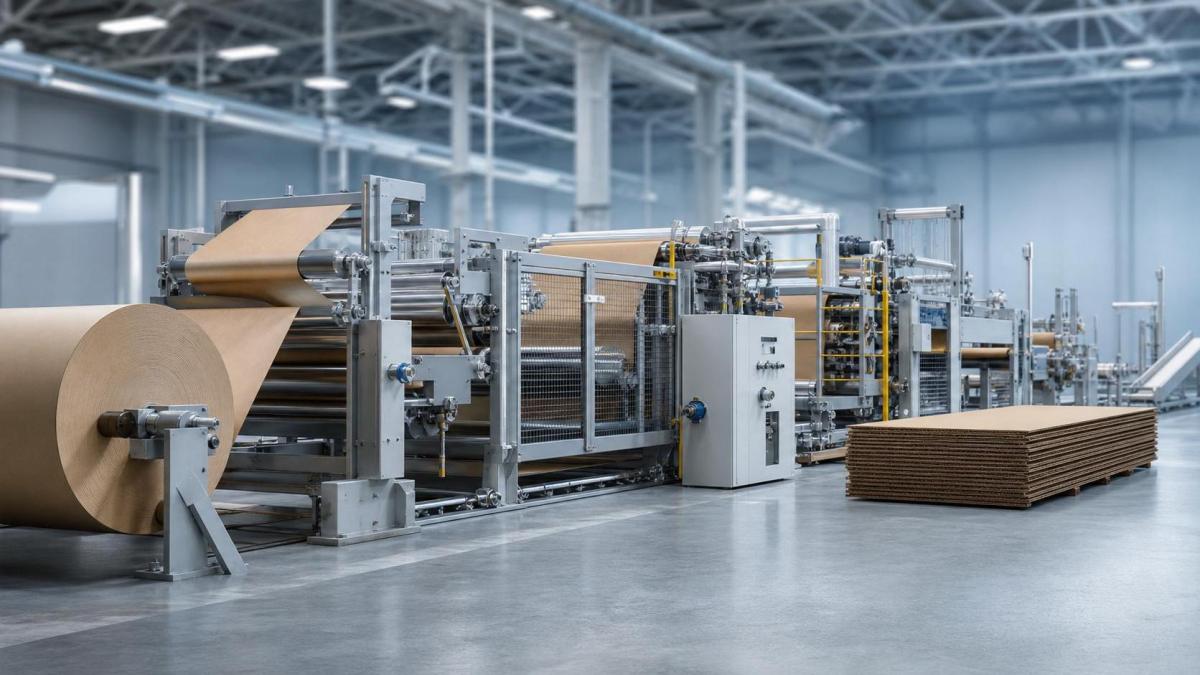
A corrugated board production line is never just a machine purchase. It shapes delivery speed, board stability, energy use, and the economics of every downstream converting step.
In real operations, corrugated board production serves very different order structures. E-commerce shippers, food packaging suppliers, and display board converters do not stress the line in the same way.
That is why line setup cannot rely on catalog speed alone. The better starting point is production mix, flute profile demand, paper grades, shift pattern, and the tolerance expected by printing and die-cutting.
PWFS tracks this wider chain closely. In packaging plants, board quality influences not only compression strength, but also offset printing consistency, die-cut accuracy, folding behavior, and waste at the folder-gluer.
A fast line with unstable moisture can undermine the visual precision of consumer packaging. A lower-speed line with balanced heat, glue, and web control can create a stronger total system return.
The first judgment is not machine size, but order pattern
Before selecting machines, it helps to map how corrugated board production will actually run over twelve to twenty-four months. Initial demand often looks simpler than the eventual mix.
Plants serving long runs of regular shipping cases usually prioritize uptime, reel change efficiency, and stable single-wall output. Plants handling frequent SKU changes need a different balance.
Short-run and mixed-flute environments care more about changeover time, adhesive response, order queue logic, and how quickly operators can stabilize board after a recipe switch.
A common mistake is sizing capacity from peak monthly tonnage only. That can produce a line that looks powerful on paper, yet struggles with scheduling friction and hidden waste.
More useful planning compares line speed under real board combinations, not empty theoretical speed. Wet-end behavior, splice quality, and heating response often define true output.
Typical setup logic in different operating conditions
This comparison shows why corrugated board production planning is an application decision first, and a machinery decision second.
Core machines matter differently in each production scene
Most lines include reel stands, splicers, preheaters, single facers, bridge control, glue units, double backer, slitter scorer, cutoff, stacker, and process control systems.
Yet the risk is assuming each module contributes equally. In practical corrugated board production, some stations become the real bottleneck depending on product mix.
When speed is the target
For transport packaging with long runs, single facer stability becomes decisive. Poor flute formation at speed quickly creates crush, weak bonding, and uneven board profile.
In this case, reel change automation, steam quality, and tension control usually matter more than adding headline line width without enough upstream discipline.
When printability is the target
For laminated displays or offset-litho mounted packaging, the double backer and moisture profile deserve extra attention. Small flatness variation can become visible after printing.
PWFS often links this point to the broader packaging chain. Board that leaves the corrugator slightly unstable may still pass inspection, yet fail during precise downstream registration.
When order flexibility is the target
Regional plants serving varied customers usually gain more from control architecture than from absolute top speed. Fast recipe recall and consistent slitting accuracy reduce cumulative waste.
That is especially true when corrugated board production feeds automated die-cutters and folder-gluers, where dimensional drift can multiply into jam risk and glue defects.
Capacity planning should reflect usable output, not brochure output
In many projects, nominal line speed receives too much weight. Real capacity depends on product mix, maintenance intervals, paper variability, shift skill, and planned versus unplanned stoppage.
A more grounded corrugated board production model uses three layers: installed capacity, sustainable running capacity, and saleable good-board capacity.
- Installed capacity measures what the line could produce under ideal conditions.
- Sustainable running capacity reflects normal speed with real paper combinations and routine stoppages.
- Saleable good-board capacity removes scrap, warp rejects, bonding failures, and off-size loss.
The last figure is the one that protects margins. It also helps prevent overinvestment in width or speed that the rest of the plant cannot absorb.
Where planning often goes wrong
One frequent misread is treating all medium papers the same. Recycled liners, virgin kraft, and lightweight grades react differently to heat, tension, and adhesive load.
Another is ignoring downstream rhythm. If printing, die-cutting, or stacking cannot absorb the board flow, extra corrugated board production speed does not create real throughput.
Quality risks usually appear before commissioning reports show trouble
Most board defects are not random. They begin with a mismatch between paper condition, steam balance, flute pressure, glue application, and operator response time.
In actual corrugated board production, the highest-cost defects are often the least dramatic at first glance. Slight warp, uneven bond, and caliper drift can travel far downstream.
Risks that deserve early control
- Warp caused by uneven heating, moisture imbalance, or poor bridge coordination.
- Delamination linked to glue viscosity drift, contaminated starch, or unstable nip conditions.
- Flute crush from aggressive pressure, dull rolls, or uncontrolled web tension.
- Score cracking driven by bad caliper control and unsuitable paper selection.
- Dimensional variation that disrupts die-cutting, printing registration, and box squareness.
These risks should be linked to measurable thresholds before startup. Waiting for customer complaints is too late, especially in export or branded packaging chains.
What to confirm before line freeze and installation
The best corrugated board production projects are disciplined before steel arrives. They align utilities, recipe logic, maintenance access, and data visibility with the intended operating model.
Steam quality, condensate recovery, starch preparation, floor logistics, dust extraction, and reel transport should be reviewed as part of one system, not separate tasks.
It also helps to define acceptance criteria that reflect downstream use. A board line feeding high-precision printing needs tighter flatness and moisture standards than basic transit packaging.
A practical decision checklist
The strongest setup is the one that stays balanced under change
Corrugated board production rarely stands still. E-commerce demand shifts, paper sourcing changes, and downstream packaging expectations become stricter over time.
A resilient line setup therefore balances machine capability, realistic capacity, and quality control discipline. That balance matters more than chasing the most aggressive specification.
The next useful step is to map actual order scenarios, compare them against usable output, and define quality thresholds that match the full packaging chain.
With that structure in place, corrugated board production becomes easier to scale, easier to stabilize, and less exposed to hidden commissioning risk.
Related News
Get weekly intelligence in your inbox.
No noise. No sponsored content. Pure intelligence.
