
Corrugated Box Manufacturing Equipment Cost Breakdown: Machines, Utilities, and Changeover
Where does corrugated box manufacturing equipment cost really go?
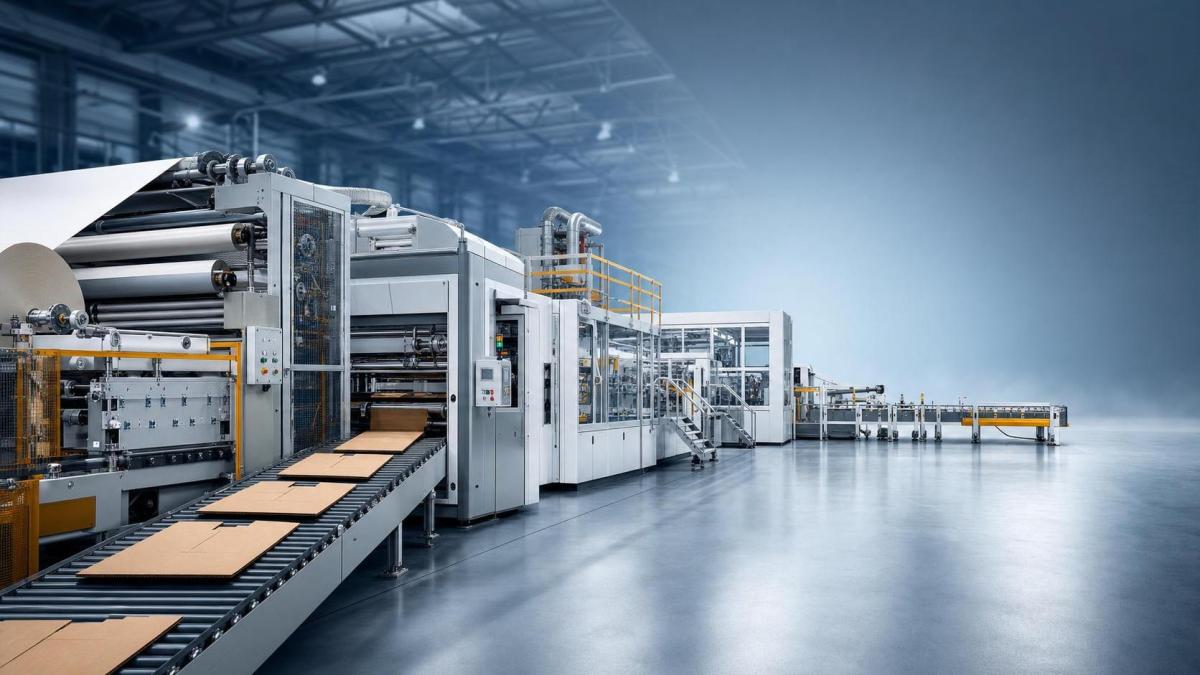
Before any approval, the useful question is not the sticker price. It is the full cost path behind corrugated box manufacturing equipment.
In practical terms, a box line spends money in three places. Capital goes into machines. Operating budget goes into utilities and labor. Profit often disappears during changeovers.
That is why two lines with similar output claims can produce very different returns. One may run cheaply but switch slowly. Another may consume more power yet waste less board.
PWFS often tracks this pattern across corrugated board lines, offset presses, and folder-gluers. The same lesson appears repeatedly: precision, uptime, and flexibility shape cost more than brochure speed.
For shipping-box production, the most common cost buckets are easier to understand when separated into machine scope, plant support, and transition losses between jobs.
Which machines drive the biggest share of investment?
A common search starts with one concern: which part of corrugated box manufacturing equipment absorbs most of the budget?
Usually, the corrugator or board line is the capital anchor. It combines paper handling, preheating, single facer sections, glue application, double backer, drying, slitting, and cut-off.
If the operation buys sheet plant equipment instead, the cost center shifts. Flexo printing, rotary die-cutting, folder-gluing, bundling, and palletizing become the main investment stack.
The highest price elements are rarely steel alone. Automation level, registration control, servo architecture, inspection systems, and line integration usually explain the premium.
A short comparison helps frame approval discussions more clearly.
More advanced corrugated box manufacturing equipment often looks expensive upfront. Still, the premium can be justified if it removes chronic waste, labor exposure, or claim-related losses.
How much do utilities change the real operating cost?
Utilities are where many models become too optimistic. Corrugated box manufacturing equipment depends heavily on stable energy and process support.
Steam is often the first blind spot. Corrugated board quality depends on heat balance. Undersized boilers or unstable condensate recovery create warping, poor bonding, and reduced speed.
Electricity is the second major variable. Servo-driven printers, vacuum systems, compressors, and conveyors can raise consumption faster than expected during peak output periods.
Compressed air matters too. It appears small in budget sheets, but leakage, pressure instability, and oversized compressors can quietly raise monthly overhead.
Water, exhaust, and glue-conditioning systems may be minor individually. Together, they affect compliance, adhesive performance, and maintenance intervals.
A useful way to review utilities is to ask whether the proposed line can hit rated output without stressing the plant infrastructure.
- Check steam demand at peak speed, not average speed.
- Verify power quality for servo-heavy sections.
- Include compressed air leakage assumptions.
- Model utility cost per thousand boxes, not per machine hour.
That last point matters. A line can look efficient by hour while becoming expensive per good box if startup scrap and partial loads are ignored.
Why do changeovers often decide the payback?
This is where many approval cases turn. Changeover loss is not only setup time. It also includes waste board, ink loss, trial sheets, labor interruption, and missed delivery windows.
In high-mix operations, corrugated box manufacturing equipment with fast recipe recall and automatic adjustment can outperform a faster machine with manual setup.
The same logic appears in other PWFS-covered sectors. A high-precision offset press or automated folder-gluer earns its premium when repeatability reduces transition friction between short runs.
For corrugated work, the hidden costs usually show up in four places.
- Die and print setup time before stable output.
- Board waste during color, slot, and score correction.
- Reduced line speed on mixed job sequences.
- Planning complexity when urgent orders interrupt the schedule.
If order profiles are getting shorter, changeover capability should be valued like production capacity. In some plants, it matters more than maximum speed.
A practical test is simple. Ask how many sellable boxes leave the line in a shift containing six to ten order changes. That answer is more useful than a nameplate speed claim.
What usually gets missed in a cost comparison?
The most expensive mistakes are often outside the machine quote. Corrugated box manufacturing equipment decisions should include surrounding costs that arrive later.
Installation and foundations are common omissions. Heavy lines may require floor reinforcement, steam piping changes, power distribution upgrades, and safety fencing revisions.
Spare parts strategy also matters. A cheaper machine can become costly if critical components have long lead times or depend on one overseas source.
Software integration is another quiet cost center. MES connectivity, order data preparation, barcode traceability, and remote diagnostics affect both startup speed and reporting accuracy.
Then there is training. When setup knowledge remains operator-dependent, expected savings become fragile. Standardized digital recipes reduce that risk.
The table below helps separate attractive quotes from durable economics.
How should a line or retrofit be judged more confidently?
A clean decision usually comes from three layers of comparison. First, compare machine architecture. Then compare plant readiness. Finally, compare order-mix performance.
For new lines, focus on whether corrugated box manufacturing equipment matches the target mix of board grades, print complexity, and run lengths.
For retrofits, the main question is different. The issue is whether upgrades remove the current bottleneck or simply improve one section while another remains constrained.
In actual reviews, the strongest cases usually include these checkpoints.
- A cost model based on good output, not rated speed.
- A utility map covering steam, power, air, and layout changes.
- A changeover study using real order history.
- A downtime assumption linked to service and spare parts.
- A training plan that reduces operator-to-operator variation.
PWFS intelligence is useful here because corrugated, print, and converting economics often overlap. Registration accuracy, mechanical stability, and automation discipline are not abstract features. They directly shape cost behavior.
If the next step is approval screening, build a side-by-side model around machines, utilities, and changeover losses. That view usually exposes the strongest option faster than price alone.
Related News
Get weekly intelligence in your inbox.
No noise. No sponsored content. Pure intelligence.
