
How corrugated packaging machinery affects output and waste
For enterprise decision-makers under pressure to raise throughput and control costs, corrugated packaging machinery is more than a production asset—it directly shapes output stability, material efficiency, and competitive margins.
From board forming to die-cutting and folder-gluing, every machine setting affects waste levels, labor reliance, and delivery speed.
Understanding these links is essential for building a smarter, leaner, and more profitable packaging operation.
For PWFS, this topic also connects directly with industrial intelligence, automation strategy, print precision, and flexible converting performance across modern packaging environments.
When output pressure rises, corrugated packaging machinery becomes a strategic bottleneck
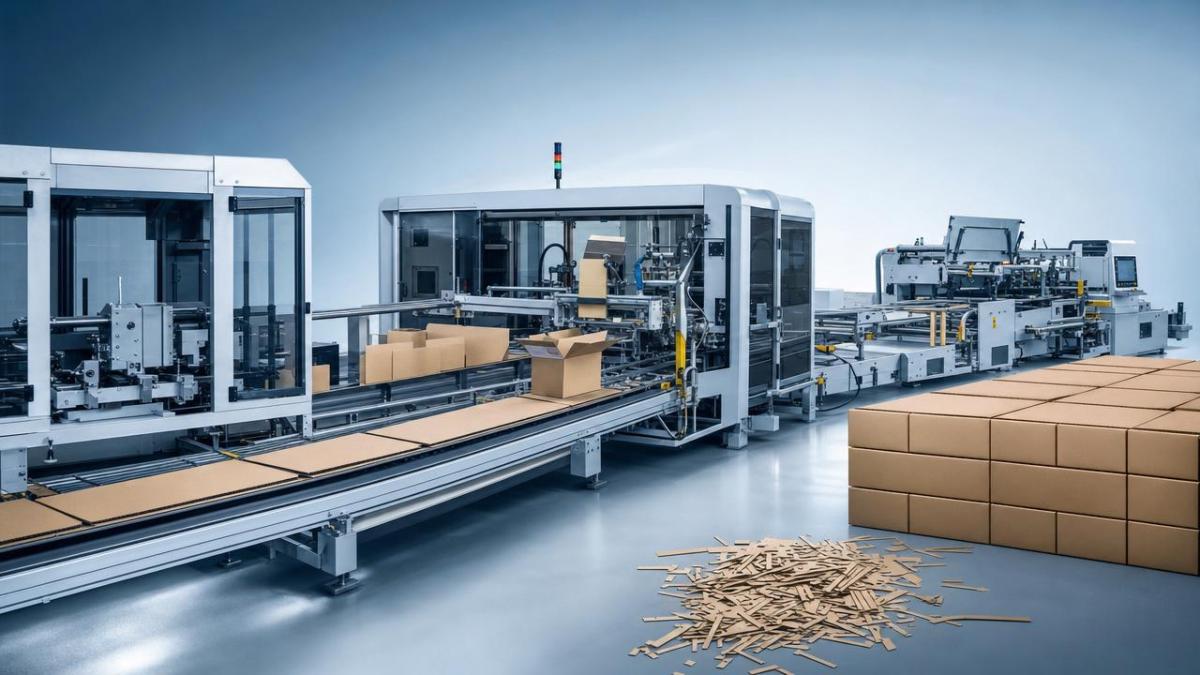
Not every facility faces the same operating pressure.
E-commerce shippers often need speed, fast changeovers, and stable board quality across high daily volumes.
Brand packaging plants usually care more about print registration, die-cut precision, and low visible defects.
Short-run custom box operations depend on flexible setups, data-driven scheduling, and lower waste during frequent order switching.
In every case, corrugated packaging machinery determines whether higher output creates profit or simply creates scrap faster.
A line that runs quickly but produces warped board, poor slotting, or glue failures will increase hidden cost per sellable box.
That is why machine performance should be judged by usable output, not only by rated speed.
In high-volume shipping box scenarios, line stability matters more than peak speed
Large logistics box demand puts the heaviest pressure on corrugated packaging machinery.
Here, board lines must maintain flute consistency, adhesive control, temperature balance, and web alignment over long runs.
If steam, traction, or glue application drifts, defects appear across thousands of sheets before operators react.
That turns a minor deviation into major waste.
Core judgment points in this scenario
- Can the corrugated packaging machinery hold board flatness at sustained speed?
- Is glue usage stable enough to avoid delamination and over-application?
- Do changeovers interrupt output too often?
- Are scrap causes visible in real time through sensors or MES data?
In this environment, uptime, repeatability, and predictive maintenance usually deliver better returns than chasing maximum machine speed.
In printed retail packaging scenarios, precision defects create expensive waste
Retail-ready corrugated packaging requires more than structural strength.
It also depends on visual quality, accurate die-cutting, clean creasing, and reliable folder-gluer performance.
In such cases, corrugated packaging machinery affects waste differently.
A board sheet may be structurally acceptable but commercially rejected because of color shift, cracking, mis-registration, or glue squeeze-out.
Waste cost rises sharply because printed work already carries higher paper, ink, plate, and finishing value.
Key signs of mismatch
- Board crush reduces print appearance and stacking strength.
- Die-cut registration drifts under speed or sheet variation.
- Folder-gluer alignment fails on complex geometries.
- Manual correction slows throughput and raises labor dependency.
For these operations, integrated print-to-convert control is often more important than standalone machine efficiency.
In short-run and custom order scenarios, flexibility drives both output and waste control
Many packaging businesses now face smaller batches and more SKU variation.
This is where corrugated packaging machinery must support rapid setup, recipe storage, and accurate repeat jobs.
If setup requires long manual intervention, productive time collapses even if the machine is fast during full run mode.
Waste also rises during each startup because operators need trial sheets to regain registration and glue accuracy.
Digital job management, servo positioning, auto-feeding correction, and memory-based setup reduce this loss significantly.
What to verify in flexible production
- Average changeover time between jobs.
- Startup scrap per order.
- Operator dependence for alignment and correction.
- Software connectivity with ERP, CAD, and MES.
Different operating scenarios need different corrugated packaging machinery priorities
The same equipment logic does not fit every business model.
This comparison shows why corrugated packaging machinery should be selected and optimized by use case, not by brochure speed alone.
How to match machinery decisions with real production needs
A useful assessment starts with waste mapping.
Measure where scrap appears: board formation, printing, die-cutting, folding, gluing, stacking, or changeover.
Then compare that pattern with machine capability gaps.
Practical adaptation suggestions
- For recurring board defects, improve heat, moisture, tension, and adhesive control first.
- For converting rejects, review die condition, feeder accuracy, and servo calibration.
- For labor-heavy workflows, introduce auto set functions and digital job recipes.
- For unplanned downtime, use predictive maintenance and component life tracking.
- For mixed-order production, prioritize connected corrugated packaging machinery with MES visibility.
PWFS consistently sees the best performance where machine hardware, software, and process discipline are upgraded together.
Common mistakes that distort output and waste expectations
One common mistake is treating machine speed as the main indicator of value.
If scrap rises with speed, true output may actually decline.
Another mistake is ignoring how upstream board quality affects downstream converting performance.
Die-cutters and folder-gluers cannot consistently rescue unstable material.
A third mistake is underestimating setup waste in multi-SKU production.
Frequent small jobs can consume capacity invisibly if corrugated packaging machinery lacks smart automation.
Some operations also delay data integration.
Without live process data, recurring waste appears random even when patterns are highly measurable.
The next step is to evaluate corrugated packaging machinery by usable output
The real question is not whether corrugated packaging machinery can run fast.
The real question is whether it can deliver stable, saleable output with predictable waste under your actual operating scenario.
Start with three actions.
- Track usable output, setup time, and scrap by machine stage.
- Separate long-run, printed, and custom-order scenarios in performance review.
- Compare losses with automation, precision, and connectivity upgrade options.
When these steps are grounded in scenario-based analysis, corrugated packaging machinery becomes a measurable driver of margin improvement.
That is also where PWFS delivers value: connecting equipment physics, process intelligence, and flexible manufacturing decisions into practical competitive advantage.
Related News
Get weekly intelligence in your inbox.
No noise. No sponsored content. Pure intelligence.
