
Why are industrial corrugated board lines getting faster?
As e-commerce volumes surge and packaging lead times shrink, industrial corrugated board lines are getting faster to meet rising output, quality, and cost-efficiency demands. For business decision-makers, this is more than a speed story—it reflects a strategic shift toward automation, energy optimization, and smarter production control that directly shapes competitiveness in modern packaging manufacturing.
Why does faster line speed matter beyond simple output?
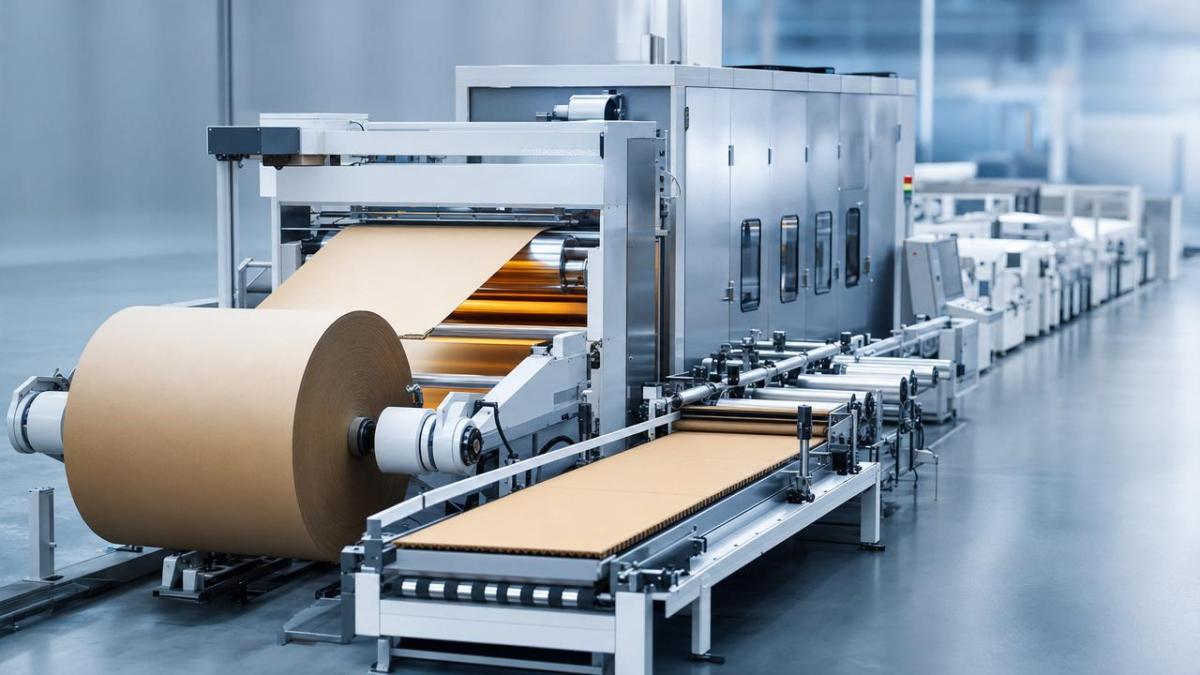
For buyers, plant managers, and investors, higher speed in industrial corrugated board lines is not just about making more square meters per hour. It changes order economics, labor allocation, downtime exposure, and customer service capability.
A modern corrugator now has to process wider product mixes, shorter runs, and tighter quality tolerances than in the past. The old model of simply adding shifts or labor no longer solves the core problem.
Speed becomes valuable only when it is stable, sellable, and repeatable. A board line that runs faster but creates warp, delamination, flute crush, or high trim loss can damage margins instead of improving them.
What business pressure is driving this change?
- E-commerce and omnichannel retail require faster replenishment cycles and more frequent SKU changes.
- Converters face rising energy, paper, labor, and maintenance costs, making low-speed inefficiency harder to absorb.
- Brand owners expect consistent board quality because downstream printing, die-cutting, and box performance depend on it.
- Regional competition is intensifying, so service lead time becomes a commercial weapon, not just an operations metric.
This is where PWFS brings value. Our intelligence framework connects corrugation mechanics, converting efficiency, and capital decision logic so equipment manufacturers and packaging businesses can evaluate speed as part of a full production system, not as an isolated machine number.
What makes industrial corrugated board lines faster today?
The acceleration of industrial corrugated board lines comes from coordinated improvements across thermal control, mechanical stability, automation architecture, and digital process management. It is rarely the result of one dramatic innovation.
Core technical drivers behind higher speed
- Improved steam and condensate management allows more stable heat transfer, helping liner and medium reach target moisture and bonding conditions faster.
- More precise glue application systems reduce overuse while maintaining adhesion at higher running speeds.
- Servo-driven section control improves synchronization in splicers, bridges, slitters, scorers, and cut-off units.
- Better web tension control lowers break risk and helps maintain flute geometry during acceleration and deceleration.
- Real-time sensors and MES connectivity shorten response time when moisture, warp, temperature, or speed drift begins.
In practical terms, faster lines are smarter lines. They increasingly rely on closed-loop feedback rather than operator intuition alone. That matters to decision-makers because repeatability is what protects return on investment.
Where speed gains are actually coming from
Many executives assume the wet end alone determines line speed. In reality, bottlenecks often shift between paper reel logistics, preheater setup, glue kitchen consistency, drying capacity, slitting changeovers, and cut-off responsiveness.
That system-level view is central to PWFS coverage. The same industrial logic that governs color register in offset printing or kinematic stress in die-cutting also applies to corrugated board lines: speed rises only when process variables move in balance.
Which performance indicators should buyers track before approving a faster line?
When evaluating industrial corrugated board lines, decision-makers should avoid being impressed by maximum speed claims alone. A more useful approach is to compare measurable operating indicators that affect commercial output.
This table helps frame a more disciplined investment discussion. A faster industrial corrugated board line should increase sellable output per shift, not just theoretical meters per minute on a brochure.
Executives should also ask whether the upgraded line can support downstream converting rhythm. If corrugation outpaces printing, die-cutting, or folder-gluing, inventory congestion may simply move to another department.
How does automation change the economics of industrial corrugated board lines?
Automation is the hidden engine behind most speed gains. It reduces variability, shortens reaction time, and lowers dependence on scarce operator experience. For enterprise decision-makers, that translates into more predictable planning.
The biggest economic benefits usually come from five areas
- Reduced setup loss through recipe-based control and faster parameter recall.
- Lower labor intensity because fewer manual interventions are needed at speed transitions and quality corrections.
- Improved energy efficiency through better steam, preheat, and traction coordination.
- Higher uptime because predictive maintenance flags bearing, belt, glue, or thermal issues earlier.
- Better order traceability when the line connects with ERP or MES for cost analysis and scheduling feedback.
PWFS follows this broader Industry 4.0 transition closely. We do not treat corrugated board production as an isolated workshop. We examine how digital workflows, high-speed conversion, and flexible manufacturing interact across paper packaging and wood-based industries.
Why many projects underperform after installation
New industrial corrugated board lines sometimes disappoint because plants upgrade equipment without upgrading process discipline. Weak steam systems, inconsistent paper storage conditions, poor glue preparation, and disconnected production data can all cap actual performance.
That is why procurement should include implementation planning, training scope, spare parts strategy, and integration mapping. Fast hardware alone does not deliver fast operations.
What should you compare when selecting among line configurations?
Different industrial corrugated board lines fit different business models. A plant serving heavy brown-box volume has different priorities from a converter handling diverse retail-ready packaging or short-run fulfillment cartons.
Selection should start with order structure, customer expectations, utility infrastructure, and workforce capability. The best line is the one that matches your profit model, not the one with the highest advertised top speed.
A practical procurement checklist
- Check whether your steam, condensate, compressed air, and electrical systems can support higher line speed reliably.
- Review product mix by flute type, board grade, order size, and downstream process requirement.
- Confirm what performance data comes from reference production rather than showroom testing.
- Assess service response, spare parts planning, and software support, especially for automation-heavy installations.
What risks do companies overlook when pushing for faster corrugated production?
The most common mistake is assuming speed automatically lowers unit cost. In corrugated manufacturing, hidden losses can grow quickly if process control lags behind machine capability.
Frequent blind spots in investment planning
- Ignoring humidity and paper conditioning, which can destabilize bonding and flatness at higher speeds.
- Underestimating downstream bottlenecks, causing WIP accumulation and scheduling disruption.
- Focusing on purchase price while overlooking lifecycle costs such as energy, glue, wear parts, and software maintenance.
- Skipping operator upskilling, which raises startup losses and extends the stabilization period after commissioning.
Business leaders should also consider compliance and traceability expectations. While corrugated board lines themselves are not usually sold through one certification lens, packaging supply chains increasingly care about material traceability, food-contact suitability where relevant, and auditable process consistency.
PWFS monitors these cross-functional requirements because packaging competitiveness now sits at the intersection of mechanics, digital control, and compliance intelligence.
FAQ: what do decision-makers ask most about industrial corrugated board lines?
How fast should industrial corrugated board lines really run for a mid-sized plant?
The right answer depends on order mix, board grades, shift structure, and downstream conversion capacity. A mid-sized factory often gains more from stable speed, low waste, and fast changeovers than from pursuing the highest possible top speed.
Is a faster line always more energy efficient?
Not automatically. Efficiency improves when steam control, traction balance, and run scheduling are optimized. A poorly managed fast line can consume more energy per sellable unit than a well-managed moderate-speed line.
What is the first sign that a plant is not ready for a higher-speed upgrade?
Recurring issues with moisture consistency, glue preparation, paper handling, or unplanned stoppages usually signal weak process foundations. Those problems should be addressed before capacity expansion is expected to pay back.
How important is MES integration for industrial corrugated board lines?
It becomes increasingly important as order complexity rises. MES integration helps track performance by job, analyze waste, improve scheduling, and link corrugation speed decisions with broader factory profitability.
Why are faster industrial corrugated board lines a long-term strategic trend?
Demand patterns are shifting toward shorter lead times, broader SKU diversity, and better packaging performance. That means future-ready corrugation lines must combine speed with flexibility, data visibility, and quality assurance.
The same industrial evolution can be seen across offset presses, die-cutters, folder-gluers, and CNC woodworking systems. Markets reward manufacturers that can move faster without losing precision. Corrugated production is following that exact path.
What this means for investment timing
If your current line struggles with repeat orders, waste control, labor dependency, or downstream coordination, the issue may not be capacity alone. It may be that your production architecture no longer fits current customer expectations.
In that case, reviewing industrial corrugated board lines through a system lens can reveal where speed, automation, and process redesign will create the strongest operational return.
Why choose us for corrugation intelligence and project evaluation?
PWFS helps enterprise decision-makers evaluate industrial corrugated board lines in the context of the whole packaging value chain. We connect corrugation mechanics, print compatibility, converting demands, automation logic, and capital planning into one decision framework.
You can consult us for line parameter review, product mix matching, automation level assessment, expected delivery rhythm, MES integration considerations, and quality-risk checkpoints before procurement or upgrade decisions.
If you are comparing suppliers, planning a new facility, or testing whether a faster line will truly improve margins, contact us with your board grades, order structure, target output, utility conditions, and downstream process setup. We can help structure a more informed selection path, from technical benchmarking to quotation discussion and implementation priorities.
Related News
Get weekly intelligence in your inbox.
No noise. No sponsored content. Pure intelligence.
