
When does precision cutting equipment justify a higher budget?
For finance approvers, a higher budget for precision cutting equipment is justified when measurable gains in yield, uptime, material savings, and order flexibility clearly outweigh the upfront cost.
In packaging and woodworking, the right machine does more than cut accurately. It protects margins, reduces rework, supports premium jobs, and strengthens competitiveness in customization-driven markets.
For PWFS, this question matters across corrugated lines, die-cutting systems, folder-gluers, offset workflows, CNC routers, and edge processing. Budget decisions should follow production reality, not brochure claims.
When production pressure makes precision cutting equipment worth the premium
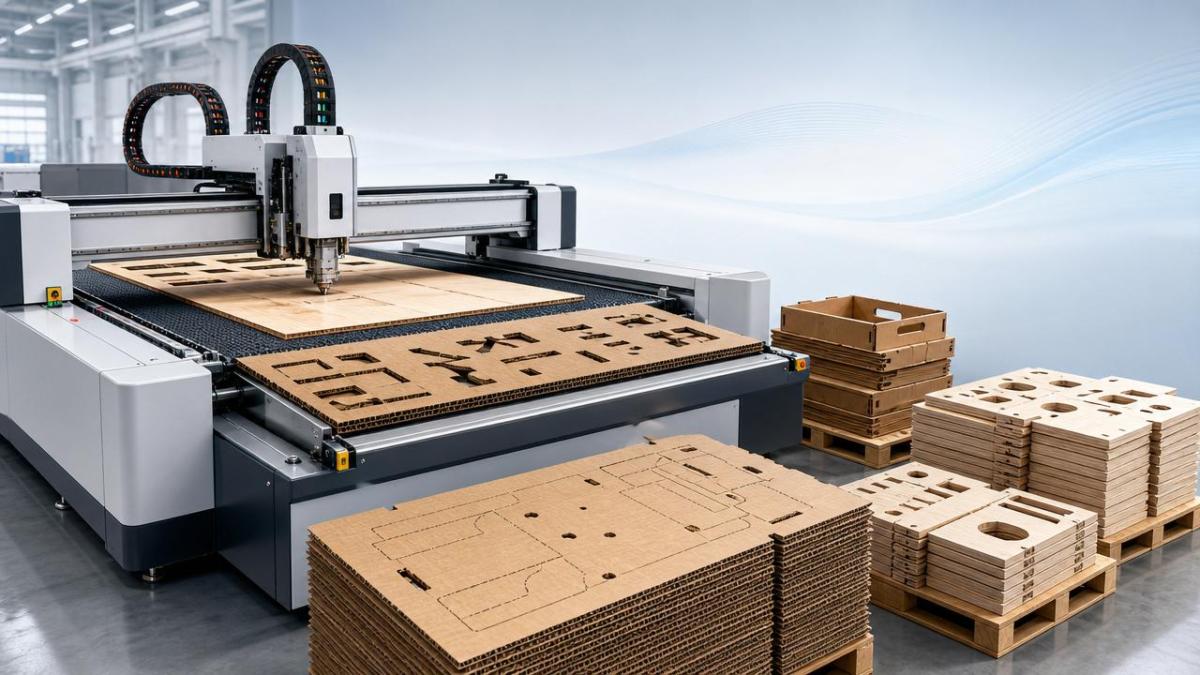
A higher investment in precision cutting equipment becomes rational when accuracy problems already create visible business losses. Scrap, callbacks, bottlenecks, and unstable delivery are the first warning signals.
In corrugated packaging, poor cut quality can affect slotting, folding, glue alignment, and box strength. In woodworking, it can distort edge banding, drilling accuracy, and final assembly consistency.
If a line handles premium printed packaging, short-run variation, or custom furniture parts, precision cutting equipment often pays back faster than standard machines.
The clearest business triggers
- Material waste is rising above planned levels.
- Rework consumes valuable labor hours.
- Tool wear causes unstable dimensions.
- Orders increasingly require tighter tolerances.
- Changeovers are too slow for mixed production.
- Machine downtime disrupts delivery promises.
Which application scenarios justify higher-end precision cutting equipment fastest?
Not every workshop needs the same level of precision cutting equipment. The budget case depends on order structure, tolerance sensitivity, material value, and downstream process dependence.
Scenario 1: High-volume corrugated box production
In corrugated board converting, speed alone is not enough. Precision cutting equipment protects flute integrity, slot position, stacking quality, and folding performance at scale.
A premium machine is justified when minor dimensional drift creates pallet instability, weak box geometry, or downstream folder-gluer rejection. Small errors multiply quickly in mass production.
Scenario 2: Premium offset-printed packaging and die-cut jobs
Luxury cartons, cosmetics boxes, and pharmaceutical packaging require registration integrity and clean edges. Precision cutting equipment supports visual quality as much as structural accuracy.
When printed graphics must align exactly with cut lines and folds, higher-end systems reduce make-ready loss and preserve brand appearance. That directly affects customer retention and margin quality.
Scenario 3: Custom furniture and CNC woodworking
Whole-house customization depends on precise nesting, drilling, routing, and repeatability. Precision cutting equipment becomes essential when one board error disrupts assembly across many unique parts.
For CNC routers, better kinematics, spindle stability, and software integration reduce chipping, mismatch, and recuts. Premium capability is especially valuable with five-axis complexity and short delivery cycles.
Scenario 4: Composite materials, coated boards, and sensitive surfaces
Decorative panels, laminated boards, and specialty substrates punish low-grade cutting performance. Precision cutting equipment minimizes tear-out, heat damage, burrs, and visible edge defects.
If the surface finish carries premium value, cleaner cutting often saves more money than the machine costs. Surface damage can erase the profit of an otherwise successful order.
How demand differences change the budget logic
The same precision cutting equipment may be excessive in one setting and essential in another. The key is matching machine capability to production risk and revenue opportunity.
Questions that sharpen the decision
- Does one cutting error cause losses in printing, folding, drilling, or edge banding?
- Are tolerances tightening because customers demand better finish or fit?
- Is short-run customization increasing setup frequency?
- Are material costs too high to tolerate frequent scrap?
- Will better data integration improve scheduling and traceability?
Practical signs that precision cutting equipment will deliver ROI
The strongest budget case combines quality improvement with operational speed. Precision cutting equipment should not be judged on accuracy alone, but on total process economics.
Look at four measurable areas
- Yield improvement: fewer rejected sheets, panels, or parts.
- Uptime gain: less unscheduled maintenance and tool-related stoppage.
- Material savings: better nesting, reduced trim loss, cleaner cuts.
- Order flexibility: faster changeovers and smoother mixed-batch scheduling.
If a machine improves only one metric, the premium may be hard to justify. If it improves all four, the investment case becomes much stronger.
Software and automation matter too
Modern precision cutting equipment often includes optimization software, servo control, condition monitoring, and MES connectivity. These features reduce hidden losses that manual operations cannot track well.
For PWFS-covered sectors, the best systems connect digital design, machine execution, and quality verification. That is especially valuable in packaging graphics and custom furniture workflows.
How to match machine level to real production scenarios
The right choice is not always the most expensive precision cutting equipment. The right choice is the model whose precision, speed, and automation fit actual order complexity.
Common misjudgments that weaken the investment decision
One frequent mistake is comparing machine prices without pricing process losses. Cheap cutting capacity may look efficient until scrap, overtime, and complaint handling are counted.
Another mistake is buying advanced precision cutting equipment for unstable upstream data. Poor design files, weak material control, or inconsistent tooling can limit machine performance.
It is also risky to ignore downstream dependence. In packaging, inaccurate cuts can affect folding and gluing. In woodworking, they can compromise edge banding and final installation.
What often gets overlooked
- Tooling quality and maintenance discipline
- Operator training and parameter management
- Material variation between suppliers or batches
- Data integration with scheduling and traceability systems
- Energy use and lifecycle service support
A practical next step before approving a higher budget
Build the case around three months of evidence. Track reject rate, downtime, setup time, material waste, and order mix. Then estimate the financial effect of better precision cutting equipment.
Next, test sample jobs that represent real complexity. Include corrugated conversion, printed packaging, or custom panel work. Compare quality stability, speed, and downstream fit.
Finally, review whether the machine supports future demand. If customization, traceability, and automation are rising, precision cutting equipment should be evaluated as a strategic platform, not a standalone expense.
When measurable process gains, premium job access, and digital readiness align, the higher budget is not excessive. It is the cost of staying accurate, efficient, and relevant in modern packaging and woodworking production.
Related News
Get weekly intelligence in your inbox.
No noise. No sponsored content. Pure intelligence.
