
Is automated die-cutting worth the setup complexity?
For enterprise decision-makers, automated die-cutting is not just a productivity upgrade—it is a strategic choice that affects throughput, labor dependency, quality consistency, and long-term ROI. While the setup complexity can seem daunting, the real question is whether the gains in speed, precision, and scalable packaging output outweigh the implementation effort in today’s competitive manufacturing landscape.
When is automated die-cutting worth the setup complexity?
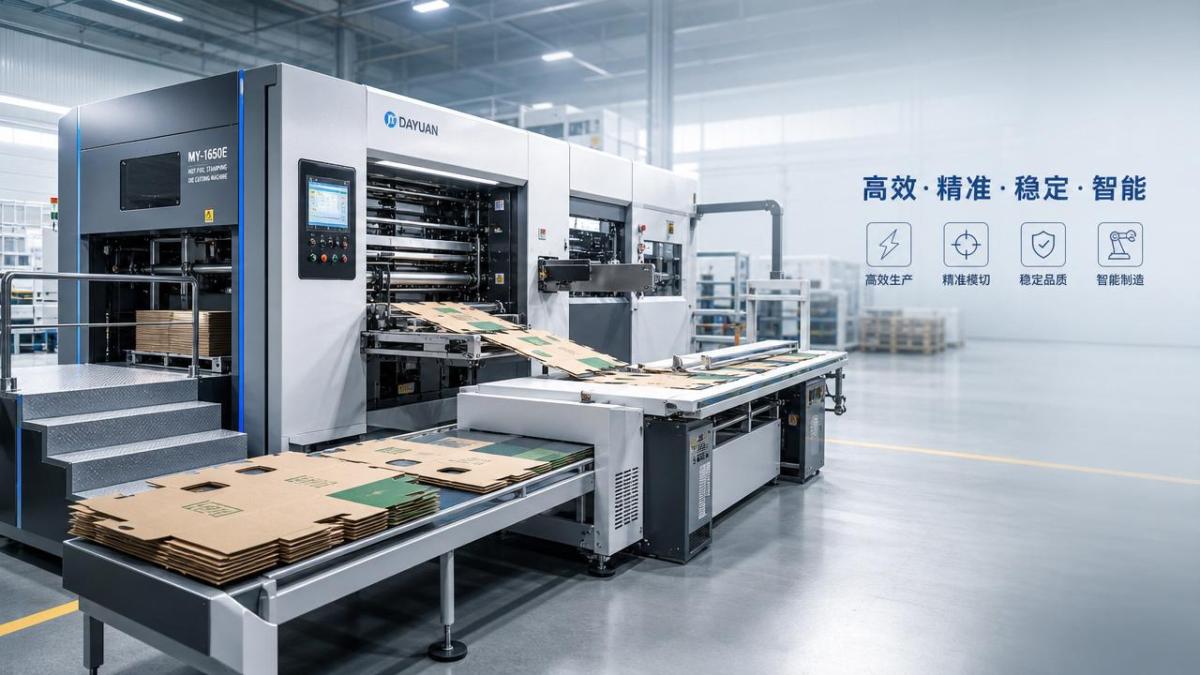
For many packaging and print manufacturers, the answer depends less on the machine itself and more on production context. Automated die-cutting becomes attractive when order volume is rising, SKU variation is increasing, and customers demand tighter delivery windows with fewer defects.
In corrugated, carton, pharmaceutical, cosmetic, tobacco, and e-commerce packaging, even small inefficiencies in make-ready, registration, stripping, or blank transfer can compound into costly downtime. That is why automated die-cutting often shifts from a technical upgrade to a board-level investment decision.
- If your plant runs repeated medium-to-high volumes, automation can reduce labor dependency and stabilize output across shifts.
- If your customers require faster replenishment and shorter lead times, automated die-cutting can improve scheduling confidence.
- If waste, changeover errors, or quality claims are eating margin, a more integrated die-cutting workflow can directly protect profitability.
PWFS tracks this issue from the broader paper and wood flexible manufacturing perspective. In real factories, automated die-cutting does not operate in isolation. Its value depends on how well it connects with corrugated board quality, offset print registration, folder-gluer speed, MES visibility, and downstream packing rhythm.
What setup complexity actually includes
Decision-makers sometimes overfocus on purchase price and underfocus on implementation friction. The setup complexity of automated die-cutting usually includes process engineering, operator training, tooling management, material consistency, and digital data flow.
The main sources of complexity
- Prepress and design alignment: carton structure, crease rules, stripping layout, and print-to-cut registration must match tightly.
- Tooling preparation: dies, counterplates, waste removal tools, and blanking tools require organized storage and accurate setup discipline.
- Machine integration: feeder, register table, cutting section, stripping, and delivery need stable coordination at target production speed.
- Workforce transition: manual expertise remains important, but the skill profile shifts toward data interpretation, setup verification, and preventive maintenance.
- Production management: scheduling rules must account for run length, substrate variation, and die change frequency to unlock automation value.
The complexity is real, but it is also manageable when treated as a system project rather than a single-machine purchase. This is where many enterprises either succeed quickly or struggle for months.
Manual vs automated die-cutting: where the business case changes
The table below helps enterprise buyers compare manual or semi-manual workflows with automated die-cutting under practical operating conditions.
The business case changes when your bottleneck is no longer finding orders but fulfilling them profitably and predictably. Automated die-cutting is especially compelling when quality claims, overtime costs, and missed shipment windows are more expensive than the implementation effort.
Which production scenarios benefit most from automated die-cutting?
Not every plant needs the same automation level. The strongest returns usually appear in packaging segments where throughput, geometry accuracy, and downstream line balance are commercially critical.
The following scenario table can help management teams decide whether automated die-cutting fits their order structure and growth plan.
In other words, automated die-cutting rewards factories that already understand process discipline or are ready to build it. It is not just about machine speed. It is about synchronized production.
What technical and operational metrics should decision-makers review?
Before approving investment, management should define measurable evaluation criteria. A machine can look impressive during a demonstration and still fail to fit your factory reality if the wrong metrics are prioritized.
Core metrics to verify
- Actual throughput under your substrate range, not only top mechanical speed under ideal sheets.
- Average make-ready time for repeat jobs and new jobs, including die changes and register adjustment.
- Registration stability, stripping cleanliness, and blank transfer reliability at production speed.
- Compatibility with upstream offset or corrugated line output and downstream folder-gluer takt time.
- Tooling availability, spare parts response, maintenance accessibility, and operator learning curve.
PWFS emphasizes cross-process evaluation because die-cutting performance depends heavily on the entire production chain. A high-precision offset press can only create value if die-cutting preserves registration integrity. Likewise, fast cutting matters little if folder-gluer performance collapses due to unstable blank quality.
How to calculate ROI beyond machine price
A narrow capital-expenditure view often leads to weak decisions. The true ROI of automated die-cutting should include labor, waste, throughput, scheduling reliability, rework, and customer retention impact.
A practical ROI checklist
- Estimate annual labor savings by comparing current staffing per shift with projected staffing under automated die-cutting.
- Measure recoverable capacity from faster changeovers and reduced stoppages, then convert that into additional billable output.
- Quantify scrap reduction from better registration, cleaner stripping, and more repeatable setup.
- Include hidden gains such as fewer urgent subcontracting needs, lower overtime pressure, and more reliable delivery performance.
- Offset these benefits against tooling, training, floor space adaptation, maintenance planning, and digital integration costs.
In many cases, the strategic return is as important as the financial return. Automated die-cutting can help a factory accept more complex jobs, protect margins on repeat business, and reduce vulnerability to labor shortages. These are not secondary benefits; they often justify the project.
Common buying mistakes that make automated die-cutting underperform
The most expensive mistake is not overbuying. It is buying automation without process readiness. When decision-makers treat automated die-cutting as a standalone asset, utilization and yield usually suffer.
Frequent mistakes to avoid
- Choosing based on maximum speed only, without validating stable speed under your real paperboard or corrugated grades.
- Ignoring die and tooling management, which can erase make-ready gains.
- Underestimating operator transition and maintenance discipline after installation.
- Failing to map bottlenecks upstream and downstream, creating line imbalance instead of end-to-end productivity.
- Treating data integration as optional, even when output planning depends on ERP or MES visibility.
This is why intelligence-led evaluation matters. PWFS brings together packaging process knowledge, motion science understanding, and investment judgment to help manufacturers avoid expensive mismatches between machine capability and factory conditions.
What standards and compliance factors should be considered?
For export-oriented plants and regulated packaging sectors, automated die-cutting decisions should also consider compliance readiness. The machine itself is only one part of a compliant production system.
- Printed packaging buyers may require traceability aligned with FSC chain-of-custody expectations where applicable.
- Food and pharmaceutical packaging often demand tighter control over material handling, ink migration considerations, and clean production procedures.
- Machine safety, guarding, electrical conformity, and documented maintenance procedures should match destination market expectations.
- Quality records for setup, inspection, and job repeatability become more important as automation scales output.
Enterprises that plan ahead on compliance usually gain smoother customer audits and lower commercial friction. That is especially relevant for international packaging suppliers serving high-value brands.
FAQ: key questions before investing in automated die-cutting
Is automated die-cutting suitable for short runs?
It can be, but only if changeovers are well organized and job data is standardized. Plants with chaotic tooling storage or inconsistent prepress files may find short-run economics weaker than expected. For short runs, setup discipline matters even more than peak speed.
How much operator skill is still needed after automation?
A lot, but the skill type changes. You need fewer hands for repetitive handling, yet more capability in setup validation, troubleshooting, quality interpretation, and preventive maintenance. Automated die-cutting reduces dependence on manual repetition, not on operational intelligence.
What should be reviewed during supplier evaluation?
Ask for performance under substrate conditions close to yours. Review make-ready logic, stripping quality, spare parts support, training scope, and integration possibilities with your current workflow. Also examine whether the supplier understands your downstream folder-gluer or packing constraints.
How long does implementation usually take?
It varies by line complexity, tooling readiness, operator background, and digital integration needs. A realistic plan includes installation, commissioning, training, trial production, process tuning, and stabilization. The machine may run early, but stable commercial output takes longer if preparation is weak.
Why many decision-makers still choose automated die-cutting
Despite the setup complexity, automated die-cutting continues to gain ground because market pressure is moving in one direction: more SKUs, faster replenishment, tighter labor markets, and less tolerance for defects. Factories that stay heavily manual may preserve flexibility in the short term but lose competitiveness in cost control and delivery reliability.
For business leaders, the best question is not simply whether automated die-cutting is worth it. The better question is whether your current workflow can support future growth without it. In many packaging environments, the answer is increasingly no.
Why work with PWFS on automated die-cutting evaluation?
PWFS looks beyond brochures and headline speeds. We connect die-cutting decisions with corrugated board performance, offset registration physics, folder-gluer rhythm, MES visibility, and the commercial realities of modern packaging production.
- We can help you confirm whether automated die-cutting matches your current order mix and target capacity.
- We can support product selection logic based on process fit, not only machine specification sheets.
- We can discuss delivery timelines, implementation sequencing, and what preparation is needed before installation.
- We can review compliance-sensitive requirements such as traceability, packaging application expectations, and production documentation needs.
- We can help structure quotation communication around throughput goals, tooling assumptions, training scope, and customization priorities.
If your team is comparing automated die-cutting options, planning a line upgrade, or questioning whether setup complexity will delay ROI, contact us with your substrate range, box or carton types, expected output, changeover frequency, and downstream process conditions. That allows a more useful discussion around parameter confirmation, model selection, delivery planning, certification expectations, sample support logic, and investment prioritization.
Related News
Get weekly intelligence in your inbox.
No noise. No sponsored content. Pure intelligence.
