
When Industrial Cutting Systems Reduce Rework Risk
For quality control and safety managers, rework is more than a cost issue—it signals unstable processes, operator exposure, and hidden compliance risk.
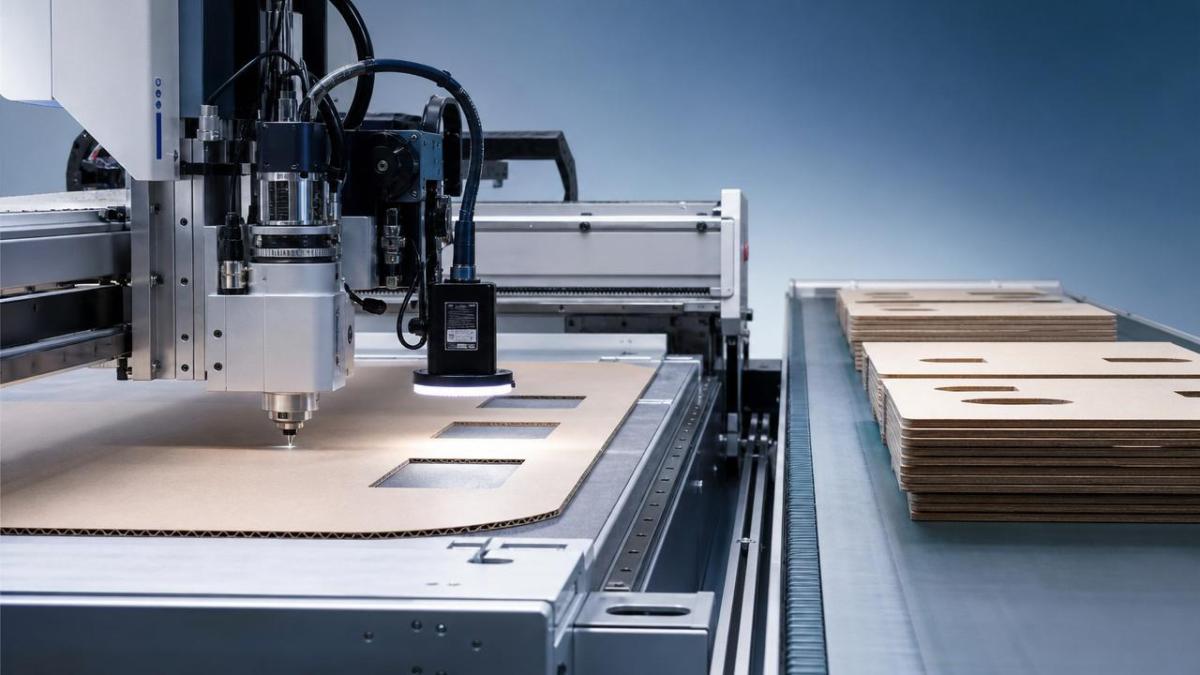
Modern industrial cutting systems help reduce those risks by combining precise motion control, automated inspection feedback, and repeatable cutting parameters across corrugated, print-finishing, and woodworking lines.
When every sheet, panel, crease, and edge is cut closer to specification the first time, factories gain higher yield, safer workflows, and more predictable delivery performance.
What quality and safety teams are really trying to confirm
The core search intent behind this topic is practical: when does a cutting system genuinely reduce rework, rather than simply cut faster?
Quality control teams want evidence that dimensional accuracy, registration stability, and edge condition improve consistently across shifts, materials, and production speeds.
Safety managers want to know whether fewer corrections mean less manual trimming, fewer jams, reduced blade exposure, and better lockout discipline.
The most useful answer is not a generic automation claim. It is a clear view of where rework originates and which controls remove it.
In packaging, print finishing, and woodworking, rework usually starts from variation: inconsistent sheets, tool wear, board movement, poor nesting, or misaligned downstream handling.
Industrial cutting systems reduce risk when they control those variations before defects leave the cutting zone and enter folding, gluing, edging, or assembly.
Rework is a process signal, not only a scrap number
Factories often measure rework as extra labor or lost material, but quality professionals know it reveals a deeper process weakness.
A corrugated blank requiring repeated trimming may indicate unstable feed control, dull knives, crushed flute structure, or poor synchronization with printing.
A die-cut carton with inconsistent creases may point to tool pressure imbalance, worn stripping components, or registration drift during high-speed operation.
A furniture panel needing recut or hand sanding may show fixture movement, incorrect tool compensation, or insufficient chip evacuation during routing.
Each correction adds touch points. More touch points increase damage risk, operator fatigue, inspection burden, and the chance of shipping nonconforming product.
This is why rework reduction matters strongly to safety managers. Manual rescue work usually happens under time pressure and near hazardous mechanisms.
When industrial cutting systems stabilize the first-pass result, they reduce the hidden safety load created by urgent corrections and informal operator workarounds.
Where modern cutting systems reduce defects first
The strongest rework reductions usually come from better control of position, pressure, tool path, and material behavior at the cutting point.
Servo-driven motion helps maintain registration between printed graphics, die lines, crease rules, drill patterns, and downstream folding or assembly requirements.
In offset and print-finishing environments, micron-level registration is essential because a visually acceptable sheet can still fail after die cutting.
If the cut edge shifts slightly across a cosmetic carton, brand appearance suffers and folding stress may create cracks or weak glued joints.
In corrugated production, cutting accuracy affects box compression, flap alignment, stacking behavior, and performance during automated packing and shipment.
In CNC woodworking, accurate tool paths reduce oversized grooves, chipped laminates, poor hardware holes, and mismatched panels during whole-house customization.
The best industrial cutting systems therefore reduce rework by connecting mechanical precision with the actual functional requirements of the finished product.
Repeatable parameters matter more than heroic operators
Many plants still rely on experienced operators to adjust pressure, speed, knives, vacuum zones, or tool offsets by feel.
That knowledge is valuable, but it becomes risky when only one shift can consistently achieve the required quality window.
Repeatable cutting recipes help standardize setup across materials, orders, customers, and operators, reducing trial runs and subjective adjustment.
For quality managers, recipe control creates traceability. They can compare defect trends against actual speed, pressure, blade life, and material batch data.
For safety managers, standardized setup reduces unnecessary access into guarded areas and discourages improvised adjustments during unstable production.
In high-mix packaging or custom furniture, this repeatability is especially important because job changeovers happen frequently and margin for setup waste is small.
A system reduces rework risk when approved parameters are locked, monitored, and updated through controlled procedures rather than informal memory.
Inspection feedback closes the loop before defects multiply
Cutting accuracy alone is not enough if deviations are discovered only at packing, assembly, or customer receiving inspection.
Modern systems increasingly use cameras, sensors, load monitoring, and software alarms to detect movement, tool wear, missing cuts, or registration drift.
In die cutting, inspection can verify sheet position before cutting and identify stripping issues before cartons pile up downstream.
In woodworking, probing and vision can confirm panel orientation, hole position, and surface defects before expensive routing or edge banding begins.
In corrugated lines, feedback from slitting, scoring, and cut-off sections helps prevent repeated batches of warped or dimensionally incorrect blanks.
The quality value comes from speed of response. A small drift corrected after ten pieces is manageable; after ten thousand, it becomes a crisis.
Safety also improves because operators are less likely to clear repeated jams, sort unstable piles, or perform emergency rework near moving equipment.
Safety gains appear when manual correction is designed out
Safety managers should examine the rework pathway, not only the primary machine guarding layout around an industrial cutting system.
Where do operators stand when checking edge quality, pulling miscut sheets, removing chips, or separating poorly cut cartons?
How often do they need knives, scrapers, sanding tools, compressed air, or manual lifting to correct cutting-related defects?
Every one of those activities may introduce laceration hazards, ergonomic strain, dust exposure, noise, or unexpected machine interaction.
A cutting system that improves first-pass yield can reduce these secondary exposures, especially when paired with safe scrap removal and automatic stacking.
However, automation does not automatically mean safety. Poorly designed access, unclear alarms, or frequent nuisance stops can create new unsafe behaviors.
The safest systems combine reliable cutting performance with interlocked access, clear recovery procedures, effective dust extraction, and disciplined maintenance planning.
How to judge whether a system will reduce rework in your plant
Before approving equipment, quality and safety teams should define their current defect profile in measurable terms, not broad complaints.
Useful indicators include first-pass yield, dimensional rejects, edge chipping rate, registration deviation, recut labor hours, jams, and operator intervention frequency.
Then compare those indicators with the proposed system’s control capabilities, including motion accuracy, material handling stability, sensor feedback, and recipe management.
Ask vendors to demonstrate performance on your real materials, including warped board, coated sheets, laminated panels, recycled fiber, or difficult decorative surfaces.
A showroom test on ideal stock may hide problems that appear in humid warehouses, mixed batches, or short-run production schedules.
Quality teams should request capability data, not only sample parts. Look for repeatability over time, across speeds, and after tool changes.
Safety teams should review routine interventions during trials. If operators constantly open doors, clear waste, or override alarms, rework risk remains unresolved.
Key evaluation questions for quality control managers
Quality managers should begin with the tolerance stack. Which downstream process suffers most when the cut is slightly wrong?
For cartons, the critical issue may be fold alignment, glue flap accuracy, window placement, or board cracking along the crease.
For furniture panels, the critical issue may be connector holes, edge banding fit, surface tear-out, or cabinet assembly squareness.
The selected industrial cutting systems should prove capability at those functional points, not only advertise maximum cutting speed.
Managers should also ask how the system handles tool compensation, blade wear, thermal change, suction loss, and material thickness variation.
Traceability is another major concern. The system should record job parameters, alarms, corrections, inspections, and operator actions for later investigation.
When defect data connects to machine data, root cause analysis becomes faster and quality meetings move from opinion to evidence.
Key evaluation questions for safety managers
Safety managers should map all human interactions during normal production, setup, jam clearing, tool change, cleaning, and maintenance.
A system that cuts accurately but requires frequent manual waste removal may still expose operators to unnecessary hazards.
Review guarding, interlocks, emergency stops, visibility, access height, dust extraction, noise controls, and lockout points before commissioning.
For woodworking applications, chip evacuation and dust control are not housekeeping details. They influence fire risk, respiratory exposure, and cut quality.
For print-finishing lines, pile stability and sheet handling are important because misfeeds can create crushing, slipping, or repetitive clearing hazards.
For corrugated operations, large moving sections require strong procedures around threading, blade adjustment, maintenance access, and communication between operators.
The best safety case is built when fewer defects, fewer interventions, and clearer recovery steps are achieved together.
Implementation risks that can weaken the expected benefit
Even advanced industrial cutting systems can fail to reduce rework if implementation is treated as a simple installation project.
Common risks include poor material standards, weak maintenance discipline, untrained operators, incomplete recipe libraries, and missing links to inspection data.
If incoming board varies widely, the cutting system may constantly compensate, but the root cause remains outside the machine.
If tools are changed too late, accuracy declines gradually and operators may normalize defects until a customer complaint arrives.
If training focuses only on production speed, teams may bypass alarm investigation and lose the very feedback that protects yield.
A successful rollout needs quality limits, safety procedures, maintenance schedules, and escalation rules prepared before full production begins.
This is where cross-functional ownership matters. Quality, safety, production, maintenance, and engineering must agree what “acceptable” means in practice.
Where the return is usually strongest
The return on improved cutting control is strongest where materials are expensive, tolerances are tight, or manual correction is frequent.
Premium packaging, pharmaceutical cartons, cosmetic boxes, export corrugated packaging, and customized furniture panels often fit this profile.
Short-run and high-mix production also benefits because setup waste can consume margin before the order reaches stable speed.
Factories facing labor shortages gain additional value because repeatable cutting reduces dependence on rare operators who understand every machine behavior.
Plants under stricter customer audits also benefit from better process evidence, especially when traceability and inspection feedback support compliance claims.
However, facilities with simple products, loose tolerances, and stable long runs should still calculate carefully before investing in advanced capability.
The right question is not whether the technology is impressive, but whether it removes the plant’s specific rework and exposure points.
Conclusion: reduce rework by controlling variation at the source
Industrial cutting systems reduce rework risk when they deliver repeatable accuracy, detect drift early, and remove manual correction from daily production.
For quality managers, the value appears as higher first-pass yield, fewer customer defects, better traceability, and faster root cause analysis.
For safety managers, the value appears as fewer interventions, less blade exposure, lower ergonomic strain, and more controlled recovery procedures.
The strongest decisions start with real defect data and end with verified performance on actual materials, operators, and production conditions.
When cutting precision, inspection feedback, and safe workflow design align, rework becomes less frequent and the entire manufacturing process becomes more predictable.
