Precision Die-Cutting Technology vs Laser Cutting: Which Fits Short Runs and Tight Tolerances?
Precision Die-Cutting Technology vs Laser Cutting: Which Fits Short Runs and Tight Tolerances?
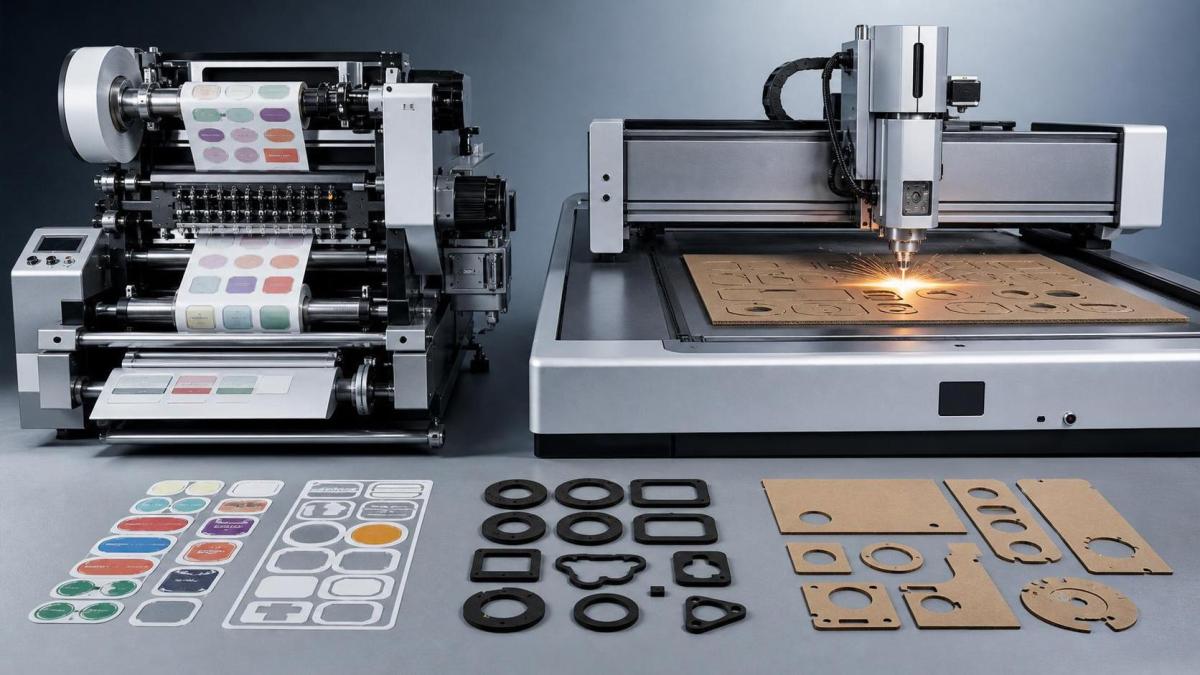
When production teams must balance speed, accuracy, and cost, process choice becomes a commercial decision, not just a technical one.
That is why precision die-cutting technology keeps coming up in packaging, print finishing, labels, foam conversion, gaskets, and engineered components.
Laser cutting, meanwhile, attracts attention for tool-free changeovers, digital flexibility, and clean handling of complex shapes.
For short runs and tight tolerances, the better option depends on material behavior, tolerance targets, throughput expectations, and downstream quality requirements.
In real operations, the wrong selection can raise scrap, delay orders, and lock a factory into avoidable operating costs.
The better signal is not which technology sounds newer, but which one protects margin while meeting repeatable output standards.
What Precision Die-Cutting Technology Actually Delivers
Precision die-cutting technology uses engineered tooling and controlled pressure to cut, kiss-cut, crease, score, or perforate material with high repeatability.
It is especially strong when part geometry stays stable across batches, even if order volumes are not very large.
This process is widely used for folding cartons, pressure-sensitive labels, inserts, medical packaging, insulation parts, foam pads, and thin industrial laminates.
Its biggest advantage is consistency at speed.
Once tooling is tuned, precision die-cutting technology can produce large quantities of nearly identical parts with stable edge quality and predictable cycle times.
That matters when tolerance drift affects folding accuracy, adhesive placement, fit-up, or automatic assembly later in the line.
- High repeatability for recurring SKUs
- Fast production rates after setup
- Reliable performance on layered materials
- Stable scoring and creasing quality
- Good fit for automated converting lines
Where Laser Cutting Wins
Laser cutting removes the need for physical tooling, which is often its strongest commercial advantage in short-run production.
If designs change frequently, laser systems reduce the delay and cost tied to die manufacturing, storage, and replacement.
This is especially useful in prototyping, customized packaging, promotional displays, sample making, and variable product launches.
Laser cutting also handles intricate internal geometries that may be difficult or uneconomical with conventional tooling.
From a workflow standpoint, digital file changes can move directly into production without waiting for a new die set.
That flexibility is valuable when product teams are still validating dimensions, graphics, or assembly behavior.
- No tooling for each design revision
- Fast changeovers between short jobs
- Strong support for customization
- Good for intricate contours and details
- Useful in sampling and pilot runs
Short Runs: The Real Cost Comparison
Short runs are where the comparison gets more interesting.
Many buyers assume laser cutting always wins because it avoids tooling.
That is sometimes true, but not automatically.
If a short run repeats often, precision die-cutting technology may still produce a lower total cost per part over time.
The tooling expense gets spread across multiple orders, while production speed stays high and labor stays predictable.
Laser cutting tends to win when runs are truly one-off, revision-heavy, or too uncertain to justify even a modest tooling investment.
A practical way to decide is to calculate total landed cost, not just first-job setup cost.
- Estimate annual order frequency, not only first order volume.
- Add setup, labor, scrap, maintenance, and inspection costs.
- Check whether geometry will remain stable for six to twelve months.
- Review downstream effects on folding, bonding, packing, or assembly.
That fuller view usually reveals whether precision die-cutting technology or laser cutting fits the real business pattern.
Tight Tolerances: Accuracy Is More Than a Number
Tight tolerances are rarely just about nominal dimensions.
They also include edge integrity, heat impact, burr behavior, compression effects, material pull, and positional repeatability over a full run.
Precision die-cutting technology performs well when the material responds predictably under pressure and the tooling is matched to substrate thickness and hardness.
This is common in paperboard, labels, foams, films, and laminated constructions.
Laser cutting, however, may introduce a heat-affected zone on some plastics, composites, or coated materials.
In certain applications, that changes edge color, bonding performance, or dimensional stability.
For premium packaging and high-spec functional parts, those details matter more than brochure-level precision claims.
Material Behavior Changes the Answer
The material often decides faster than the equipment brochure does.
Corrugated board, folding carton, adhesive laminates, rubber sheets, foams, and thin films all respond differently to force and heat.
Precision die-cutting technology usually performs best when compression, scoring, and cut depth control must work together in one stable process.
Laser cutting becomes more attractive when contactless processing avoids mechanical distortion or supports highly variable shapes.
Still, some coated materials char, discolor, or emit fumes under laser exposure.
That can trigger extra ventilation, filtration, compliance, and maintenance requirements.
So the best purchasing question is simple: how does this exact substrate behave at production speed?
Operational Risks Buyers Often Miss
A process can look accurate in a demo and still create hidden production risk.
With precision die-cutting technology, the main risks are poor tooling design, inconsistent makeready, and weak maintenance discipline.
With laser cutting, the risks often include slower throughput, thermal edge variation, optics maintenance, and unexpected extraction system costs.
In growing factories, the bigger issue is often process fit, not machine capability.
If the workflow depends on repeated jobs, standardized output, and automated downstream handling, precision die-cutting technology may create fewer surprises.
If the workflow depends on frequent revisions and low-volume customization, laser cutting may reduce planning friction.
How to Make the Right Selection
A smart selection process connects technical evidence to business reality.
That means comparing more than sample quality on one good day.
- Run the same material through both processes.
- Measure first-piece and last-piece consistency.
- Review scrap, setup time, and operator dependence.
- Check edge quality after folding, gluing, or assembly.
- Model annual demand by stable SKUs and variable SKUs.
- Ask suppliers for tolerance data under production load.
For many converters and industrial manufacturers, the result is not either-or forever.
Precision die-cutting technology handles recurring work efficiently, while laser cutting supports samples, variants, and fast design validation.
That hybrid strategy often creates the best mix of speed, control, and flexibility.
Final Takeaway
If short runs are unstable and designs change constantly, laser cutting usually offers the faster path to action.
If short runs repeat, tolerances are tight, and downstream consistency matters, precision die-cutting technology often provides the stronger long-term value.
The best decision comes from matching process physics to order patterns, substrate behavior, and margin targets.
Before investing, validate both options with your real materials, real tolerances, and real production assumptions.
That step turns a technology comparison into a confident purchasing decision.
Related News
Get weekly intelligence in your inbox.
No noise. No sponsored content. Pure intelligence.
