
What Is Whole-House Customization and How Does It Work in Modern Home Projects?
Why is whole-house customization getting so much attention?
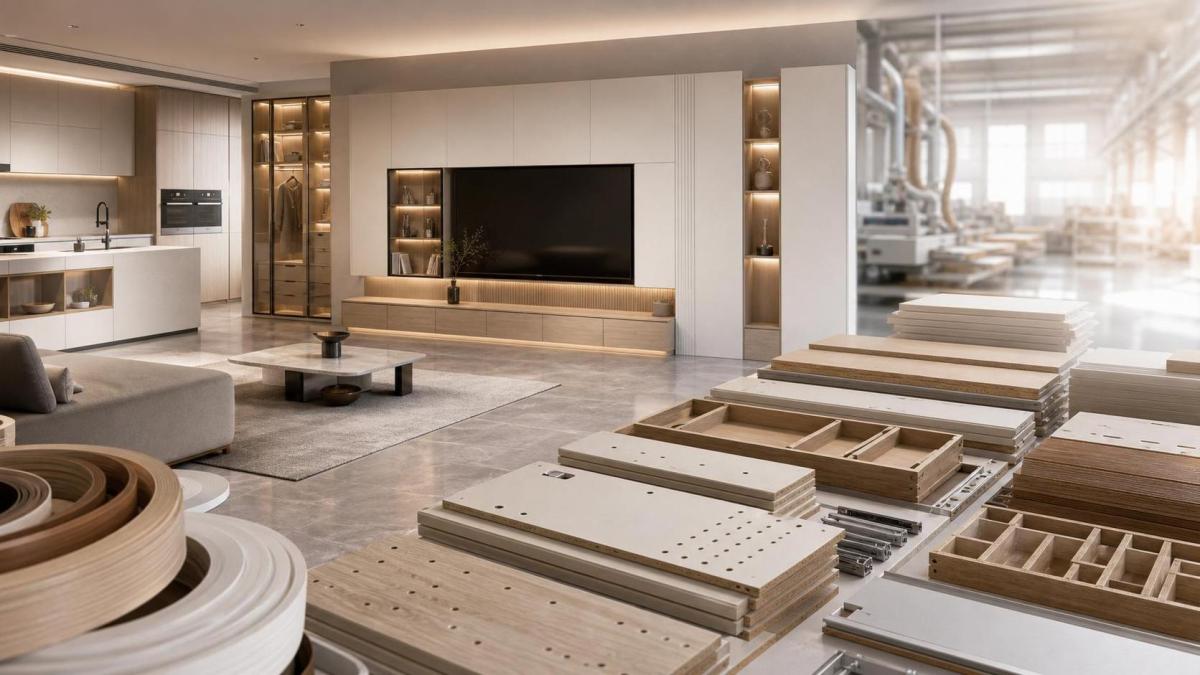
Whole-house customization is no longer a niche idea.
It has become a practical response to changing home expectations, tighter project timelines, and more flexible manufacturing systems.
In simple terms, whole-house customization means designing cabinets, wardrobes, wall units, storage, doors, and related furniture as one connected system.
Instead of buying separate pieces, the project is planned around space, function, material, finish, and installation sequence.
That shift matters because modern home projects now demand both individuality and repeatable quality.
This is where industrial woodworking enters the picture.
Advanced CNC routers, panel saws, drilling units, and edge banders make whole-house customization scalable rather than handcrafted in a slow, inconsistent way.
PWFS often looks at this trend through a wider manufacturing lens.
The same digital discipline that drives precision printing, die-cutting, and automated packaging lines also explains why customized living spaces can now be delivered faster.
So the real question is not only what whole-house customization is, but why it now works at industrial speed.
What does whole-house customization actually include?
Many people first assume it only means made-to-measure wardrobes.
In practice, the scope is much broader.
A whole-house customization project usually links several interior systems into one coordinated package.
- Kitchen cabinets, islands, and pantry storage
- Bedroom wardrobes and walk-in closet structures
- Bathroom vanities and compact storage units
- Living room media walls and display systems
- Study room desks, shelving, and hidden storage
- Entryway cabinets, shoe units, and transition spaces
What makes it different from ordinary furniture purchasing is coordination.
Dimensions, panel materials, hardware, finish colors, and installation details are planned together.
That reduces visual mismatch and also helps control tolerances during production.
A useful way to understand whole-house customization is to see it as a design-to-manufacturing workflow.
The value comes from connecting front-end design decisions with back-end cutting, drilling, edging, labeling, packing, and installation.
How does the process work from design to installation?
The process looks simple from the outside, but several linked stages determine whether whole-house customization succeeds.
A delay or data error early on often affects every later step.
1. Space measurement and requirement mapping
The project begins with accurate site data.
Wall conditions, ceiling height, corners, columns, pipe positions, and electrical points all need checking.
At this stage, style preference matters less than usable dimensions and daily routines.
2. Digital design and configuration
Design software turns measurements into 3D layouts and panel breakdowns.
This is where whole-house customization becomes a data-driven system rather than a sketch-based process.
Material codes, hole positions, edge requirements, and hardware selections are defined here.
3. CNC cutting, drilling, and labeling
CNC woodworking routers read production files directly from the approved design.
They cut panels, create slots, and drill connection holes with high repeatability.
This is the core reason whole-house customization can support unique layouts without losing speed.
4. Edge banding and finishing control
After cutting, exposed panel edges must be sealed.
Edge banders using laser technology or PUR adhesives improve durability, moisture resistance, and indoor environmental performance.
This step is easy to underestimate, yet it strongly affects appearance and long-term quality.
5. Packing, delivery, and on-site assembly
Labeled parts are sorted, packed, and installed according to sequence.
Well-managed packaging also matters here.
PWFS tracks packaging and printing systems because protective corrugated structures, accurate labels, and clear visual coding reduce installation confusion and damage in transit.
Which technologies make whole-house customization efficient today?
The short answer is digital continuity.
The longer answer involves several technologies working together instead of one machine doing everything.
A common misunderstanding is that whole-house customization only depends on attractive design software.
In reality, the decisive factor is whether software, machines, packaging, and workflow rules speak the same language.
That is why PWFS pays attention to both woodworking and packaging intelligence.
Flexible furniture production does not end at cutting.
It also depends on identification, protection, movement, and final assembly discipline.
Is whole-house customization right for every home project?
Not always, and that is worth stating clearly.
Whole-house customization works best when the project values spatial efficiency, style consistency, or non-standard layouts.
It is especially useful in apartments, compact urban homes, irregular floorplans, and storage-heavy interiors.
It may be less suitable when immediate delivery matters more than integrated design.
The better question is how to judge fit before moving ahead.
- Choose whole-house customization if space utilization is a top priority
- Choose it if several rooms need a unified material and color system
- Be cautious if the site dimensions are still changing
- Be cautious if the timeline cannot support measurement, confirmation, and production rounds
- Look closely at board quality, hardware, and edging, not only renderings
In actual projects, the strongest results usually come from clear decisions made early.
Late design changes can disrupt both production scheduling and installation sequencing.
What are the common risks, costs, and timing issues people overlook?
Most discussions focus on style and storage.
Yet the harder questions usually involve tolerances, materials, schedule discipline, and after-installation adjustments.
Risk 1: inaccurate measurements
Even a small site error can affect multiple cabinets and wall connections.
That is why final measurement should happen after civil conditions are stable.
Risk 2: focusing on visible surfaces only
People often compare finishes but ignore substrate quality, edge sealing, and hardware lifespan.
Those hidden elements shape daily use far more than brochures suggest.
Risk 3: underestimating packaging and logistics
Customized panels move as identified kits, not generic stock items.
Damaged packaging, weak labeling, or poor sorting can delay installation and increase replacement work.
Risk 4: expecting factory speed without approval speed
Modern factories can cut fast, edge fast, and pack fast.
But production only starts after design confirmation, material locking, and process release.
As for cost, whole-house customization should not be judged by unit price alone.
A more realistic comparison includes storage efficiency, coordination savings, rework risk, transport protection, and service life.
That broader view often explains why industrialized customization continues to grow.
What is the smartest next step if you are still evaluating whole-house customization?
Start by turning general interest into a decision checklist.
Whole-house customization works best when design goals, machine capability, and delivery logic stay aligned.
A practical review should cover room functions, board specifications, edge banding method, hardware grade, packaging protection, and installation timing.
It also helps to ask how digital files move from design approval into CNC production and final part tracking.
That question often reveals whether a project is supported by a mature system or a fragmented process.
From the broader industry perspective followed by PWFS, whole-house customization is part of a larger manufacturing shift.
The same logic shaping high-speed printing, die-cutting, and smart packaging is reshaping furniture production too.
If the goal is to understand where modern home projects are heading, this model is worth studying in detail.
The next useful move is simple: define the space needs, compare process transparency, and verify the production standards behind the design promise.
Related News
Get weekly intelligence in your inbox.
No noise. No sponsored content. Pure intelligence.
