
Packaging Machinery Exporter Checklist: Certifications, Lead Times, and After-Sales Support
Why does choosing a packaging machinery exporter need a broader checklist?
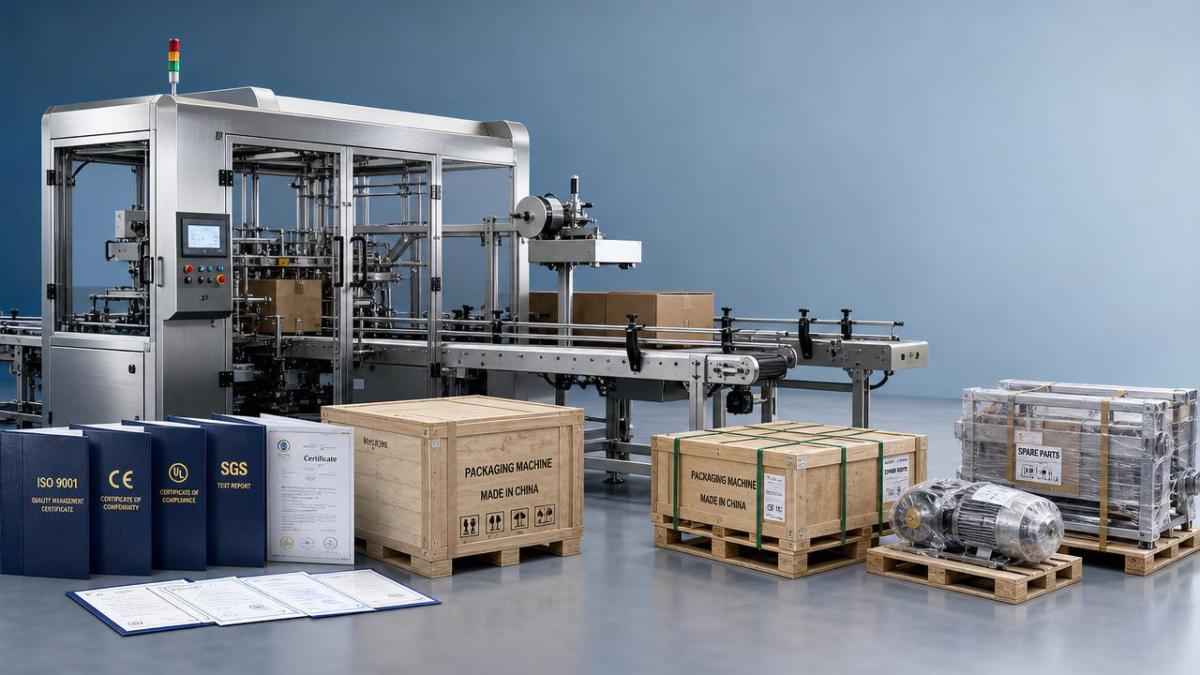
Price is the easiest number to compare, yet it is rarely the safest one to trust.
A capable packaging machinery exporter affects uptime, compliance exposure, installation speed, and future upgrade options.
That matters even more in sectors linked to corrugated lines, offset printing, die-cutting, folder-gluing, and automated woodworking.
In these systems, precision is not a marketing word. It shapes waste rates, labor intensity, and output consistency.
PWFS follows this industrial chain closely, from carton production for e-commerce logistics to CNC equipment behind customized interiors.
Seen from that lens, exporter evaluation becomes a risk-control exercise, not just a sourcing task.
The most useful checklist usually revolves around three questions.
Are the certifications real and relevant? Are the lead times realistic? Will after-sales support still work after shipment clears customs?
Once those answers are clear, commercial comparison becomes far more meaningful.
Which certifications actually tell you something useful?
Not every certificate carries the same decision value.
A reliable packaging machinery exporter should match certifications to machine type, target market, and application environment.
For basic industrial access, CE documentation, electrical conformity, and safety file completeness are common starting points.
If the line touches food packaging, ink migration, material contact, and traceability controls deserve extra attention.
If wood-based production is involved, FSC-related chain visibility may influence downstream customer acceptance.
More practical signals often sit behind the certificate itself.
- Ask who issued the certificate and whether the issuing body is recognized in the destination market.
- Check whether the model number on the document matches the quoted configuration.
- Review test scope, not just the logo on the first page.
- Confirm whether optional modules need separate compliance files.
This is especially relevant for high-speed presses, die-cutters, and servo-driven folder gluers.
Those machines combine electrical, pneumatic, software, and guarding requirements in ways that simple certificates may not fully describe.
A packaging machinery exporter with mature documentation can usually provide manuals, wiring diagrams, risk assessments, and spare lists without delay.
If documents arrive slowly during pre-sales, service responsiveness later may follow the same pattern.
A quick document check helps separate depth from decoration
How should lead times be judged without relying on optimistic promises?
Quoted lead time is often treated as a delivery date. It should be treated as a hypothesis.
A dependable packaging machinery exporter explains what is standard, what is custom, and what depends on imported components.
This matters because corrugated board lines and precision printing systems rarely move as one-piece products.
They are assembled from frames, motors, controls, drying units, feeders, gluing systems, or tool heads sourced on different cycles.
More realistic lead-time evaluation usually includes four checkpoints.
- Engineering freeze date for drawings and options
- Critical component availability, especially servo systems and PLC brands
- Factory acceptance testing schedule
- Packing, inland transport, and export documentation timing
In actual projects, delays often come from late technical confirmation rather than weak manufacturing alone.
That is why a packaging machinery exporter should show milestone control, not only a final week number.
If schedule updates are vague before deposit, visibility may become worse after payment.
It also helps to compare the quoted cycle with machine complexity.
A short lead time for a simple conveyor addition may be credible.
The same promise for a high-speed offset press or 5-axis CNC package deserves scrutiny.
What does strong after-sales support look like before the machine ships?
After-sales quality is often visible long before the first breakdown happens.
A serious packaging machinery exporter can define who handles installation, commissioning, operator training, and remote diagnostics.
That answer should include response times, spare-part routes, and escalation paths for control issues.
For automated die-cutters, folder gluers, or edge banders, even minor alignment drift can affect daily output quickly.
For corrugated and printing lines, unplanned downtime can disrupt multiple downstream processes at once.
That is why support must be measured in operational terms.
- Can remote troubleshooting reach the HMI, PLC, and servo alarms securely?
- Are wear parts listed with replacement cycles and stocking advice?
- Is training limited to operation, or does it also cover maintenance and calibration?
- Can the exporter support software updates and future line integration?
PWFS frequently highlights the connection between mechanics, controls, and process stability.
That perspective is useful here.
Good after-sales support is not only about sending a technician.
It is about preserving registration accuracy, cutting consistency, glue quality, and digital workflow continuity over time.
Where do buyers usually misread a packaging machinery exporter?
The most common mistake is assuming impressive references automatically guarantee fit.
A packaging machinery exporter may be excellent at standard box converting but less prepared for customized, data-linked production.
Another mistake is focusing on line speed without testing yield stability.
Fast nominal speed means little if setup time, waste ratio, or operator dependence remain high.
This is especially true in sectors where short runs, version changes, and quality traceability are becoming normal.
A more grounded assessment asks whether the exporter understands the production logic behind the machine.
For example, can the line connect with MES? Can it store job recipes? Can it support rapid size changeovers?
Those questions matter in both packaging conversion and whole-house customization workflows.
Another overlooked risk is local service feasibility.
Even if the exporter offers support, visa timing, language clarity, and spare-part customs handling may weaken real response speed.
A practical comparison lens
What should be on the final decision checklist before signing?
By this stage, the right goal is not finding a perfect exporter.
It is reducing uncertainty to a manageable level.
A final review should bring technical, compliance, schedule, and service points into one decision sheet.
- Confirm exact scope, including options, tooling, utilities, and excluded items.
- Lock document lists, certification files, and FAT criteria into the contract.
- Tie payment milestones to visible progress, not only calendar dates.
- Define commissioning support, training days, and spare-part starter package.
- Clarify warranty boundaries for consumables, electronics, and operator-caused faults.
- Record software backup, parameter ownership, and remote access rules.
This is where a packaging machinery exporter either becomes transparent or remains vague.
The better partners usually welcome detailed questions because they shorten disputes later.
For complex print, packaging, and woodworking systems, that clarity is often worth more than a headline discount.
The next practical step is simple.
Build a comparison sheet around certifications, lead-time evidence, and after-sales commitments, then score each exporter on proof rather than promises.
That approach creates a cleaner basis for site visits, technical clarification, and final commercial negotiation.
Related News
Get weekly intelligence in your inbox.
No noise. No sponsored content. Pure intelligence.
