
Flexible Manufacturing Systems Price Breakdown: What Drives Cost and ROI?
Flexible Manufacturing Systems Price Breakdown: What Drives Cost and ROI?
Understanding flexible manufacturing systems price is essential for balancing capital efficiency, automation goals, and long-term competitiveness.
A quoted number rarely tells the full story.
In real projects, cost is shaped by machine scope, software depth, material flow, labor strategy, and future expansion.
That is why smart buyers evaluate flexible manufacturing systems price as a business model question, not only an equipment purchase.
What Flexible Manufacturing Systems Price Really Includes
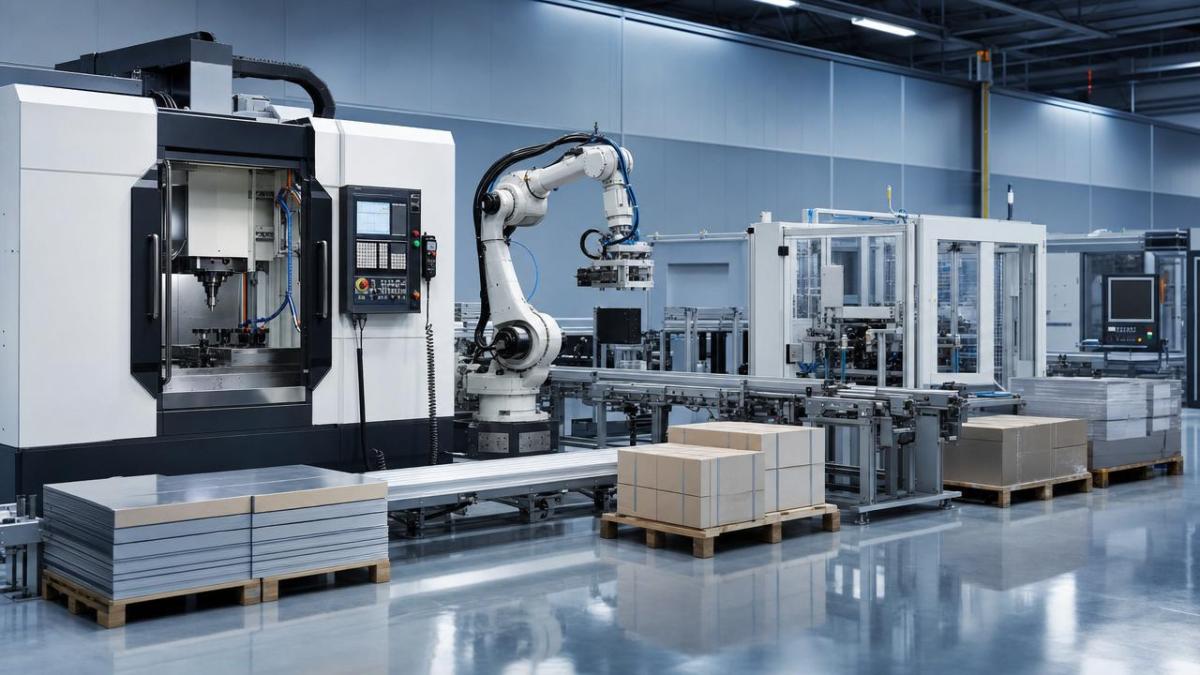
The visible price is usually the base equipment package.
The real investment often includes engineering, controls, installation, utilities, training, and production ramp-up losses.
For packaging and woodworking plants, the gap can be substantial.
A corrugated board line, offset press, folder gluer, die cutter, CNC router, or edge bander may look comparable on paper.
Yet flexible manufacturing systems price rises quickly when integration becomes deeper and output targets become stricter.
Most budgets should separate five layers:
- Core machinery and automation modules
- Software, MES, ERP, and CAD/CAM connectivity
- Conveying, loading, unloading, and robotic handling
- Site preparation, power, air, dust extraction, and safety systems
- Commissioning, training, service contracts, and spare parts
This broader view creates a more accurate flexible manufacturing systems price benchmark before negotiations begin.
The Main Cost Drivers Behind Flexible Manufacturing Systems Price
1. Machine Configuration and Process Scope
The first driver is simple: more functions mean more cost.
A standalone CNC router costs far less than a connected cell with automatic labeling, nesting, loading, drilling, and edge processing.
The same applies to print and packaging lines.
Adding non-stop feeders, vision inspection, servo adjustments, and auto changeover pushes flexible manufacturing systems price upward.
2. Throughput and Precision Requirements
Higher speed is expensive.
Higher precision is also expensive.
When both are required together, the investment jumps.
Micron-level print registration, stable die-cutting pressure, and repeatable woodworking tolerance all demand better mechanics and smarter controls.
3. Software Integration Depth
This is one of the most underestimated factors.
A modern line is not only steel and motors.
It is also data logic.
If the system must connect with MES, ERP, warehouse software, design files, and order scheduling, flexible manufacturing systems price will reflect that complexity.
In actual operations, integration often determines whether automation delivers its promise.
4. Material Handling and Factory Layout
Buyers sometimes compare machine quotes but ignore plant logistics.
That can distort the total picture.
Conveyors, gantries, robots, stackers, AGVs, and buffer zones may add major cost.
Still, they often remove hidden bottlenecks that limit output and labor savings.
Typical Flexible Manufacturing Systems Price Ranges by Application
Price ranges vary by geography, brand, and customization level.
Still, decision-makers usually need a working range for early planning.
These ranges are directional, not universal.
They are useful for checking whether a supplier’s flexible manufacturing systems price is realistic or incomplete.
How to Evaluate ROI Without Oversimplifying the Math
A low flexible manufacturing systems price does not guarantee a strong return.
A higher price can be smarter if it removes recurring operating pain.
A practical ROI model should include:
- Direct labor reduction across shifts
- Scrap, rework, and setup waste reduction
- Output gains from shorter changeovers
- Higher order accuracy and delivery speed
- Ability to accept smaller, more customized orders profitably
- Maintenance, energy, consumables, and financing costs
From recent market shifts, flexibility is becoming a stronger ROI lever than pure output.
E-commerce packaging changes fast.
Furniture buyers expect personalized dimensions and faster delivery.
That means the best flexible manufacturing systems price is often the one that supports product mix changes without killing margins.
Hidden Costs That Commonly Distort Purchasing Decisions
Many investment cases look attractive until hidden costs appear.
Watch these areas closely:
- Custom foundations, reinforced floors, or utility upgrades
- Dust collection, air treatment, and environmental compliance
- Operator learning curves and temporary productivity dips
- Imported spare parts with long lead times
- License fees for software modules and future users
- Vendor dependence for troubleshooting and upgrades
In practice, these items can materially change the true flexible manufacturing systems price over three to five years.
This is especially relevant for plants moving from labor-heavy workshops to digitally managed production.
A Smarter Way to Compare Supplier Quotes
A serious comparison should go beyond headline price.
Use a structured checklist:
- Define your real product mix, not an idealized sample.
- Ask for cycle times under your material conditions.
- Confirm what software interfaces are included.
- Separate guaranteed performance from estimated performance.
- Request a full spare parts and service cost schedule.
- Model flexible manufacturing systems price over the equipment lifecycle.
This also helps expose suppliers who win with low entry pricing but recover margin through later add-ons.
The more complex the line, the more important quote transparency becomes.
Why Industry Context Matters in Flexible Manufacturing Systems Price
Not every factory needs the same level of automation.
For PWFS-tracked sectors, context changes everything.
Corrugated plants may prioritize uptime and board consistency for massive parcel volume.
Offset print operations may focus on registration stability, color compliance, and premium packaging quality.
Folder-gluer lines often win through speed, geometry precision, and labor-light conversion.
CNC woodworking cells create value by converting custom design data into repeatable production at scale.
So the right flexible manufacturing systems price depends on the bottleneck that matters most in your plant.
Final Buying Takeaway
The best purchasing decisions do not chase the lowest quote.
They connect flexible manufacturing systems price to throughput, flexibility, labor structure, software readiness, and service reliability.
If a system reduces waste, shortens lead times, supports customization, and stays stable under real workloads, the ROI case becomes much stronger.
Before signing, build a total cost model, pressure-test assumptions, and compare suppliers on lifecycle value.
That approach turns flexible manufacturing systems price from a confusing number into a clear strategic decision.
Related News
Get weekly intelligence in your inbox.
No noise. No sponsored content. Pure intelligence.
