
Packaging Automation Technology for Mid-Volume Lines: Where It Improves Speed and Traceability
Where packaging automation technology makes sense on mid-volume lines
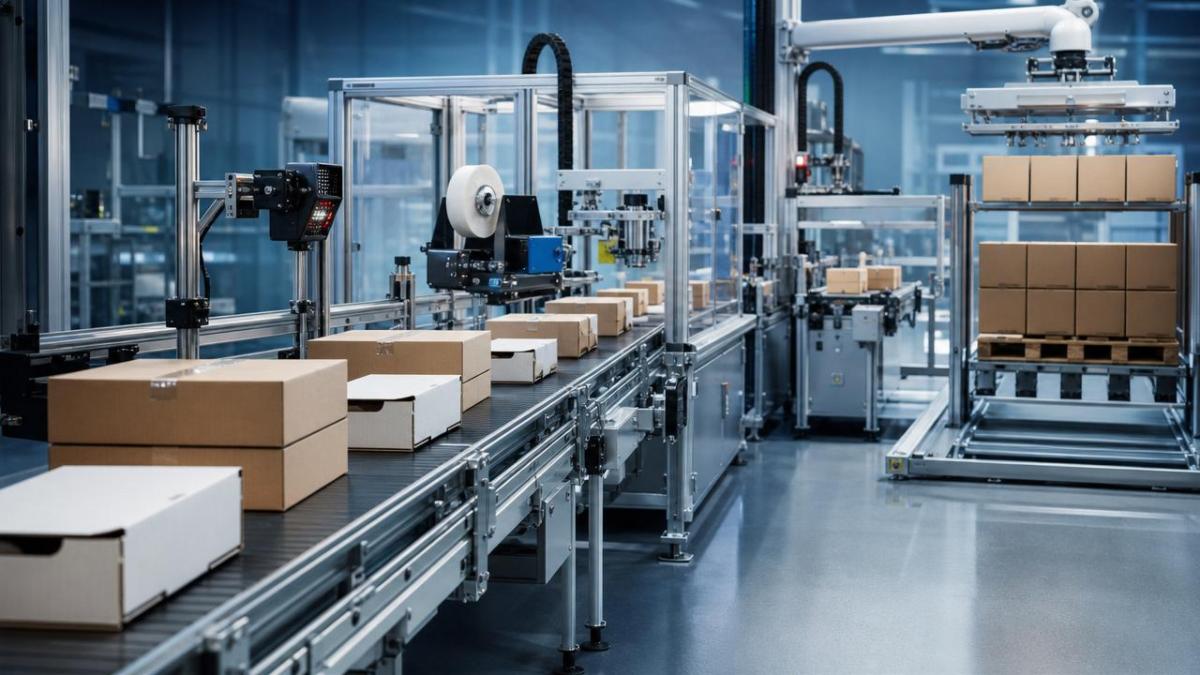
Packaging automation technology is often discussed as a scale story.
In practice, mid-volume lines gain value for a different reason.
They sit between manual flexibility and full-line capital intensity.
That middle ground creates daily friction.
Operators move stacks by hand, labels are checked twice, and traceability depends on shift discipline.
When orders mix e-commerce shippers, retail cartons, and branded display work, small delays multiply fast.
This is where packaging automation technology improves speed and traceability without forcing an oversized rebuild.
For a platform like PWFS, this matters across corrugated converting, offset-driven cartons, and folded packaging systems.
The same logic also reaches wood-related supply chains where packaged components need clean identification and shipment control.
The core question is not whether automation is useful.
The better question is where packaging automation technology removes the most costly interruptions first.
Why the right automation choice changes by production context
Not all mid-volume packaging environments struggle in the same way.
A corrugated line may lose time at bundle transfer and pallet labeling.
An offset carton plant may lose more at code verification and version changeovers.
A folder-gluer cell may run fast enough mechanically, yet still lack batch-level visibility.
That is why packaging automation technology should be judged by flow interruption points.
PWFS often frames this through the mechanics behind paper and board conversion.
High-speed equipment already delivers impressive physical performance.
The weaker link is usually between machines, operators, and records.
In actual use, stronger traceability comes from connecting events, not only accelerating hardware.
Smart conveying, print-and-apply coding, vision inspection, reject handling, and MES-linked data capture matter because they close those gaps.
A simple way to compare line conditions
On corrugated and shipping lines, speed gains usually begin between machines
Corrugated operations already depend on powerful continuous equipment.
The bottleneck often appears after forming, printing, or bundling.
Stacks wait for transport.
Labels are applied late.
Shipment records get updated after the physical movement has already happened.
Here, packaging automation technology works best when it synchronizes transfer, identification, and dispatch confirmation.
A controlled conveyor section with automatic spacing can stabilize downstream labeling accuracy.
Inline scanners then verify pallet IDs before warehouse release.
This does more than save labor minutes.
It reduces the hidden cost of wrong-load events and manual reconciliation.
For e-commerce packaging, that traceability layer is especially useful.
Order fragmentation means each delay can ripple across many small shipments.
In this setting, packaging automation technology is not mainly about replacing people.
It is about making high-throughput handoffs predictable.
In printed carton work, traceability matters as much as output speed
Offset presses and folder-gluers can produce impressive hourly volumes.
Yet premium cartons face a different pressure.
The risk is not only stoppage.
It is undetected mismatch between artwork, code, lot, and shipment destination.
That concern grows in cosmetics, pharmaceuticals, food sleeves, and private-label retail packaging.
In these environments, packaging automation technology should start with inspection logic tied to job data.
Vision systems need more than pass-fail imaging.
They should confirm print content against the active order file.
Automatic reject lanes should log the reason, quantity, and time.
That level of packaging automation technology supports compliance reviews later.
PWFS regularly highlights how precision mechanics and digital control must be stitched together.
A perfect carton fold still becomes a business problem if its trace record is weak.
What changes when jobs are version-heavy
- Artwork variations raise the value of camera-guided code and text checks.
- Frequent changeovers make recipe recall more useful than pure mechanical speed.
- Regulated packs need event logs that can be retrieved by batch, shift, or order.
- Mixed SKU output benefits from automated segregation before final case packing.
Custom and mixed-product environments need modular upgrades, not heavy automation everywhere
A common mistake is assuming every line needs the same automation depth.
Short-run converters and furniture-related packaging cells prove the opposite.
When product dimensions, pack counts, or routing logic change daily, oversized systems can slow adaptation.
In these cases, packaging automation technology should stay modular.
Barcode stations, assisted case verification, and recipe-driven label printing often deliver more value than a complex robotic cell.
This is especially relevant where PWFS tracks the intersection of woodworking and packaging.
CNC routers and edge banders create highly customized components.
The packaging task then shifts toward matching each part set to the right order and destination.
Packaging automation technology helps here by linking cut data, packing identity, and shipment confirmation in one record chain.
That connection supports fewer packing errors and clearer after-sales tracing.
Misjudgments that weaken automation returns
The most common misread is focusing on machine headline speed.
If upstream variation remains high, that speed rarely appears in finished output.
Another issue is treating traceability as a software add-on.
Without reliable scan points and reject discipline, the data record looks complete but is not trustworthy.
There is also a cost trap.
Low purchase price can hide expensive maintenance, format change delays, or poor integration with existing pressroom and converting controls.
Packaging automation technology performs best when the site checks mechanical fit, operator workflow, and data compatibility together.
Lines that serve multiple packaging styles should be reviewed over a year, not only a peak month.
That longer view reveals whether flexibility or absolute speed matters more.
Practical checks before implementation
- Map where manual touches delay release, not just where labor is visible.
- Confirm whether current ERP or MES can receive real-time line events.
- Test label readability, scan angles, and substrate behavior under real speeds.
- Review maintenance access and spare-part availability before final selection.
- Define traceability depth by customer, product category, and compliance need.
A grounded next step for evaluating packaging automation technology
The strongest mid-volume results usually come from selective coordination, not from automating every meter of the line.
Packaging automation technology improves speed when it removes unstable handoffs.
It improves traceability when every key movement creates a usable record.
That principle holds across corrugated board flow, offset carton finishing, folder-gluer output, and packaged furniture components.
A practical next step is to document three things together.
List recurring delay points, identify traceability gaps, and rank which events must be captured automatically.
From there, compare modular upgrades against line-wide investment.
That approach gives packaging automation technology a clear business role instead of turning it into a generic modernization project.
For operations shaped by the same paper, board, print, and wood-processing realities followed by PWFS, that distinction is often where the real return begins.
Related News
Get weekly intelligence in your inbox.
No noise. No sponsored content. Pure intelligence.
