
Industrial Packaging Intelligence Explained: What Data Matters on a Smart Packaging Line?
Industrial packaging intelligence has moved from a technical upgrade to a management discipline. On a smart packaging line, data is no longer collected just to populate dashboards. It is used to expose waste, stabilize quality, reduce downtime, and connect commercial promises with factory reality.
That matters across corrugated board production, offset printing, die-cutting, folder gluing, and even adjacent wood-based manufacturing systems. In a market shaped by e-commerce volume, shorter lead times, traceability rules, and customized production, the value of industrial packaging intelligence lies in knowing which signals actually guide decisions.
Why the data conversation has become more urgent
Packaging plants now operate under pressure from several directions at once. Order variability is rising. Material costs remain volatile. Brand owners expect consistent graphics and faster response. Compliance demands deeper proof, not broad claims.
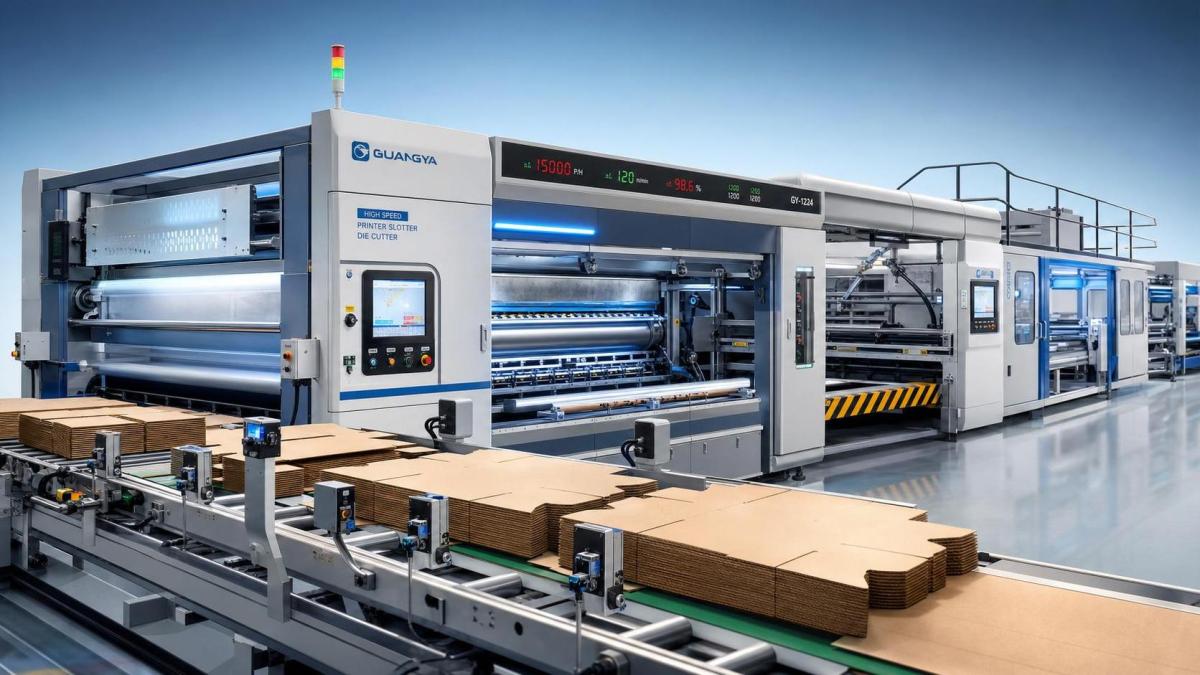
A smart line may include a corrugator, high-precision offset press, automated die-cutter, folder gluer, and finishing stations. Each machine can produce useful data. The problem is that not all data is equally meaningful.
Industrial packaging intelligence starts with prioritization. It separates operational noise from decision-grade information. That distinction is often what turns digital investment into measurable output, yield, and service gains.
What industrial packaging intelligence really means
At its core, industrial packaging intelligence is the structured use of production, quality, maintenance, and traceability data to improve packaging performance. It is not only automation, and it is not only MES software.
It combines machine signals, process context, operator actions, job parameters, and business targets. In practice, this means linking press settings to color stability, board moisture to warp risk, or die-cut pressure to downstream folding defects.
For platforms such as PWFS, the value of this view is clear. Corrugated lines, printing presses, folder gluers, die-cutters, CNC routers, and edge banders all depend on precision, repeatability, and flexible response. The machines differ, but the intelligence logic is similar.
The data that matters most on a smart packaging line
The most useful data usually falls into a few connected layers. Decision quality improves when these layers are read together rather than in isolation.
1. Throughput and flow data
Line speed, job changeover time, feeder stability, queue time, and stoppage frequency show whether production flow matches schedule assumptions. A fast machine is not necessarily a productive machine if upstream or downstream flow remains unstable.
2. Quality-critical process data
These signals vary by process. On corrugated lines, moisture, temperature, glue application, flute formation, and warp tendency are central. On offset presses, registration drift, ink density, dot consistency, and sheet handling are more important.
On die-cutters and folder gluers, pressure balance, crease quality, fold accuracy, glue pattern integrity, and carton squareness often determine whether defects appear immediately or later in packing and transport.
3. Waste and yield data
Material loss is one of the clearest financial signals on any packaging line. Good industrial packaging intelligence traces waste by grade, SKU, shift, job type, setup condition, and machine state. That reveals whether scrap is caused by materials, settings, training, or maintenance.
4. Asset health and maintenance data
Vibration, bearing temperature, motor load, lubrication status, tool wear, roller condition, and adhesive system performance help prevent unplanned downtime. The real advantage appears when maintenance data is connected to quality and output, not stored separately.
5. Compliance and traceability data
Food-grade ink migration standards, FSC chain-of-custody records, batch traceability, and inspection history have become practical requirements. These data points protect market access and reduce the risk of expensive disputes.
How key metrics change by equipment type
A useful intelligence model respects machine differences. The best dashboard for a corrugator will not be the best dashboard for a folder gluer.
This cross-equipment view is one reason broader intelligence platforms matter. PWFS, for example, sits at the intersection of paper, print, converting, and wood-based production systems, where similar logic supports different processes.
Where companies often misread packaging data
The first mistake is chasing visibility without context. A dashboard may show uptime, but not whether uptime produced saleable output. High speed can hide poor yield. Low defect counts can hide weak inspection discipline.
The second mistake is treating all jobs as equal. Industrial packaging intelligence becomes more valuable when data is segmented by board grade, artwork complexity, order size, substrate source, or delivery priority.
Another common gap is failing to link technical data with financial effect. A two-minute slowdown on a critical line may matter more than a longer delay on a non-constrained asset. Intelligence should clarify commercial consequence, not just machine status.
Turning data into action on the plant floor
The practical question is not how much data a site can collect. It is how fast the site can turn trusted data into repeatable action. That usually starts with a smaller number of linked indicators.
- Track one flow metric, one quality metric, and one waste metric for each critical process.
- Standardize job recipes and compare actual settings against proven ranges.
- Use alarm logic that highlights trends, not just threshold violations.
- Connect maintenance events with defects, rework, and scrap patterns.
- Make traceability searchable by batch, shift, supplier, and customer requirement.
When done well, industrial packaging intelligence supports both immediate correction and long-range improvement. A single source of truth helps separate one-off incidents from structural weaknesses.
What decision-makers should evaluate next
A strong next step is to review whether current reporting mirrors actual operational risk. If the line produces corrugated transit packaging, process stability and board performance may matter more than visually impressive dashboards.
If the line serves premium cartons, color control, die precision, and glue integrity may deserve higher weight. If the site also spans furniture or panel processing, the same intelligence framework can extend into CNC routing and edge finishing.
The broader lesson is simple. Industrial packaging intelligence works best when it reflects how value is actually created, where loss truly appears, and which data points can change a decision. That is the basis for better capital planning, better digital priorities, and more resilient production performance.
Before adding new systems, map the few data relationships that most affect yield, quality, compliance, and delivery. That exercise often reveals the clearest path for smarter packaging operations and more informed future investment.
Related News
Get weekly intelligence in your inbox.
No noise. No sponsored content. Pure intelligence.
