
Flexible manufacturing solutions can cut changeover losses
For business evaluators facing rising SKU complexity, labor constraints, and margin pressure, flexible manufacturing solutions offer a practical path to lower changeover losses without sacrificing output quality.
Across packaging, printing, and woodworking operations, smarter line integration, faster setup, and data-driven control can turn downtime into measurable profit opportunities.
This shift matters because short runs, versioned packaging, and customized furniture now move from exceptions to daily production reality.
Changeover loss is becoming a central profit issue
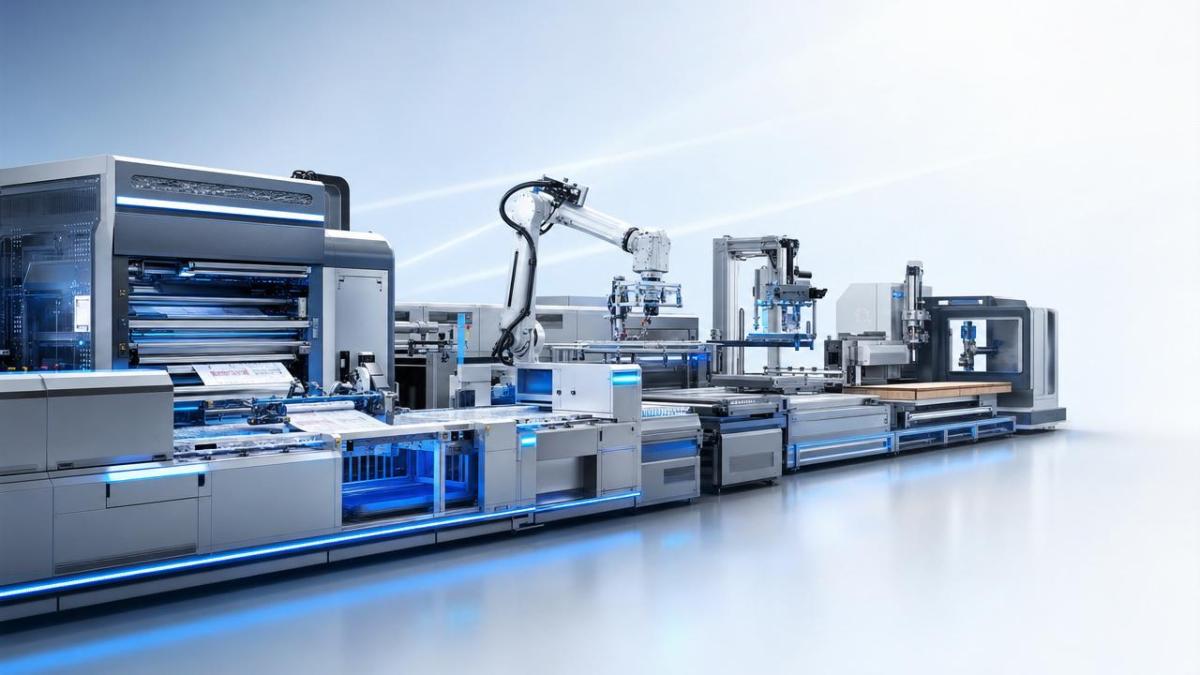
In corrugated, offset printing, die-cutting, folder-gluing, and CNC woodworking, the old efficiency model favored long stable runs.
That model is under pressure. Orders are smaller, designs change faster, and delivery windows keep shrinking.
As a result, hidden losses during setup now damage margins more than many managers expect.
A machine can look productive on paper while losing hours through plate changes, tool swaps, wash-ups, feeder adjustments, and quality stabilization.
This is where flexible manufacturing solutions are gaining strategic value across the broader industrial ecosystem.
Several market signals show why flexible manufacturing solutions are accelerating
Multiple signals point to a structural shift rather than a temporary operating challenge.
- SKU growth is increasing job variety on the same line.
- E-commerce requires frequent packaging changes and rapid replenishment.
- Whole-house customization drives one-off or small-batch woodworking orders.
- Labor shortages make manual setup knowledge harder to sustain.
- Energy and raw material costs punish every wasted startup sheet or board.
- Traceability and quality compliance demand repeatable settings, not operator memory.
These pressures explain why flexible manufacturing solutions are moving from optional upgrades to operational priorities.
The drivers behind the trend can be mapped clearly
For PWFS-observed sectors, these drivers connect directly with machine intelligence, motion control, setup automation, and production data visibility.
Where changeover losses appear across paper and wood operations
The pattern differs by process, but the economic logic is the same.
Packaging and printing lines
Losses often come from plate mounting, ink balancing, register correction, feeder resets, die changes, and carton size adjustments.
Even a brief startup instability can consume board, paper, ink, adhesive, labor time, and delivery confidence.
Woodworking and furniture systems
Losses appear in tool path verification, fixture changes, drilling pattern shifts, edge banding adjustments, and panel sorting errors.
When product variation is high, every manual intervention increases the chance of scrap or rework.
Flexible manufacturing solutions reduce these losses by making setup faster, guided, and repeatable.
Flexible manufacturing solutions now influence more than one business function
The impact extends beyond machine uptime. It changes planning quality, labor use, inventory posture, and customer responsiveness.
- Production gains more usable capacity without adding floor space.
- Scheduling becomes more realistic because setup assumptions improve.
- Quality teams see fewer startup defects and better process consistency.
- Commercial teams can accept shorter runs with less margin erosion.
- Maintenance can identify recurring setup bottlenecks from machine data.
This broader effect explains why leading plants treat flexible manufacturing solutions as a system capability, not a single machine feature.
The strongest response combines automation, software, and operator guidance
No single upgrade solves changeover loss. The best results come from coordinated improvements.
Key levers worth tracking
- Recipe management for repeat jobs and version control
- Servo-driven automatic positioning and memory-based adjustments
- Presetting tools, plates, dies, and glue parameters offline
- MES integration for job sequencing and live setup tracking
- Inline inspection to shorten time to first-good product
- Digital work instructions that reduce variation between shifts
In high-precision print and converting, registration intelligence and automated wash-up can significantly improve recovery time between jobs.
In CNC furniture lines, nesting optimization, barcode-driven panel flow, and connected edge banding improve order switching with less confusion.
What deserves immediate attention when evaluating flexible manufacturing solutions
The most useful evaluation starts with measured loss categories rather than broad automation ambition.
- Track average setup time by product family, not plant-wide averages.
- Measure startup waste before first sellable output.
- Separate planned changeover from unstable post-changeover time.
- Identify which adjustments still rely on individual experience.
- Check whether ERP, MES, and machine controls share the same job data.
- Review if automation fits mixed production, not only peak-volume products.
This approach keeps flexible manufacturing solutions tied to business outcomes such as throughput, yield, and delivery reliability.
A phased path often works better than a full-line leap
This staged method lowers risk while building the foundation for durable operational flexibility.
The next practical move is to convert setup data into a decision baseline
The biggest mistake is treating changeover loss as unavoidable overhead.
Across print, packaging, and woodworking, the plants gaining ground are those that quantify setup friction and redesign around it.
Flexible manufacturing solutions become valuable when they shorten time to first-good output, cut startup waste, and protect quality during frequent switching.
A practical next step is simple: audit the last thirty changeovers, rank the largest recurring delays, and match each issue to digital, mechanical, or procedural fixes.
That evidence-based review creates a stronger foundation for investment decisions and reveals where flexible manufacturing solutions can deliver the fastest return.
Related News
Get weekly intelligence in your inbox.
No noise. No sponsored content. Pure intelligence.
