
When does woodworking automation lower total labor cost?
When does woodworking automation truly lower total labor cost? The answer starts with economics, not machinery alone.
In today’s mixed manufacturing environment, labor expense includes far more than hourly wages.
It includes overtime, training, turnover, setup delays, scrap, rework, quality variation, and scheduling instability.
That is why woodworking automation becomes valuable when it improves the full production system.
For panel furniture, custom cabinetry, and flexible wood processing, woodworking automation can lower total labor cost only under specific operating conditions.
Those conditions usually involve repeatable workflows, rising labor scarcity, digital job preparation, and measurable waste reduction.
Why woodworking automation is being reevaluated across modern factories
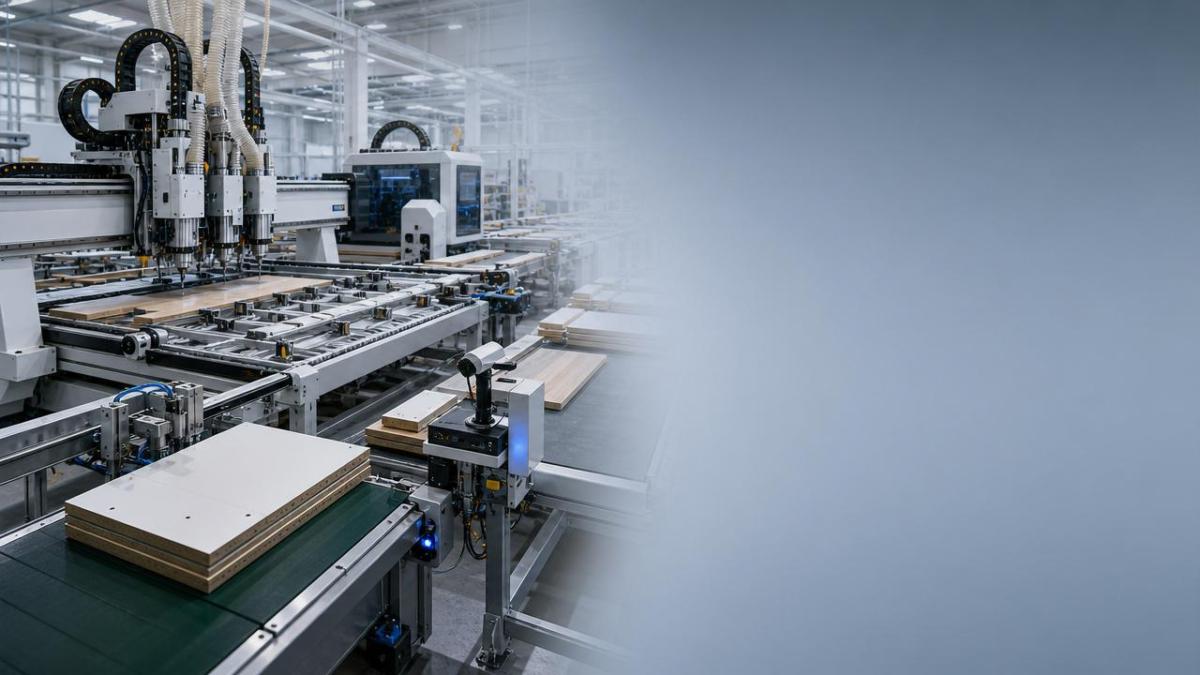
The labor equation in wood processing has changed quickly over the last several years.
Wages have risen, but labor volatility has risen even faster.
Skilled operators remain difficult to recruit, retain, and redeploy across shifting order mixes.
At the same time, order structures are becoming smaller, faster, and more customized.
This trend is especially visible in whole-house customization, panel furniture, and short-run component manufacturing.
As a result, woodworking automation is no longer judged only by headcount reduction.
It is judged by whether one line can absorb variability without adding hidden labor.
That hidden labor often sits outside the machine footprint.
It appears in job sorting, label matching, manual corrections, queue balancing, and troubleshooting.
The strongest signals that woodworking automation will reduce total labor cost
Not every operation benefits equally from automation.
The cost advantage appears when several signals occur together.
- Order volume is stable enough to keep equipment utilized across shifts.
- Product variety is high, but data preparation is already digital.
- Manual setup consumes too much available production time.
- Quality defects trigger expensive downstream rework.
- Experienced labor is scarce or expensive to replace.
- Lead times are compressed by customization and e-commerce demand.
- Material yield matters because board prices remain volatile.
When these factors combine, woodworking automation often shifts from optional upgrade to financial necessity.
A simple rule of thumb
Automation lowers labor cost when one operator can control more output with fewer interruptions.
If output rises but support labor also rises, the savings can disappear.
The real cost drivers behind woodworking automation payback
The strongest business case comes from total labor cost modeling.
That means comparing the full before-and-after production structure, not just payroll counts.
In most cases, the biggest savings come from time compression and error reduction.
Direct labor replacement matters, but indirect labor often determines final ROI.
What is pushing the woodworking automation trend forward
Several structural forces explain why woodworking automation now attracts stronger attention across integrated paper, packaging, and furniture ecosystems.
- Mass customization requires high mix production without proportional labor growth.
- CNC data flows allow design files to reach machines with fewer manual translations.
- Quality expectations are rising for fit, finish, and dimensional consistency.
- Delivery windows are shrinking, especially in retail and home projects.
- Environmental pressure makes waste, scrap, and rework more expensive.
- MES and line-level monitoring improve visibility into labor productivity.
These drivers matter because woodworking automation works best when linked to digital planning and process discipline.
A standalone machine may speed one step, yet fail to reduce total labor cost.
A connected workflow usually delivers the stronger result.
How woodworking automation changes different business stages
The impact of woodworking automation is not uniform across the value chain.
It reshapes labor demand differently at design, cutting, edging, sorting, and assembly stages.
Front-end preparation
Labor falls when CAD, nesting, labeling, and work orders are standardized.
Labor rises when automation receives poor input data or inconsistent naming structures.
Cutting and drilling
This is where woodworking automation often creates the most visible productivity gain.
Consistent toolpaths reduce dependence on individual operator technique.
Edge processing and finishing
Savings appear only when downstream flow stays synchronized with upstream output.
Otherwise, labor simply shifts from machining to sorting and buffer handling.
Assembly and delivery preparation
Accurate parts, better labels, and stable sequencing reduce search time and mismatch labor.
This hidden gain is often underestimated in woodworking automation decisions.
Where woodworking automation fails to lower labor cost
Automation does not automatically produce labor savings.
In some settings, it adds complexity faster than it removes manual work.
- Low utilization spreads fixed cost across too few production hours.
- Frequent engineering changes create unstable recipes and repeated setup edits.
- Poor maintenance planning increases downtime and emergency labor.
- Disconnected software creates manual data correction loops.
- Material quality inconsistency causes stoppages and manual intervention.
- Operators are reduced on paper, yet support staffing quietly expands.
This is the critical warning.
If woodworking automation is measured only by machine speed, the labor picture becomes misleading.
The correct metric is labor hours per saleable unit, not labor hours per machine cycle.
What deserves the closest attention before investing
The most reliable automation decisions come from operational evidence.
- Measure current labor by process step, including indirect time.
- Track scrap, rework, remakes, and order exception frequency.
- Map where skilled labor concentration creates scheduling risk.
- Check whether digital files are production-ready without manual cleanup.
- Estimate utilization under realistic order mix, not ideal capacity.
- Include maintenance, training, consumables, and software support in the model.
- Test whether downstream stations can absorb higher output smoothly.
These checkpoints help determine when woodworking automation becomes a labor-saving system rather than an isolated asset.
A practical framework for the next decision
The conclusion is clear.
Woodworking automation lowers total labor cost when it increases usable output, reduces process variability, and simplifies workforce dependence across the full production chain.
It works best where digital design meets disciplined execution and balanced downstream flow.
To move forward, start with a labor map, a defect map, and a realistic utilization model.
That evidence will show whether woodworking automation is ready to become a margin booster instead of a capital burden.
Related News
Get weekly intelligence in your inbox.
No noise. No sponsored content. Pure intelligence.
