
Flexible Manufacturing Systems Price: How to Compare ROI, Integration Cost, and Capacity
Flexible Manufacturing Systems Price: How to Compare ROI, Integration Cost, and Capacity
Evaluating flexible manufacturing systems price goes far beyond the initial quote.
In packaging, printing, and woodworking, the smarter comparison starts after the proposal lands on your desk.
A lower sticker price can hide higher integration work, slower ramp-up, and costly capacity limits.
A higher quote may deliver stronger ROI through labor savings, better yield, and faster changeovers.
That is why flexible manufacturing systems price should be judged as a total business case, not a purchase line item.
This guide breaks down what really matters when comparing suppliers, architectures, and investment timing.
Why Flexible Manufacturing Systems Price Is Often Misread
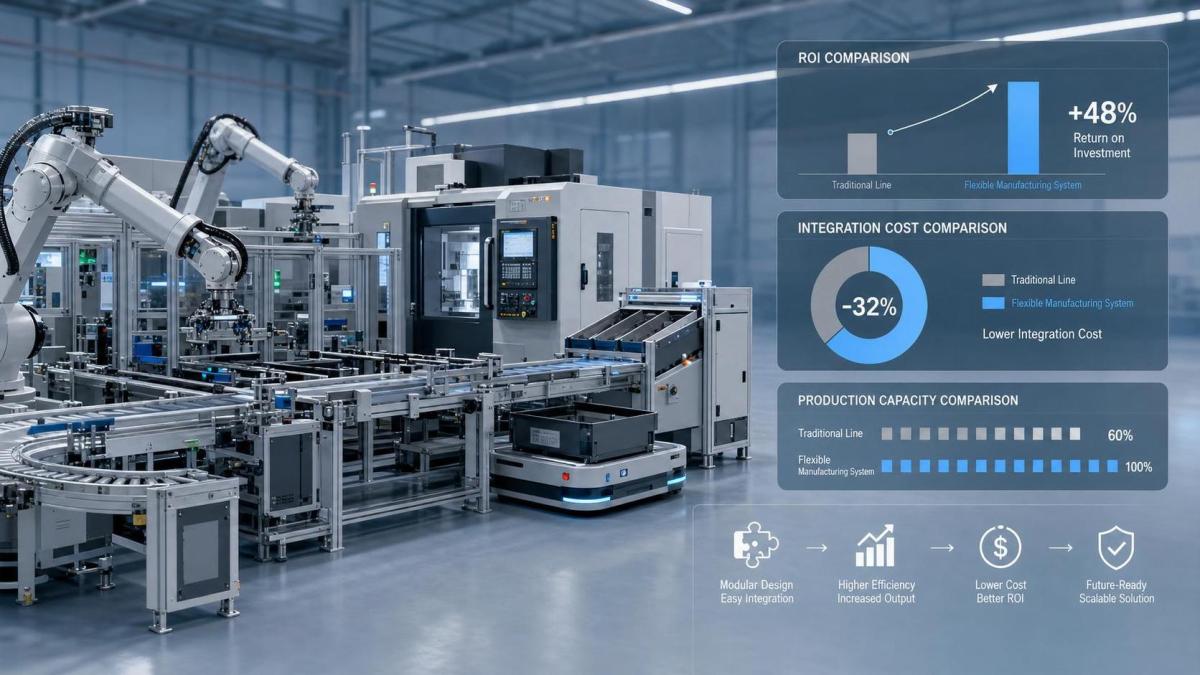
Many buyers compare flexible manufacturing systems price the same way they compare standalone machines.
That approach usually misses the main source of value.
A flexible system is not only hardware.
It is a linked production environment combining automation, software, data flow, material handling, and operator logic.
In real operations, flexible manufacturing systems price reflects how smoothly orders move from design to finished output.
For corrugated plants, that may mean less waste between board production, printing, die-cutting, and folding.
For furniture factories, it may mean direct CAD-to-cutting workflows with less manual interpretation.
The more product variation you handle, the more pricing must be tied to agility.
This is especially true when labor is tight and lead times keep shrinking.
What Is Included in Flexible Manufacturing Systems Price
Before comparing offers, separate visible cost from hidden cost.
The base quotation often covers only part of the full project.
Core cost components
- Main equipment, tooling, and automation modules.
- Robotics, conveyors, loading, unloading, and buffering units.
- MES, scheduling software, machine connectivity, and dashboards.
- Installation, commissioning, training, and acceptance testing.
- Factory layout changes, utilities, and safety compliance upgrades.
- After-sales service, spares, and remote support coverage.
In practice, flexible manufacturing systems price can rise sharply when upstream and downstream systems are not ready.
That includes ERP interfaces, barcode logic, shopfloor data capture, and digital job preparation.
More clearly now, the real question becomes simple.
How much of the price creates future efficiency, and how much only fixes current fragmentation?
How to Compare ROI Without Getting Lost in the Math
ROI does not need to be complicated.
But it does need to reflect your production reality.
When reviewing flexible manufacturing systems price, focus on the few levers that move profit fastest.
Key ROI drivers
- Labor reduction through fewer manual touches and lower supervision needs.
- Higher throughput from faster setup, feeding, cutting, printing, or gluing.
- Lower waste from better registration, nesting, and process control.
- Shorter lead times that support premium orders and urgent delivery.
- Improved uptime through predictive maintenance and cleaner scheduling.
- More order flexibility without adding separate dedicated lines.
For example, one system may have a higher flexible manufacturing systems price but recover cost in two years.
Another may look cheaper, yet struggle with changeovers and underperform at mixed batch sizes.
That difference matters most in custom packaging and whole-house furniture production.
Both markets now reward speed, consistency, and product variation at the same time.
Integration Cost Is Often the Real Budget Risk
From recent projects, the clearest warning sign is not machine cost.
It is integration complexity.
Flexible manufacturing systems price can stay manageable until software and workflow alignment begin.
Then delays, custom coding, and process redesign can change the financial picture quickly.
Questions to ask suppliers
- How many ERP or MES integrations have been completed in similar plants?
- Which interfaces are standard, and which require custom development?
- What data must be clean before commissioning starts?
- Who owns troubleshooting across machine, software, and network layers?
- How long is the ramp-up period to stable output?
This is where experienced intelligence matters.
In high-speed board converting, offset printing, die-cutting, or CNC routing, weak integration can erase expected gains.
A strong supplier should map process physics, data logic, and operator routines together.
That reduces risk long before production starts.
Capacity Planning: Buy for the Next Three Years, Not the Last One
Capacity is where flexible manufacturing systems price becomes strategic.
If you size the system only for current volume, you may outgrow it too soon.
If you overspec too early, cash flow suffers.
The goal is scalable capacity, not maximum capacity at any price.
Capacity factors worth comparing
This also means capacity should be modeled against product mix.
A furniture line handling unique panels behaves differently from a packaging line running repeated SKUs.
The better supplier will translate that reality into a more honest flexible manufacturing systems price.
A Practical Comparison Framework for Buyers
When proposals look similar, use a weighted comparison instead of relying on instinct.
This keeps flexible manufacturing systems price tied to business impact.
Recommended scoring areas
- Total project cost, not only machine price.
- Expected ROI within 24 to 36 months.
- Integration readiness with existing software and equipment.
- Output stability at your actual product mix.
- Service response, training depth, and spare part support.
- Scalability for future automation or capacity modules.
In actual procurement, this method helps remove noise from sales presentations.
It also exposes where a low flexible manufacturing systems price depends on assumptions that may not hold.
For many factories, the winning option is not the cheapest.
It is the one that reaches stable output fastest and scales with fewer surprises.
Final Take: Price Matters, but System Economics Matter More
Flexible manufacturing systems price should always be judged in context.
That context includes ROI, integration effort, labor pressure, product diversity, and growth plans.
For packaging, printing, and woodworking operations, flexible systems are no longer only an automation upgrade.
They are becoming the operating model behind faster customization and more resilient output.
The smartest next step is to request proposals in a way that forces full cost transparency.
Ask suppliers to quantify integration scope, ramp-up time, and real capacity under your product mix.
Once that happens, flexible manufacturing systems price becomes easier to compare, and much harder to misread.
Related News
Get weekly intelligence in your inbox.
No noise. No sponsored content. Pure intelligence.
