
Digital Print Integration in Packaging Lines: Common Bottlenecks and How to Fix Them
Digital Print Integration in Packaging Lines: Where Projects Slow Down
Digital print integration promises faster launches, shorter runs, and sharper version control.
Yet many packaging plants discover that adding a digital engine is not the same as building a reliable digital workflow.
That gap is where schedules slip, costs rise, and confidence drops.
Digital print integration can unlock faster changeovers, sharper customization, and better responsiveness in modern packaging lines—but many projects stall at the same hidden bottlenecks.
For project success, the real question is simple: where does the line stop behaving like one system?
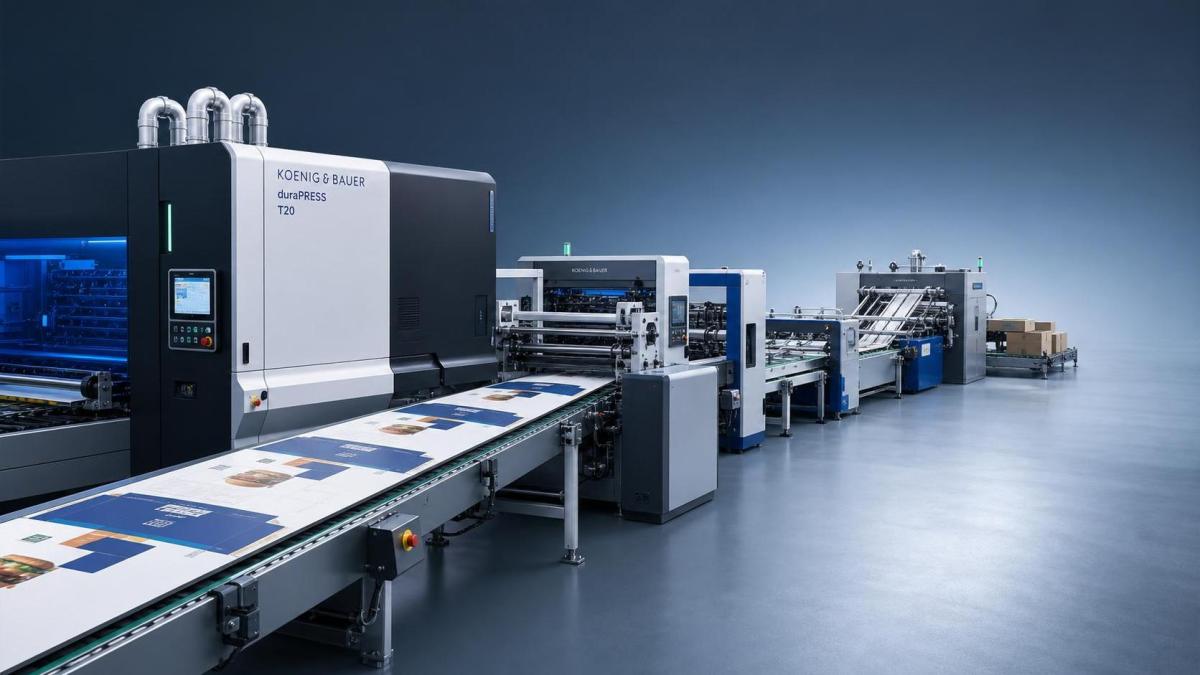
In practice, digital print integration fails less from one big issue and more from several small disconnects.
Files do not match substrate reality. Print speed outruns finishing. Operators improvise around missing standards.
The result is familiar: rework, idle time, color disputes, and missed delivery windows.
For packaging operations connected to corrugated lines, offset assets, folder-gluers, and automated converting, those weak points multiply quickly.
The good news is that most bottlenecks are predictable, measurable, and fixable.
Bottleneck 1: Workflow Integration Stops at the RIP
A common mistake is treating digital print integration as a press installation project.
The press may run well, but the upstream and downstream workflow stays manual.
Orders arrive by email. Artwork changes are tracked in spreadsheets. Job tickets are retyped at several stations.
This breaks digital print integration before the first sheet is printed.
What it looks like on the floor
- Operators confirm versions by phone or messaging apps.
- Prepress repeats file checks already done by sales or planning.
- Finishing teams receive late updates on size, barcode, or varnish zones.
- ERP, MES, and DFE systems store different job values.
How to fix it
Start by mapping every touchpoint from order entry to pallet release.
Then identify where data is re-entered, reinterpreted, or manually approved.
For strong digital print integration, each job should have one data owner and one version of truth.
Connect ERP, prepress workflow, DFE, inspection, and finishing ticket data through defined interfaces.
If full MES integration is not ready, build a staged bridge with mandatory field validation.
That simple step removes many silent errors early.
Bottleneck 2: Print Speed and Converting Speed Are Mismatched
Many teams focus on press throughput when planning digital print integration.
But packaging lines only perform well when printing and converting stay balanced.
A fast engine feeding a slow die-cutter or folder-gluer creates hidden inventory and unstable priorities.
Soon, the line looks busy but lead time gets worse.
Typical warning signs
- Printed stacks wait too long before die-cutting.
- Ink cure or surface condition changes before finishing.
- Urgent short runs interrupt profitable batch planning.
- WIP grows even when press uptime improves.
How to fix it
Model the full line, not the print module alone.
Use realistic job mixes, including SKU volatility, substrate thickness, cure time, and finishing setup loss.
In digital print integration projects, buffer design matters as much as rated speed.
Add clear release rules for jobs moving from print to converting.
When possible, group jobs by finishing path instead of only by print sequence.
That often reduces congestion more than another print-speed upgrade.
Bottleneck 3: Color Control Is Treated as an Art Problem
In packaging, color is never only visual.
It affects approval time, brand trust, substrate choice, and reprint risk.
Still, some digital print integration projects rely too heavily on operator experience.
That works until a new board grade, humidity shift, or customer target breaks the routine.
Root causes
- Profiles are generic, not substrate-specific.
- Measurement standards vary by shift or site.
- Brand targets are unclear before production starts.
- Preprint and digital output are compared without agreed tolerances.
How to fix it
Build digital print integration around measurable color governance.
Create substrate-linked profiles, target libraries, and pass-fail thresholds before ramp-up.
Standardize spectro use, sampling frequency, and approval ownership.
For operations tied to offset references, define which colors must match tightly and which can flex.
This reduces endless debates that slow packaging releases.
Bottleneck 4: Substrate Behavior Is Underestimated
Digital print integration becomes fragile when board behavior is treated as constant.
Corrugated liners, coated cartons, and specialty stocks do not respond the same way.
Absorption, surface energy, warp, dust, and stiffness all affect print and finishing stability.
This is especially visible during short runs with frequent material changes.
How to fix it
Set material qualification rules before commercial scheduling opens.
Test print adhesion, cure response, feeding behavior, die-cut edge quality, and glue performance together.
Do not approve a substrate based only on printable appearance.
In strong digital print integration, substrate approval includes converting readiness.
Keep a living matrix of qualified materials, machine settings, and risk notes.
That matrix becomes one of the most useful project tools on the floor.
Bottleneck 5: Operator Roles Are Unclear
Even the best equipment cannot rescue weak role design.
Digital print integration often crosses prepress, printing, QA, maintenance, and finishing teams.
If ownership is blurred, decisions get delayed or made twice.
What works better
- Name one launch owner for each production phase.
- Define escalation rules for color, substrate, and finishing deviations.
- Train operators on workflow logic, not only machine buttons.
- Use startup checklists shared across departments.
This sounds basic, but it is often where digital print integration either stabilizes or drifts.
A Practical Fix Plan for Digital Print Integration
If the goal is a production-ready packaging line, sequence matters.
Do not solve everything at once.
A phased digital print integration plan usually delivers faster results.
- Audit current workflow, data handoffs, and line constraints.
- Prioritize one packaging family or one substrate group first.
- Define baseline KPIs, including setup time, waste, WIP, and approval delays.
- Run controlled trials with prepress, print, QA, and converting present.
- Lock standards after proof, then scale to more SKUs.
From recent market shifts, the stronger signal is clear.
Customers want more versions, lower inventory, and faster response without quality loss.
That means digital print integration is no longer a side project.
It is a line architecture decision.
Quick Diagnostic Table
Final Takeaway
Digital print integration succeeds when packaging leaders treat it as a connected manufacturing system.
The press matters, but workflow discipline, substrate control, converting balance, and role clarity matter just as much.
In real operations, the fastest gains often come from fixing handoffs before buying more speed.
If digital print integration is being planned or corrected now, start with one rule.
Follow the job from data entry to finished box, and remove every point where people must guess.
That is usually the shortest path to a scalable, reliable, and commercially ready packaging line.
Related News
Get weekly intelligence in your inbox.
No noise. No sponsored content. Pure intelligence.
