
What industrial cutting systems reduce errors on fast lines?
On fast production lines, even tiny cutting deviations can trigger waste, rework, and costly stoppages.
The best industrial cutting systems reduce those risks by combining rigid mechanics, precise motion control, stable material handling, and closed-loop inspection.
In packaging and woodworking, error reduction rarely comes from one machine feature alone.
It comes from a system that keeps cut position, tool condition, board movement, and digital instructions aligned at production speed.
For PWFS, this topic sits at the center of corrugated converting, die-cutting, folder-gluing, and CNC wood processing intelligence.
What industrial cutting systems mean on high-speed lines
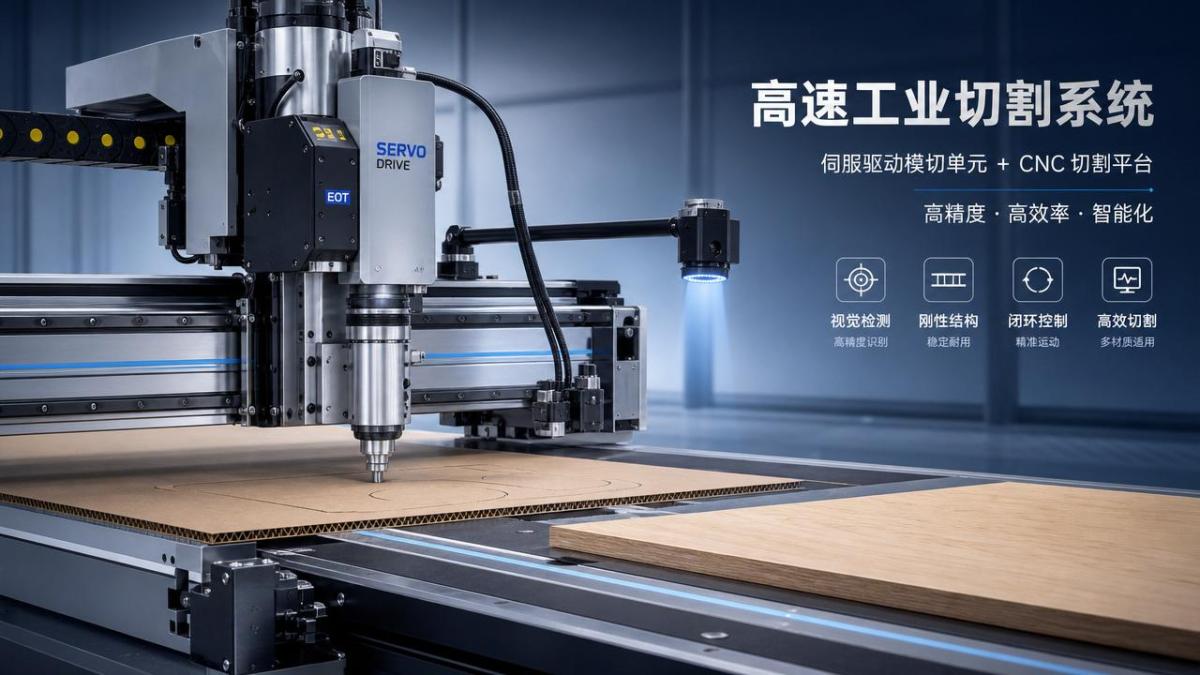
Industrial cutting systems are integrated platforms that cut, score, trim, slot, route, drill, or contour materials under controlled motion.
They include the cutting head, drive system, tooling, sensors, software, feeding units, and downstream synchronization logic.
On fast lines, the objective is not only speed.
The real objective is repeatable precision at speed, with minimal variation between the first part and the ten-thousandth part.
Strong industrial cutting systems usually control five error sources:
- material shift during feeding
- tool wear and heat buildup
- vibration in frames, gantries, or shafts
- registration drift between print and cut
- software or data transfer mismatch
This is why simple cutting speed comparisons can be misleading.
A faster head without stable tracking may increase scrap faster than it increases output.
The industrial cutting systems that most effectively reduce errors
Different materials require different cutting principles.
However, several industrial cutting systems consistently outperform others when high-line speed and low-error rates are both critical.
Servo-driven rotary die-cutting systems
For corrugated and carton converting, servo-driven rotary die-cutters are strong error reducers on fast lines.
They maintain better phase control, repeat length accuracy, and registration consistency than mechanically limited alternatives.
When paired with automatic register correction, they can react quickly to board stretch, print drift, and feeder variation.
Flatbed die-cutting systems with vision registration
For premium printed packaging, flatbed systems remain highly effective.
They apply uniform pressure and support complex geometries with excellent crease and cut quality.
Vision-assisted sheet alignment reduces errors caused by print shift and substrate distortion.
CNC routing systems with closed-loop servo control
In woodworking, CNC routing is often the best answer for flexible, high-accuracy production.
Closed-loop servos monitor position continuously and correct deviation before it becomes visible on the workpiece.
This is especially important for nested furniture panels, hinge drilling, groove cutting, and shaped edges.
Oscillating knife and digital cutting tables
For short runs, prototyping, and mixed materials, digital industrial cutting systems reduce setup error dramatically.
They eliminate die change delays and lower the risk of wrong-tool mounting between jobs.
Their strength is flexibility, though throughput may trail dedicated mass-production machines.
Laser-guided or vision-guided trimming systems
These systems are useful where printed marks, contours, or natural material variation affect cut paths.
They reduce human alignment errors and improve consistency on decorated boards, laminated panels, and customized components.
Key performance factors that matter more than headline speed
The most reliable industrial cutting systems are judged by error stability, not catalog speed alone.
Material behavior also changes error performance.
Corrugated board can warp with humidity, while laminated panels may chip if cutting geometry and spindle load are poorly matched.
That is why industrial cutting systems must be evaluated under real material and production conditions.
Industry focus areas across packaging and woodworking
PWFS tracks two broad groups where cutting precision directly affects yield and market performance.
- Packaging lines need exact slotting, die-cutting, and crease alignment at very high board or sheet speeds.
- Woodworking lines need flexible routing, drilling, trimming, and edge preparation across variable board formats.
Current attention is shifting from isolated machine accuracy toward system-level stability.
That includes upstream print quality, feeding repeatability, digital design data, and downstream assembly tolerance.
A carton cut slightly off-register may fail at folding and gluing.
A furniture panel cut slightly oversized may disrupt edge banding, drilling alignment, and final installation.
Application value of error-reducing industrial cutting systems
The value of advanced industrial cutting systems is visible in quality, uptime, and resource efficiency.
- Lower scrap rates from mis-cuts, chipped edges, and registration misses.
- Shorter setup time through recipe control, automatic positioning, and digital job transfer.
- Better downstream fit in folding, gluing, edge banding, assembly, and packing.
- More predictable maintenance through spindle load, knife life, and servo alarm data.
- Higher flexibility for mass customization without sacrificing dimensional discipline.
This matters in e-commerce packaging, branded retail boxes, and whole-house furniture programs.
In each case, line speed is commercially important, but avoidable error is more expensive than moderate speed loss.
Typical cutting system choices by production scenario
Practical guidance for selecting industrial cutting systems
Start with the dominant error mode, not the advertised machine category.
If print registration fails, prioritize vision and servo correction.
If edge chipping dominates, focus on tool geometry, spindle stability, and chip evacuation.
If variation appears after job changes, inspect software workflow and operator dependency.
- Test industrial cutting systems with actual substrates, moisture range, and production speeds.
- Measure first-pass yield, not only nominal throughput.
- Check tolerance results after several hours, not only during initial setup.
- Review tool-life management, spare parts support, and calibration routines.
- Verify integration with MES, ERP, CAD, and print workflow data.
In fast environments, the most valuable industrial cutting systems are those that keep performance stable when operators, materials, and order mix change.
A practical next step for reducing line errors
Reducing errors on fast lines begins with a structured audit of cut quality, registration drift, tooling wear, and digital job flow.
From there, compare industrial cutting systems by real yield performance across representative jobs.
For packaging, examine die-cutting pressure balance, feeder control, and print alignment recovery.
For woodworking, examine servo precision, vacuum hold-down, spindle behavior, and nesting software logic.
The strongest choice is usually the system that connects mechanics, controls, and data into one repeatable precision loop.
That is how industrial cutting systems reduce errors while supporting both throughput and flexible manufacturing growth.
Related News
Get weekly intelligence in your inbox.
No noise. No sponsored content. Pure intelligence.
