
Precision Woodworking Equipment Selection Guide for Panel Processing and Joinery Work
Precision Woodworking Equipment Selection Guide for Panel Processing and Joinery Work
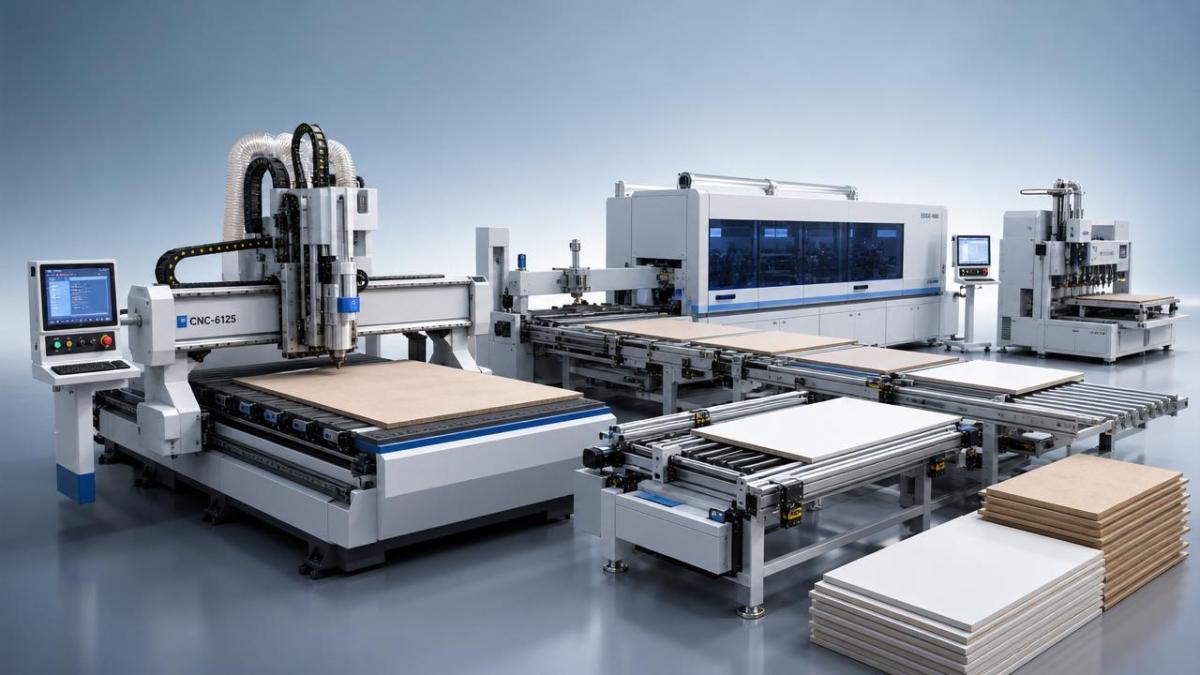
Selecting precision woodworking equipment is rarely just a purchasing task. It is a production strategy that shapes quality, lead time, labor structure, and long-term operating cost.
In panel processing and joinery work, one wrong decision can create bottlenecks for years. One well-matched line can raise output without sacrificing finish quality.
That is why precision woodworking equipment should be evaluated as a system, not as isolated machines. CNC routers, drills, saws, and edge banders must work together.
The practical goal is simple. You want stable accuracy, reliable throughput, clean edge quality, and predictable delivery under changing order mix.
From recent market shifts, the clearer signal is flexibility. Customized furniture, shorter batches, and tighter delivery windows now define equipment selection.
This also means precision woodworking equipment must support digital job flow, low setup loss, and repeatable results across different materials and operators.
Start with the Production Reality
Before comparing brands or machine sizes, define your actual production profile. Many costly mistakes begin with technical overbuying or process underestimation.
Ask a few direct questions. What board types dominate? What tolerances matter? How many order changes happen daily? Where do rework and delays usually start?
- Board materials: MDF, plywood, particle board, melamine panels, solid wood parts.
- Order profile: mass production, mixed batch, or whole-house customization.
- Critical operations: nesting, drilling, grooving, trimming, edge sealing, or joinery accuracy.
- Output target: daily square meters, completed cabinets, or assembled units.
- Tolerance priority: cut size, hole position, surface finish, or edge bond consistency.
This first step keeps precision woodworking equipment selection grounded in business reality. It also helps separate must-have functions from attractive but low-value features.
Core Equipment Categories That Shape Results
For panel processing and joinery work, most line decisions revolve around four equipment groups. Each one affects precision, speed, and workflow in a different way.
1. CNC Routers and Nesting Centers
These are often the center of modern precision woodworking equipment layouts. They define cutting flexibility, drilling integration, and data-driven production capacity.
Key checkpoints include spindle power, tool magazine capacity, table stability, vacuum zoning, and software compatibility with CAD or MES systems.
2. Beam Saws or Panel Saws
If your order mix includes repeated rectangular parts, saw-based cutting may outperform nesting. It offers speed, predictable panel yield, and easier maintenance.
The decision depends on part geometry, label tracking, dust control, and whether downstream drilling is integrated or separate.
3. Edge Banders
Edge quality strongly influences customer perception. In many projects, poor sealing creates more complaints than cutting errors.
When reviewing precision woodworking equipment, compare glue technology, corner finish quality, feed stability, and cleaning performance after trimming and scraping.
4. Drilling and Joinery Machines
Horizontal drilling, vertical drilling, and dowel insertion accuracy determine assembly speed later. Small positional deviations quickly become expensive on site.
For joinery work, focus on repeatability, servo control, fixture stability, and how easily programs switch between product variants.
How to Compare Precision Beyond the Spec Sheet
Many spec sheets look impressive. In real production, precision woodworking equipment proves itself through consistency over time, not just peak laboratory figures.
A practical evaluation should include both static and dynamic factors. Machine rigidity matters, but thermal behavior, dust extraction, and operator workflow matter too.
In actual operations, this comparison method reveals more than brochure language. It shows whether precision woodworking equipment will hold performance under daily pressure.
Match Equipment to Workflow, Not Just Capacity
A fast single machine does not guarantee a fast factory. Bottlenecks usually appear between machines, especially during sorting, labeling, buffering, and part identification.
That is why precision woodworking equipment should be selected around the full flow. Cutting speed matters less if edge banding queues keep growing.
A balanced line often outperforms an oversized flagship machine. The real target is synchronized output with fewer pauses, fewer handoffs, and fewer searching mistakes.
- Map part flow from design release to packing.
- Measure queue time between cutting, drilling, and edging.
- Check barcode, labeling, and part tracking logic.
- Review buffer zones for mixed-order production.
- Plan labor roles around exceptions, not routine repetition.
This systems view is especially important for whole-house customization, where every batch can change and every identification error creates downstream disruption.
Cost Evaluation Should Go Beyond Purchase Price
The cheapest quote often becomes the most expensive decision. Purchase price is visible. Hidden operating cost appears later, usually through downtime, waste, and inconsistent quality.
A stronger selection model compares total value over time. This is where precision woodworking equipment should be judged like a long-term production asset.
- Calculate output per shift, not only nameplate speed.
- Estimate material savings from better nesting or cut planning.
- Include glue, tooling, energy, and maintenance consumption.
- Review expected labor reduction and training intensity.
- Price the cost of quality failures and delivery delays.
In many cases, better precision woodworking equipment wins through lower defect cost, faster setup, and stronger on-time delivery rather than headline speed.
Supplier Evaluation Is Part of Equipment Evaluation
Machine performance depends heavily on supplier capability. Installation quality, training depth, spare parts access, and response time shape the real ownership experience.
This becomes even more important when precision woodworking equipment is tied to software, digital nesting, or custom process logic.
A practical supplier review should cover reference projects, remote diagnostics, local service coverage, commissioning method, and training for both operators and maintenance staff.
- Ask for similar applications, not generic showroom samples.
- Review acceptance standards before delivery.
- Confirm lead time for key spare parts.
- Check software upgrade policy and compatibility risks.
- Clarify who owns process optimization after installation.
A capable supplier reduces project risk. A weak supplier turns good hardware into a slow and frustrating startup.
A Practical Shortlist Framework
To make decisions faster, use a structured shortlist. It keeps team discussion focused and prevents selection from drifting into personal preference.
A useful framework scores precision woodworking equipment across five decision dimensions.
- Process fit: how well it matches your actual panel and joinery tasks.
- Precision stability: how reliably it repeats quality over full shifts.
- Integration value: how smoothly it connects with software and downstream flow.
- Ownership cost: how it performs across labor, tools, glue, energy, and service.
- Supplier strength: how confidently the partner supports startup and scaling.
If two options look similar, choose the one with lower execution risk. Stable output usually creates more value than theoretical maximum speed.
Final Decision: Build for the Next Three Years
The best precision woodworking equipment is not simply the most advanced machine. It is the system that fits your process today and adapts to tomorrow’s order complexity.
For panel processing and joinery work, selection should balance accuracy, flexibility, maintainability, and digital readiness. That balance is what protects delivery performance.
In practice, strong decisions start with real workflow data, compare precision under operating conditions, and evaluate total production impact instead of isolated specifications.
If you are reviewing new capacity, line upgrades, or customized manufacturing expansion, start by mapping current bottlenecks and defining the quality points you cannot compromise.
That simple discipline makes precision woodworking equipment selection faster, clearer, and far more likely to deliver long-term operational value.
Related News
Get weekly intelligence in your inbox.
No noise. No sponsored content. Pure intelligence.
