
CNC Furniture Manufacturing for Custom Orders: How to Improve Yield and Cut Rework
Why Yield Matters More in Custom CNC Furniture Manufacturing
In CNC furniture manufacturing, custom orders create a very different pressure from batch production.
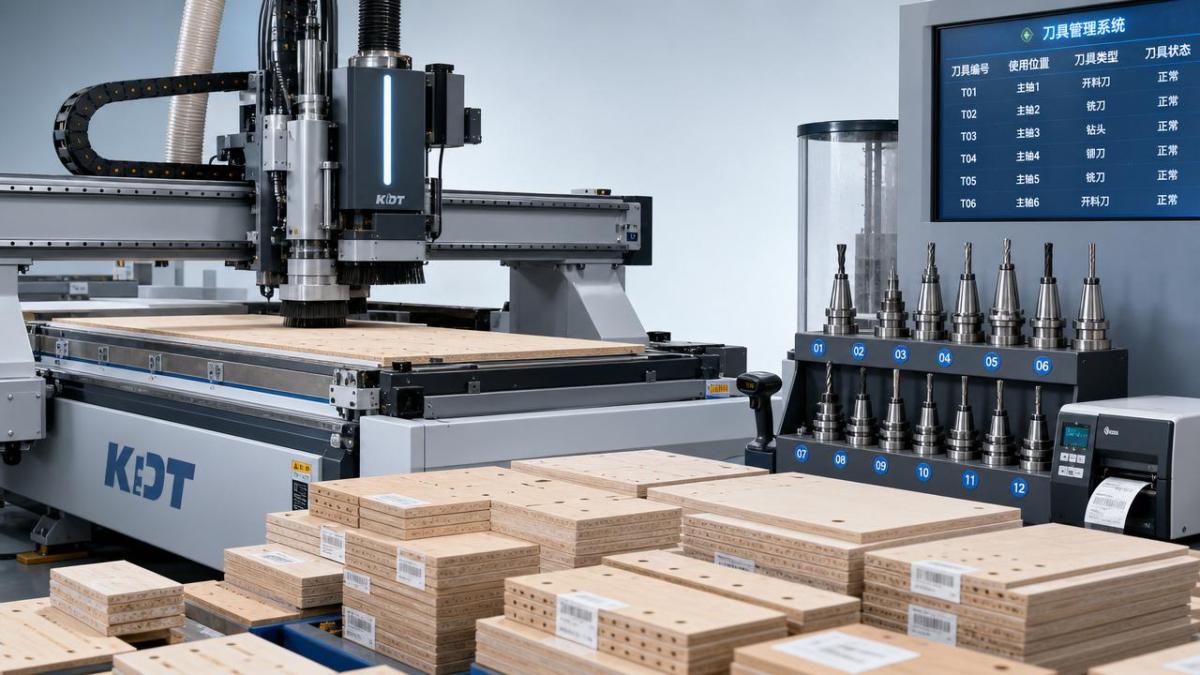
Every panel may carry different dimensions, hole patterns, edge details, and hardware requirements.
That means one programming mistake, one wrong label, or one tool offset can trigger avoidable scrap and expensive rework.
For many factories, the biggest problem is not machine speed. It is first-pass accuracy.
When first-pass yield improves, delivery promises become easier to keep, planning becomes more stable, and margin leakage slows down.
This is especially important in whole-house customization, where one delayed cabinet can hold back installation for an entire room.
In practical terms, better CNC furniture manufacturing performance comes from connecting design, machining, nesting, tool control, and inspection into one disciplined workflow.
The good news is that most yield losses are predictable. They can be reduced with process design, not just operator effort.
Start Upstream: Fix Data Before the Board Reaches the Machine
A large share of rework in CNC furniture manufacturing starts long before cutting begins.
Custom projects often combine multiple designers, shifting client preferences, and fast revisions.
If version control is weak, the shop may process outdated files without realizing it.
The smartest move is to treat engineering data as a controlled production input, not an informal handoff.
Build a release gate for production files
Before any order enters CNC furniture manufacturing, confirm one approved source for CAD, CAM, BOM, and labels.
This release gate should check dimensions, hardware logic, grain direction, edge-banding sides, and machining constraints.
Even a short digital checklist can prevent repeated shop-floor confusion.
Standardize rule libraries
Many custom furniture errors happen because every programmer uses a slightly different logic.
Create standard rule libraries for drilling depths, connector positions, safe tool paths, and minimum panel spacing.
This reduces variation and makes CNC furniture manufacturing output more repeatable, even with mixed order types.
Improve Material Yield Without Sacrificing Flexibility
Material cost remains one of the fastest ways yield loss becomes visible.
In CNC furniture manufacturing, poor nesting can quietly erase profit, especially with premium boards and decorative surfaces.
However, chasing the highest nesting rate alone can also create downstream trouble.
A layout that looks efficient on screen may increase sorting errors, break fragile parts, or complicate edge-banding flow.
Balance nesting yield with process yield
The best CNC furniture manufacturing strategy weighs material utilization against handling risk and machine stability.
- Group parts by board finish, thickness, and grain direction.
- Avoid ultra-tight spacing for small or narrow components.
- Reserve safe margins for vacuum hold and chip evacuation.
- Separate fragile decorative pieces from heavy drilling cycles.
This approach often lowers scrap more effectively than chasing a theoretical nesting percentage.
Track remnant recovery deliberately
Usable offcuts should not disappear into manual storage chaos.
Label remnants by size, material code, and usable face quality.
When integrated into scheduling, remnant reuse can support lower-cost custom jobs without disrupting standard boards.
Reduce Rework Through Tooling Discipline and Machine Control
Many shops blame operators for rework, but the root cause often sits in tooling management.
In CNC furniture manufacturing, worn tools, inconsistent offsets, and unstable clamping quickly turn small deviations into repeat defects.
This is where disciplined machine control pays off fast.
Create a tool life management routine
Do not wait for visible quality failure before replacing cutters or drills.
Track running meters, board type, spindle load trends, and defect patterns by tool ID.
That creates a predictable replacement window and protects surface quality.
Stabilize setup conditions
Repeatable CNC furniture manufacturing depends on repeatable zero points, vacuum performance, spoilboard condition, and tool calibration.
Short daily checks help avoid long nights of hidden defects.
- Verify vacuum zones before shift start.
- Check spindle and aggregate alignment.
- Confirm tool length and diameter compensation.
- Inspect spoilboard flatness and cut-through consistency.
These steps look basic, yet they prevent recurring errors that are expensive to trace later.
Use In-Process Quality Control Instead of End-of-Line Discovery
One of the costliest habits in CNC furniture manufacturing is finding errors after all value-added steps are complete.
A wrongly drilled panel becomes much more expensive after edge banding, sorting, transport, and installation prep.
A better model is layered verification inside the process.
Add control points at critical transitions
Check dimensions and hole patterns right after machining on first pieces, then confirm edge information before banding.
For high-mix orders, barcode-based traceability helps link each part to its digital record.
That makes CNC furniture manufacturing far easier to audit and correct in real time.
Measure the defects that actually hurt delivery
Not every defect deserves the same level of attention.
Focus on the few that delay shipment or trigger remanufacturing.
Connect Scheduling, MES, and Shop-Floor Feedback
From a project perspective, yield problems are rarely isolated machine events.
They usually reflect a gap between planning assumptions and shop-floor reality.
That is why stronger digital coordination matters in CNC furniture manufacturing.
Turn production data into decisions
MES or similar systems should not only collect data. They should trigger action.
If one product family shows repeated rework, engineering needs feedback before the next order release.
If one machine shows lower yield on specific materials, scheduling should adapt capacity plans.
This closed loop makes CNC furniture manufacturing more resilient under custom order pressure.
Use a simple operating dashboard
The most useful dashboard is usually the clearest one.
- First-pass yield by order and product type.
- Rework hours by root cause.
- Material utilization by board category.
- Tool-related defects by machine and shift.
- On-time completion risk for active projects.
When teams review these numbers weekly, improvement stops being abstract and becomes operational.
A Practical Action Plan for Higher CNC Furniture Manufacturing Yield
If the goal is to cut rework quickly, start with a focused sequence instead of a broad transformation program.
A practical rollout often works better than a large technology push.
- Map the top three rework causes in current CNC furniture manufacturing orders.
- Lock one approved data release process for design-to-machine handoff.
- Set tool life rules and daily machine verification routines.
- Add in-process checks after machining and before edge treatment.
- Review yield, scrap, and delay data every week with engineering and production together.
In the end, stronger CNC furniture manufacturing performance is not only about faster routers or smarter software.
It comes from disciplined information flow, stable machine conditions, and earlier detection of deviations.
When those elements work together, custom orders become easier to scale, margins become more predictable, and delivery confidence improves.
That is the real advantage of better CNC furniture manufacturing: less waste, fewer surprises, and more control over profitable customization.
Related News
Get weekly intelligence in your inbox.
No noise. No sponsored content. Pure intelligence.
