CNC Wood Cutting Price: What Affects Cost per Sheet, Hour, and Finished Part?
CNC Wood Cutting Price: What Affects Cost per Sheet, Hour, and Finished Part?
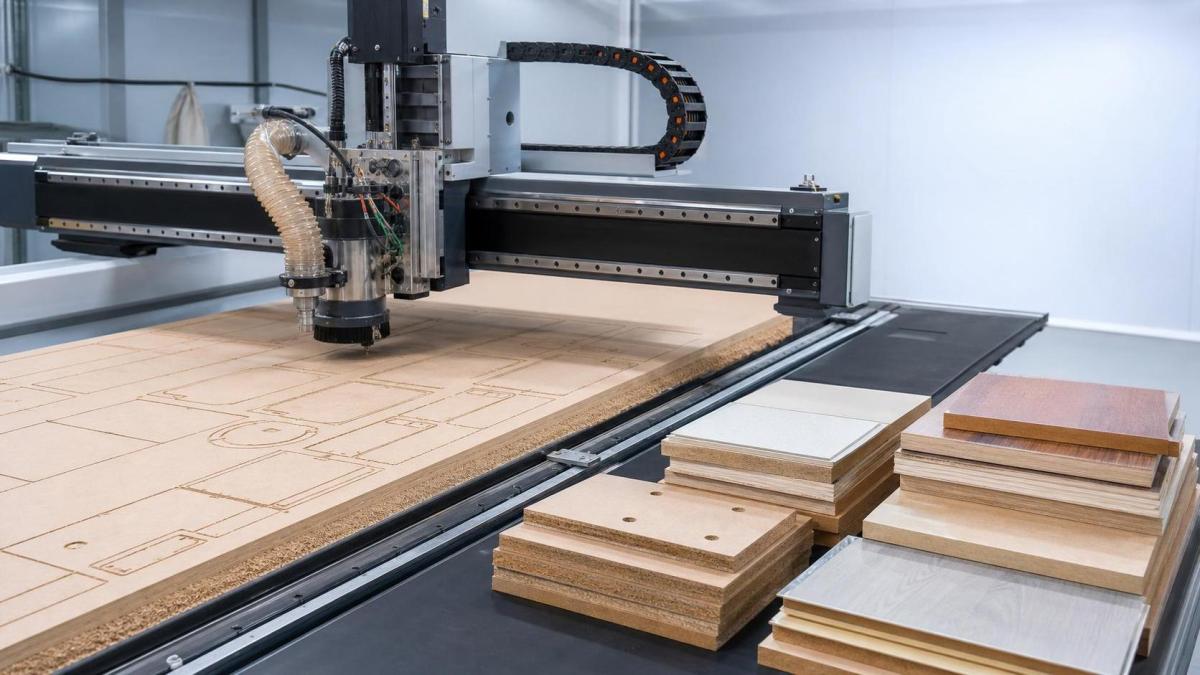
CNC wood cutting price can look simple at first glance. In practice, it rarely is.
A quote may be based on sheet usage, machine hours, or finished parts. Some suppliers combine all three.
That creates a common problem. Two offers can look close, while the real cost structure is completely different.
For better sourcing decisions, it helps to break CNC wood cutting price into its actual cost drivers.
The main variables are material, sheet size, cutting time, tooling, labor, tolerances, and downstream handling.
Once these inputs are visible, quote comparison becomes more disciplined and much less subjective.
That matters even more in panel furniture, custom interiors, fixtures, and batch-size-one woodworking.
Why CNC Wood Cutting Price Varies So Much
The biggest mistake is treating CNC wood cutting price as a flat market number. It is not.
A cabinet side panel, a shaped chair back, and a grooved acoustic board do not consume resources the same way.
Even when the same board is used, machine path density can change total cost sharply.
Recent market shifts make this more visible. Energy, labor, glue-based panels, and tool replacement all moved upward in many regions.
More suppliers now separate material and processing. Others still quote a bundled finished-part price.
This means a low unit quote may hide higher waste, lower nesting efficiency, or weak process control.
Cost per Sheet: Material Is Only the Starting Point
When suppliers quote by sheet, the board itself is only one layer of CNC wood cutting price.
Material grade changes cost immediately. MDF, plywood, particle board, solid wood, and laminated panels behave very differently.
Denser sheets often cut slower. Coated surfaces may require cleaner edges and fresher tools.
Sheet size also matters. A larger panel can lower part cost if nesting improves. It can also increase waste if shapes are inefficient.
Ask suppliers how they calculate yield. The useful number is not sheet price alone, but sheet utilization rate.
In real purchasing work, these sheet-level items usually drive the largest differences:
- Board thickness and density
- Surface finish and edge quality requirement
- Defect allowance for knots, voids, or warp
- Nesting efficiency across the full sheet
- Waste ownership, reusable offcuts, and scrap rules
A practical quote should state whether scrap is charged fully, partly credited, or retained by the supplier.
Without that detail, a sheet-based CNC wood cutting price can be misleading.
Cost per Hour: Machine Time Drives the Core Processing Rate
Hourly pricing is often the cleanest way to understand machining cost.
The machine hour rate usually covers depreciation, power, maintenance, dust extraction, operator support, and overhead.
But not every machine hour is equal. A 3-axis router and a 5-axis CNC cell should never be compared as if they were the same asset.
Spindle power, automation level, loading system, and software all change the real CNC wood cutting price per hour.
Cycle time is where many hidden costs sit. A part may cut in three minutes but require seven minutes of handling and setup.
That is why smart buyers ask for full cycle time, not pure spindle time.
Useful hourly quote questions include:
- Does the rate include setup, programming, and unloading?
- Is tool change time included?
- Are trial runs billed separately?
- What utilization rate is assumed for the machine cell?
A supplier with better automation may show a higher hourly rate but a lower total finished-part cost.
Cost per Finished Part: Complexity Changes Everything
Finished-part pricing is often the easiest format to approve internally. It is also the easiest to misunderstand.
A simple rectangle with a few drill holes is not comparable to a contoured part with pockets, slots, bevels, and tight tolerances.
Each added feature increases toolpath length, programming effort, inspection demand, and rejection risk.
That drives CNC wood cutting price upward, even when the material remains unchanged.
More complex parts also expose process stability. If dust evacuation is weak, edge finish declines and recuts become more likely.
In custom furniture and interior projects, small geometry decisions can have a large sourcing impact.
This is why part drawings should be reviewed for manufacturability before final quote approval.
The Hidden Cost Drivers Many Quotes Leave Out
The visible numbers are only part of the story. Several hidden items can reshape CNC wood cutting price later.
Tool wear is one of them. Abrasive boards, laminates, and mineral-filled surfaces shorten cutter life quickly.
Programming is another. One-off custom jobs often need more CAM effort than repeat production.
Then comes labor around the machine. Material loading, labeling, sorting, packing, and quality checks all add cost.
Suppliers with MES integration and automatic labeling usually control these steps more efficiently.
More importantly, they reduce mix-ups in multi-part custom orders.
- CAD to CAM preparation time
- Fixture design or vacuum holding challenges
- Tooling replacement frequency
- Rework caused by chips, tear-out, or burn marks
- Part identification and packaging accuracy
If these items are not defined early, the first quote can be less reliable than it appears.
How to Compare Suppliers More Accurately
A better buying process starts with quote normalization. Every supplier should price the same scope, assumptions, and output conditions.
That includes board specification, tolerance, surface protection, edge standard, packaging method, and batch size.
Then compare CNC wood cutting price across three lenses: per sheet, per hour, and per finished part.
This makes quote gaps easier to explain and harder to hide.
A practical evaluation checklist should include:
- Material yield percentage by nesting plan
- Quoted machine and total cycle time
- Setup charge and minimum order logic
- Expected rejection rate and quality control method
- Whether post-processing is included or excluded
- Lead time stability for repeat and custom orders
The strongest suppliers explain their assumptions clearly and can defend the numbers with process data.
A Smarter Way to Control CNC Wood Cutting Price
The best cost control move is not always price pressure. Often it is cleaner specifications and more production-friendly design.
Simpler geometry, better nesting, fewer tool changes, and realistic tolerances can reduce CNC wood cutting price without hurting product value.
It also helps to separate one-time engineering costs from recurring production costs.
That distinction is especially useful for trial orders, pilot launches, and customized furniture programs.
In the end, a reliable CNC wood cutting price is not the cheapest visible number. It is the most transparent and repeatable one.
Use sheet cost to judge material efficiency, hourly cost to judge process capability, and part cost to judge commercial fit.
When those three views align, sourcing decisions become faster, cleaner, and far less risky.
Related News
Get weekly intelligence in your inbox.
No noise. No sponsored content. Pure intelligence.
