
Woodworking Equipment Selection for Panel Processing: Key Specs That Matter Most
Woodworking Equipment Selection for Panel Processing: Key Specs That Matter Most
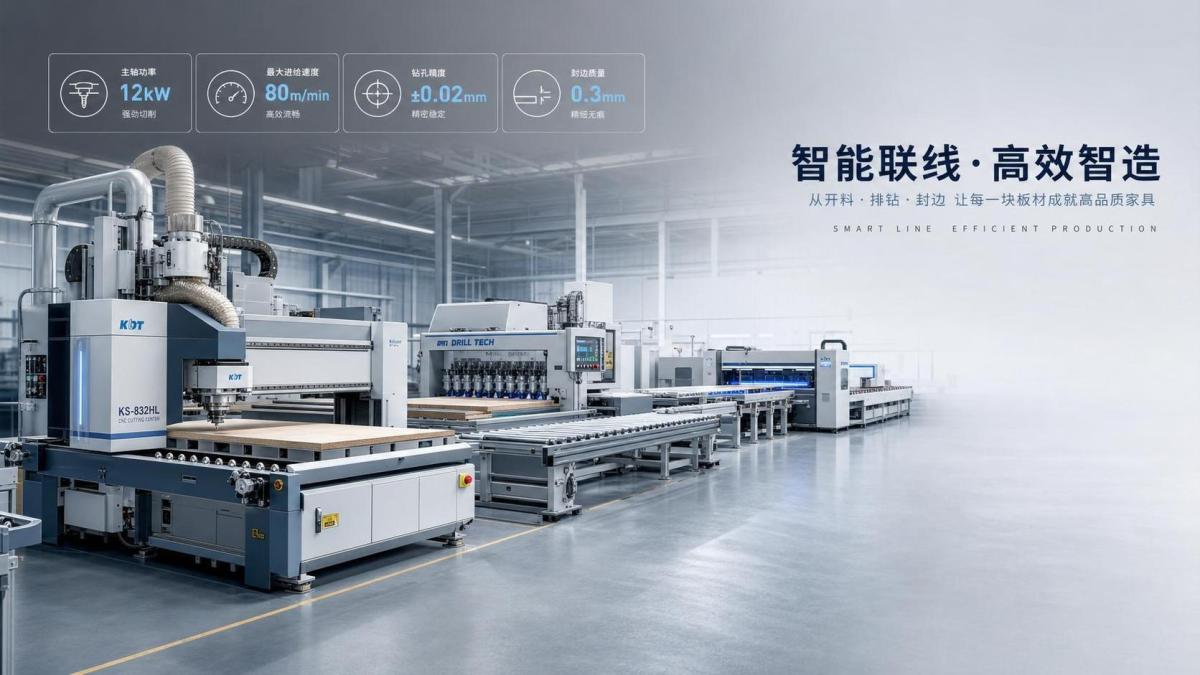
For panel processors, woodworking equipment selection starts with output targets, not brochure highlights.
A machine can look impressive and still become the wrong investment.
The real question is simple.
Can the equipment hold accuracy, speed, edge quality, and uptime under your actual production mix?
That is why woodworking equipment selection for panel processing should focus on a few hard specifications.
These include spindle power, feed speed, drilling precision, dust extraction, edge banding performance, and automation readiness.
From recent market changes, one signal is clear.
Smaller batches, more decor options, and shorter lead times are reshaping equipment decisions.
This also means technical evaluation now goes beyond nominal machine size.
It needs a closer look at process stability, software compatibility, and future flexibility.
Start With the Production Reality
Good woodworking equipment selection begins with the board, not the machine catalog.
Melamine-faced particleboard, MDF, plywood, compact board, and honeycomb panels behave very differently during cutting and drilling.
Panel size variation matters too.
A line designed for standard cabinet panels may struggle when oversized wardrobe parts become common.
In practical terms, define five basics before comparing suppliers:
- Daily output by panel type
- Typical thickness range
- Share of custom versus repeated parts
- Required hole patterns and grooves
- Edge quality expectations by product grade
Without this baseline, woodworking equipment selection becomes guesswork.
And guesswork usually appears later as chip-out, rework, idle time, or underused capacity.
Spindle Power and Feed Speed: Read Them Together
Spindle power is one of the most cited factors in woodworking equipment selection.
It matters, but only when matched with feed speed and tool path demands.
A higher kilowatt rating does not automatically mean better productivity.
For nested-based manufacturing, the useful comparison is cutting stability at target throughput.
If the spindle is strong but the structure vibrates, surface quality drops fast.
If feed speed looks high on paper but acceleration is weak, cycle time gains disappear on complex parts.
Focus on these checks during woodworking equipment selection:
- Continuous spindle rating, not only peak rating
- Maximum feed speed under loaded cutting conditions
- Acceleration and deceleration performance on short tool paths
- Frame rigidity and vibration control
- Tool change time in mixed-part jobs
For high-mix furniture production, balanced motion performance usually beats extreme headline speed.
Drilling Accuracy and Positioning Repeatability
In cabinet and wardrobe production, drilling often exposes weak equipment faster than routing does.
Shelf pins, connectors, hinges, and dowels require stable hole location over long shifts.
This is where woodworking equipment selection should look closely at repeatability figures.
Nominal positioning accuracy matters less than real repeatability after thermal drift and continuous operation.
Also review the drilling block layout.
The right vertical and horizontal spindle combination can reduce part flipping and secondary handling.
That directly improves line flow and operator consistency.
Ask for proof under actual panel programs, not ideal test patterns.
Edge Quality Is a Process Metric, Not a Cosmetic Detail
Many teams treat edge finish as a secondary item in woodworking equipment selection.
That is a costly mistake.
Poor cut edges affect appearance, edge band adhesion, sealing reliability, and downstream repair rates.
The problem becomes more visible with dark decors, glossy surfaces, and thin edge materials.
For panel processors, edge quality depends on several linked variables:
- Tool sharpness and tool holding stability
- Spindle vibration and machine rigidity
- Proper feed rate for the board surface
- Vacuum hold-down consistency
- Dust extraction around the cutting zone
This also affects edge banding selection.
If edge preparation is unstable, even a premium PUR or laser edge process cannot fully hide defects.
Automation Level Should Match Order Structure
Automation is central to modern woodworking equipment selection, but more automation is not always more value.
The right level depends on batch size, labor availability, and order volatility.
For repeat production, automatic loading, labeling, sorting, and return handling can transform unit economics.
For highly customized work, software flexibility may be more valuable than heavy mechanical automation.
More clearly now, technical evaluation needs to examine digital connectivity.
Can the machine read design data cleanly from CAD, MES, and optimization software?
Can it support barcode tracking and recipe-driven changeovers without manual file correction?
These questions often decide whether woodworking equipment selection supports future scale or blocks it.
Material Compatibility and Tooling Economics
A solid woodworking equipment selection process must include consumables and tooling costs.
Machine price is only one layer of the decision.
Tool wear changes quickly when production shifts from standard particleboard to abrasive decorative surfaces or compact materials.
This is why material compatibility should cover both process capability and operating cost.
Review spindle interface, collet consistency, tooling availability, and local service support.
Also check whether the machine can maintain cut quality as tools age between planned replacements.
In real operations, stable performance over tool life matters more than perfect results with a fresh cutter.
A Practical Comparison Table
How to Shortlist Without Missing Hidden Risks
The most reliable woodworking equipment selection process is staged, not rushed.
First, filter machines by process fit.
Then test the finalists against actual production files and representative board types.
A practical shortlist usually includes these steps:
- Define target output, panel mix, and tolerance limits.
- Request sample processing using your own files.
- Measure cut edge quality, hole repeatability, and cycle time.
- Review software workflow from design entry to finished label.
- Calculate tooling, energy, maintenance, and downtime exposure.
- Check service response and spare parts lead time.
This approach makes woodworking equipment selection more objective and easier to defend internally.
Final Decision: Choose the Machine That Holds Performance Over Time
At its core, woodworking equipment selection is a stability decision.
The best option is rarely the machine with the most aggressive single specification.
It is the one that sustains output, accuracy, edge quality, and digital flow across changing orders.
For panel processing, that means reading every specification in context.
Spindle power must support real feed conditions.
Drilling accuracy must survive long production runs.
Automation must fit order structure.
And material compatibility must protect total ownership cost.
When those factors align, woodworking equipment selection becomes a growth tool, not a purchasing risk.
Related News
Get weekly intelligence in your inbox.
No noise. No sponsored content. Pure intelligence.
