
Flexible Wood-Cutting Algorithms Price: What Drives Cost and How to Compare Options
Flexible Wood-Cutting Algorithms Price: What Drives Cost and How to Compare Options
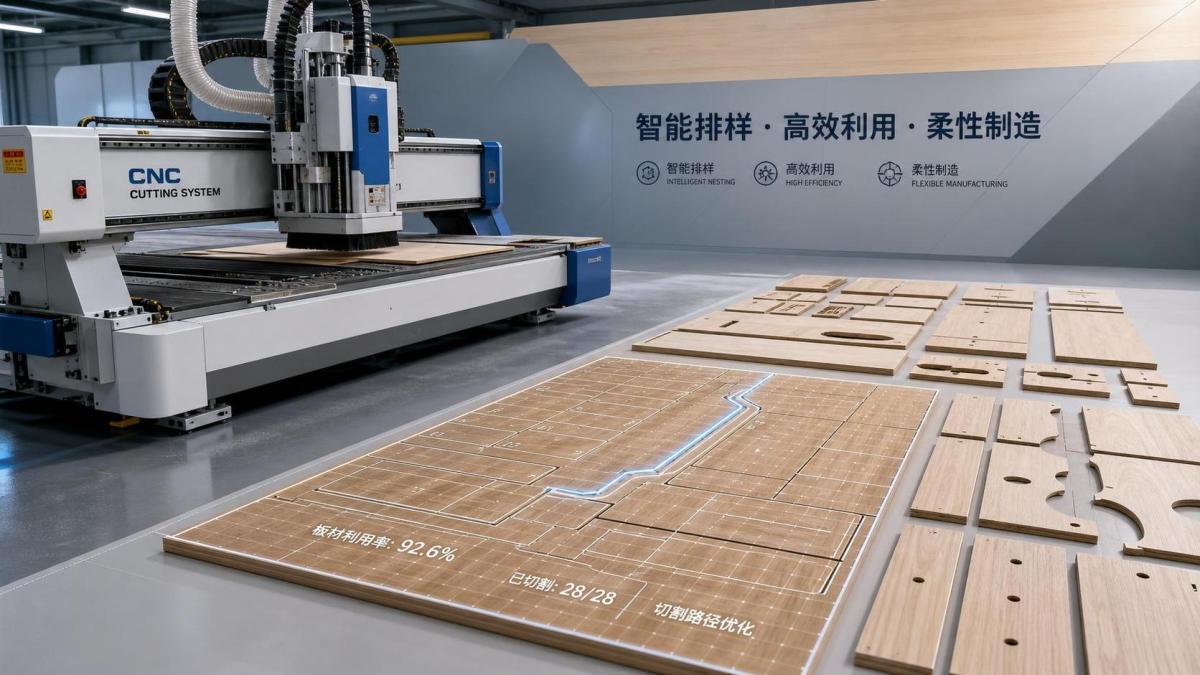
Evaluating flexible wood-cutting algorithms price is not just about software cost. It shapes cut quality, nesting yield, machine uptime, and order response speed.
In CNC woodworking, algorithm performance often decides whether a line runs like a flexible factory or a slow digital workshop.
That is why flexible wood-cutting algorithms price deserves the same attention as spindle power, table size, or tool magazine count.
From a buying perspective, the real question is simple. What are you actually paying for, and which price differences are justified?
The short answer is that pricing reflects far more than code volume. It reflects manufacturing logic, optimization depth, integration effort, and service risk.
In practical terms, a low quote can still become expensive if it creates board waste, manual intervention, rework, or poor compatibility with MES and CAD workflows.
A higher flexible wood-cutting algorithms price may be easier to defend when it improves yield, speeds scheduling, and supports mixed-batch production without operator dependence.
This article breaks down the cost drivers, comparison points, and buying checks that matter before signing a software or equipment contract.
What Is Included in Flexible Wood-Cutting Algorithms Price
Flexible wood-cutting algorithms price usually includes more than a nesting engine. Vendors often bundle several layers of capability under one software line item.
At the basic level, you are paying for path planning, sheet layout optimization, toolpath generation, and collision-aware sequencing.
At the higher end, the package may include material database logic, grain-direction rules, remnant reuse, drilling coordination, label mapping, and job-priority balancing.
Some suppliers also include simulation tools. These help verify cycle time, tool changes, vacuum zone use, and part stability before cutting starts.
That matters because the visible software screen is only one part of the value. The hidden logic behind production flow usually explains much of the flexible wood-cutting algorithms price.
Another pricing factor is deployment format. Standalone software is usually cheaper than a system tied into ERP, MES, scanner stations, and machine controllers.
So when comparing quotes, start by asking for a feature boundary list. Without that, price comparison is mostly guesswork.
The Main Cost Drivers Behind Flexible Wood-Cutting Algorithms Price
Several variables consistently move flexible wood-cutting algorithms price up or down. Understanding them helps explain why two offers can look similar but perform very differently.
1. Optimization depth
Basic engines focus on fitting parts into boards. Advanced engines optimize cut order, tool wear, head travel, remnant recovery, and mixed-material scheduling.
The deeper the optimization logic, the higher the development cost. It also tends to lift practical value faster than cosmetic interface features.
2. Machine complexity
A 3-axis router needs less algorithmic support than a 5-axis CNC with drilling banks, saw units, automatic loading, and return handling.
As hardware complexity rises, flexible wood-cutting algorithms price usually rises with it. The software must account for more movement rules and production constraints.
3. Customization level
Standard software is cheaper. But many furniture producers need custom logic for door panels, cabinets, wardrobes, curved parts, or special drilling strategies.
If the supplier must build custom post-processors or workflow rules, price moves up quickly. Custom work also affects future upgrade costs.
4. Integration scope
Integration is one of the biggest hidden factors in flexible wood-cutting algorithms price. It covers CAD import, MES connectivity, barcode flow, and machine communication.
The more systems involved, the more testing and support are needed. This is where many low initial quotes become expensive later.
5. Service and upgrade model
One-time licenses look appealing, but support quality varies widely. Subscription or annual service models often include updates, bug fixes, and process tuning.
That means the right flexible wood-cutting algorithms price cannot be judged without checking the support window and upgrade path.
How to Compare Low, Mid, and High Price Options
In the market, flexible wood-cutting algorithms price usually falls into three practical tiers. The ranges vary by region, but the logic is consistent.
A low flexible wood-cutting algorithms price can fit a stable product mix and low order volatility. It is less suitable for high-mix, short-lead furniture manufacturing.
Mid-range options often make sense when output growth is expected, but full dark-factory automation is still a medium-term target.
High-end systems tend to pay back when material savings, labor reduction, and delivery reliability all matter at the same time.
Hidden Costs That Distort Flexible Wood-Cutting Algorithms Price
The most misleading part of flexible wood-cutting algorithms price is what gets excluded from the first quotation.
Common hidden costs include post-processor fees, operator training, on-site commissioning, and paid upgrades for integration connectors.
Some vendors charge separately for new machine models, extra workstations, or future database expansion. Those charges can materially change total ownership cost.
There is also process risk. If software lacks stable nesting logic, the plant may consume more boards than projected, even when the license looked affordable.
Downtime risk matters as well. A weak service team can turn a small software fault into a missed delivery problem.
This is why flexible wood-cutting algorithms price should always be reviewed as total operational cost, not just a procurement line item.
Questions to Ask Before Comparing Quotations
Good comparison starts with disciplined questioning. Vendors often use similar words, but their actual scope can differ sharply.
- What nesting efficiency has been proven on materials similar to ours?
- Does the quoted flexible wood-cutting algorithms price include CAD, MES, and barcode integration?
- How are grain direction, drilling rules, and remnant management handled?
- What is the expected setup time for new part families and new machine configurations?
- Which updates are included, and which future changes require paid engineering?
- Can the supplier demonstrate cycle-time improvement on a real production case?
- What local or remote support response time is contractually guaranteed?
These questions help move the discussion from price labels to process evidence. That is usually where strong suppliers separate themselves.
A Practical Buying Framework for Smarter Decisions
A workable decision model should combine price, performance, and implementation risk. Looking at only one of those three usually leads to weak purchasing outcomes.
Step 1: Define your production reality
Map order size, product variation, board types, lead times, and shift structure. Flexible wood-cutting algorithms price only makes sense against real plant complexity.
Step 2: Calculate return from three angles
Measure potential savings in material use, labor input, and machine utilization. This creates a more honest benchmark than software cost alone.
Step 3: Test with sample jobs
Ask each supplier to run the same sample set. Compare yield, cut time, tool changes, and ease of exception handling.
Step 4: Score service reliability
A strong service structure can justify a higher flexible wood-cutting algorithms price. In flexible manufacturing, recovery speed often has direct cash value.
Step 5: Review expansion path
Check whether the system can support future routers, edge-banding links, smart sorting, and data analytics without a full software replacement.
This approach keeps flexible wood-cutting algorithms price anchored to business impact, not sales presentation style.
Final View on Flexible Wood-Cutting Algorithms Price
Flexible wood-cutting algorithms price is really a proxy for process capability. It reflects how well software can convert design intent into stable, efficient production.
The best option is rarely the cheapest quote and not automatically the highest one. The better choice is the system that lowers waste, protects uptime, and fits future workflow needs.
When reviewing flexible wood-cutting algorithms price, compare feature scope, integration depth, service model, and proof of real production gains.
That gives a clearer basis for investment decisions and reduces the risk of paying twice, first for the license and later for the missing capability.
A structured evaluation, backed by sample testing and full cost review, is still the most reliable path to choosing the right solution.
Related News
Get weekly intelligence in your inbox.
No noise. No sponsored content. Pure intelligence.
