
High Precision Offset Presses Manufacturer: 7 Technical Checks Before You Compare Suppliers
High Precision Offset Presses Manufacturer: 7 Technical Checks Before You Compare Suppliers
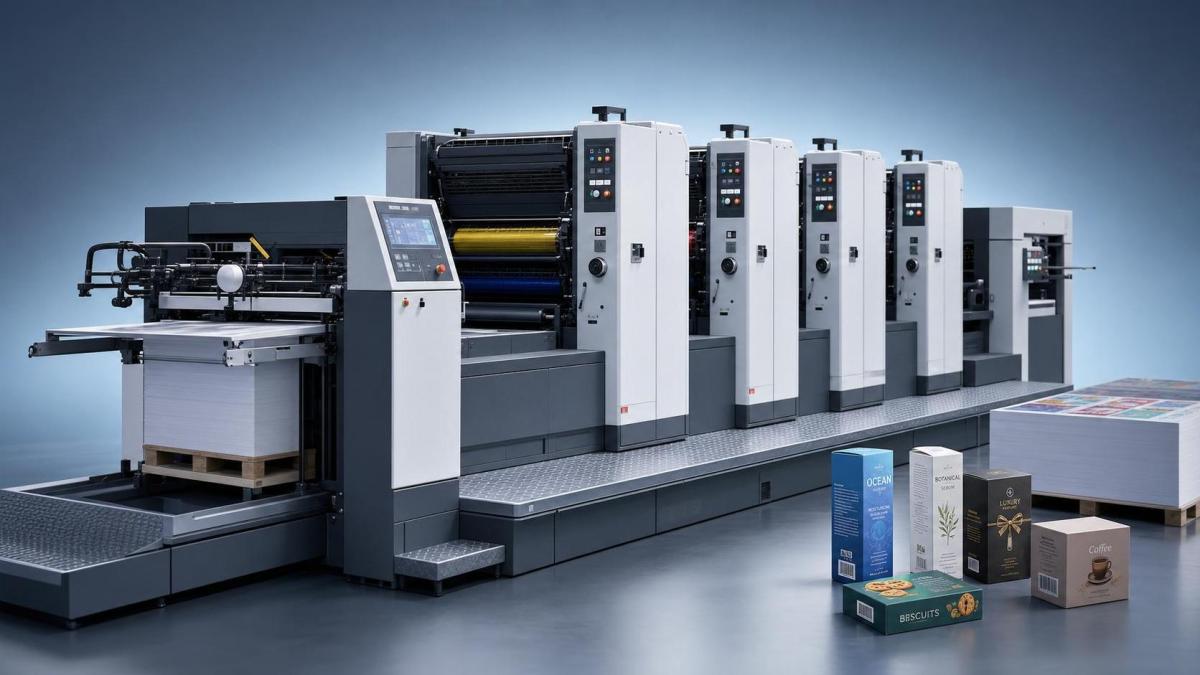
Choosing a high precision offset presses manufacturer is not just about headline speed or price.
The real gap appears later, on the floor, during long runs, rush orders, and color-critical packaging jobs.
A supplier may promise 15,000 sheets per hour.
What matters more is whether that speed holds stable registration, consistent density, and low waste after several shifts.
For packaging and commercial print buyers, a high precision offset presses manufacturer should be evaluated as a long-term production partner.
That means looking beyond catalog claims and checking the mechanics, controls, service model, and total operating logic.
The seven checks below help you compare suppliers with more confidence and fewer expensive surprises.
1. Verify registration stability under production conditions
Registration accuracy is the first serious test for any high precision offset presses manufacturer.
Brochures often show ideal lab values.
Real production includes paper variation, humidity changes, operator shifts, and speed ramps.
Ask suppliers for registration performance across short, medium, and long runs.
The useful question is not peak accuracy.
It is drift control over time.
- Request tolerance data at startup, after warm-up, and after several continuous hours.
- Check whether automatic register control adjusts in real time or only after manual correction.
- Review sample jobs with fine text, skin tones, barcodes, and tight trapping areas.
A capable high precision offset presses manufacturer should explain how frame rigidity, cylinder machining, servo response, and sensor feedback support stable overprint.
If the answer stays vague, move carefully.
2. Check sheet handling, feeder control, and delivery accuracy
Many print defects begin before ink touches the sheet.
Feeding instability creates skew, doubles, marking, and register loss.
This is why sheet transport deserves separate attention when assessing a high precision offset presses manufacturer.
Look at feeder head design, suction control, side lay consistency, transfer timing, and delivery pile management.
Then connect those points to your substrate mix.
In actual business, this matters even more for lightweight paperboard, coated stock, and warp-prone materials.
- Ask for the stable operating range by sheet size, thickness, and board flatness.
- Confirm anti-scratch and anti-marking features in transfer and delivery sections.
- Review makeready waste data for common carton grades.
A strong high precision offset presses manufacturer will connect transport precision to end-use packaging quality, not just machine speed.
3. Assess ink-water balance control and color repeatability
Color consistency is where many supplier comparisons become superficial.
A high precision offset presses manufacturer may show beautiful first samples.
The harder challenge is repeating those results across shifts, operators, and repeat orders.
Pay close attention to dampening stability, inking unit response, preset data use, and closed-loop color systems.
This also affects wash-ups, emulsification risk, and waste between job changes.
Useful questions include:
- How fast does the press reach sellable color after startup?
- How stable is density on long packaging runs?
- Can the system store and recall job parameters with low operator dependence?
For food, cosmetic, pharma, and premium retail cartons, repeatability often matters more than theoretical top speed.
A reliable high precision offset presses manufacturer should prove that with measured data.
4. Compare automation depth, not just automation labels
Automation is one of the most overused terms in supplier presentations.
The better question is where automation actually reduces labor, waste, and downtime.
A serious high precision offset presses manufacturer should map automation across the full workflow.
That includes plate changing, presetting, register correction, color control, blanket washing, diagnostics, and production data capture.
From recent market changes, labor availability has become a stronger decision factor.
This makes usable automation more valuable than flashy interfaces.
When comparing a high precision offset presses manufacturer, ask where automation removes daily friction, not where it only looks modern.
5. Review uptime design, spare parts logic, and service response
Machine quality and service quality cannot be separated.
Even the best press will eventually need support, parts, calibration, or troubleshooting.
A dependable high precision offset presses manufacturer plans for that from day one.
Ask how quickly technicians respond, where parts are stocked, and which modules have known wear cycles.
More importantly, ask existing users about recovery time after a fault.
That is often the clearest signal.
- Confirm local or regional service coverage.
- Check critical spare part lead times.
- Review preventive maintenance schedules and remote diagnostic capability.
- Ask whether software updates improve function or only fix problems.
For plants running carton lines, die-cutters, and folder-gluers behind the press, downtime creates a chain reaction.
That is why service depth should carry real weight in any supplier scorecard.
6. Calculate total operating cost, not just purchase price
The cheapest quotation can become the most expensive ownership decision.
A high precision offset presses manufacturer should be compared on total cost across several years.
This includes waste, consumables, energy, maintenance, labor, training, and lost output during setup.
More obvious now is how short-run packaging growth changes cost logic.
Frequent job changes punish presses with slow makeready and unstable presets.
Build a comparison model around your own order structure.
- Estimate annual waste sheets by job type.
- Model setup time for repeat and new orders.
- Include expected part replacements and service visits.
- Compare labor need per shift and per changeover.
This is where one high precision offset presses manufacturer may outperform another, even with a higher initial capital cost.
7. Test supplier fit through references, trials, and risk questions
The final check is about credibility under pressure.
A high precision offset presses manufacturer may perform well on paper.
You still need evidence from production references, test jobs, and difficult questions.
Ask for reference sites with similar substrates, run lengths, finishing demands, and operator skill levels.
During trials, bring files that expose weaknesses.
Do not bring only easy jobs.
- Use jobs with heavy solids, fine reverses, barcodes, and repeat color targets.
- Ask how the supplier handles tolerance disputes after installation.
- Confirm training scope for operators, maintenance staff, and supervisors.
- Review acceptance criteria in writing before the order is signed.
This step often reveals whether a high precision offset presses manufacturer is transparent, mature, and ready for a long-term account relationship.
How to turn these checks into a better supplier decision
A structured comparison works better than open-ended meetings.
Create a scoring sheet for registration, sheet handling, color control, automation, service, operating cost, and reference strength.
Then weight each factor by your plant reality.
If you run premium cartons, color repeatability may rank first.
If you handle many short jobs, changeover and automation may dominate.
If service coverage is weak in your region, uptime support may outweigh price.
The best high precision offset presses manufacturer is rarely the one with the loudest brochure.
It is the supplier whose machine, support model, and cost structure stay stable under your actual workload.
Use these seven technical checks before the comparison process gets narrowed by headline speed or initial quotation.
That approach usually leads to a cleaner shortlist, a stronger negotiation position, and a much better final investment decision.
Related News
Get weekly intelligence in your inbox.
No noise. No sponsored content. Pure intelligence.
