
Automated Die-Cutting with Stripping: When It Solves Waste and Speed Bottlenecks
Automated Die-Cutting with Stripping: When It Solves Waste and Speed Bottlenecks
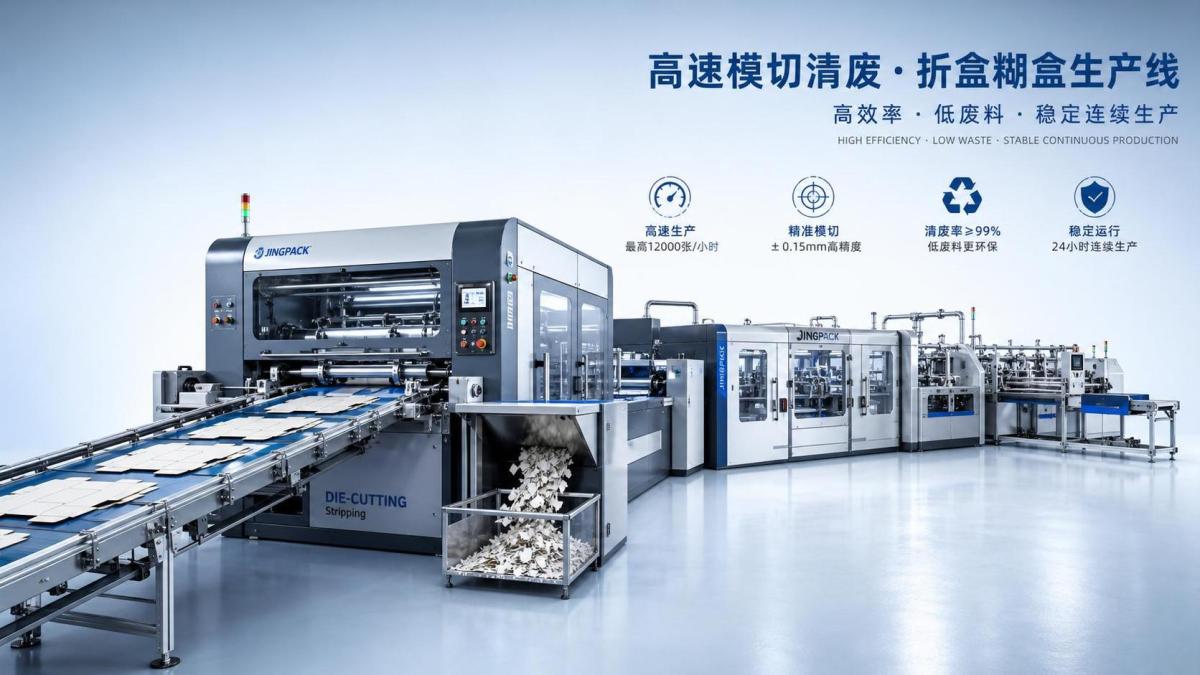
For many converting plants, waste and speed problems rarely come from one issue alone. They usually show up together, then spread into scheduling, labor, and delivery performance.
That is where automated die-cutting with stripping becomes useful. It removes scrap inline, shortens touchpoints, and keeps the sheet flow cleaner from press to folder-gluer.
In practical terms, automated die-cutting with stripping helps high-volume carton production run faster without pushing instability downstream. That balance matters more than headline machine speed.
For packaging lines serving e-commerce, cosmetics, pharma, and consumer goods, the value is straightforward. Less waste handling means more consistent throughput, cleaner blanks, and fewer delays before folding and gluing.
From the PWFS perspective, this is not only a machine upgrade. It is a process decision that affects yield, labor structure, maintenance planning, and line-wide production rhythm.
Why waste and speed bottlenecks often appear together
A die-cutting line can look fast on paper but still miss output targets. The usual reason is hidden friction around waste removal, pile quality, and downstream stops.
Without inline stripping, operators often separate scrap manually or through extra offline steps. That adds labor, handling time, stack disturbance, and more chances for bent nicks or torn edges.
Once scrap removal becomes inconsistent, the next machines feel it quickly. Folder-gluers slow down, blank feeding becomes less stable, and reject rates start creeping upward.
This also means planning becomes harder. A line that technically runs fast but generates cleanup work is difficult to schedule with confidence, especially under short delivery windows.
In real operations, the bottleneck is often not the cutting stroke itself. It is the combined effect of scrap, rehandling, micro-stops, and unstable handoff between processes.
What automated die-cutting with stripping changes
Automated die-cutting with stripping combines precise die-cutting and automatic waste separation in one controlled sequence. The goal is simple: deliver cleaner blanks with fewer manual interventions.
That sounds incremental, but the operational effect is broader. Scrap exits the process immediately, so stacks stay tidier and the next machine receives material in a more predictable condition.
Well-configured automated die-cutting with stripping also supports higher sustained speed, not just peak speed. Sustained speed is what protects delivery promises and equipment utilization.
Another benefit is quality stability. When stripping is automated and repeatable, small internal cutouts and edge waste are removed more consistently than in labor-heavy processes.
This is especially relevant for intricate folding cartons, promotional packs, and high-graphics boxes, where poor scrap release can damage appearance or slow packing later on.
Core operational gains
- Lower manual scrap handling and fewer touchpoints.
- Higher effective throughput across the shift.
- Cleaner blank delivery into folder-gluers or packing stations.
- Better stack quality and less disruption during transport.
- More predictable planning for repeat orders and peak periods.
Where automated die-cutting with stripping makes the strongest business case
Not every product line needs the same level of automation. The best fit usually appears where volume, complexity, and downstream sensitivity meet.
Automated die-cutting with stripping is often justified in medium-to-long runs, frequent repeat jobs, and carton designs with windows, internal holes, or tight geometric features.
The case becomes stronger when labor availability is uneven. Plants that depend on skilled operators for scrap cleanup usually feel the payoff faster.
It also fits operations where folder-gluer uptime is strategically important. A small die-cutting improvement can unlock larger gains if it prevents downstream starve-and-stop cycles.
Typical fit scenarios
- Folding cartons with multiple internal cutouts.
- Retail packaging needing high visual quality.
- Corrugated formats with strict shipping deadlines.
- Plants balancing many SKUs with repeated order cycles.
- Factories aiming to reduce dependence on manual finishing labor.
How to evaluate the investment without relying on machine speed alone
A common mistake is to compare only rated sheets per hour. That misses the real economics of automated die-cutting with stripping.
A better evaluation starts with total line effect. Look at net output, labor hours, scrap disposal effort, quality loss, and downstream idle time.
In many plants, the strongest return does not come from faster cutting alone. It comes from fewer interruptions and more stable handoff into gluing, packing, or bundling.
This wider view matters even more when product mix is changing. Shorter lead times and more packaging variation reward processes that recover quickly between jobs.
Useful evaluation metrics
Implementation risks to watch before scaling up
Automated die-cutting with stripping works best when the full process is aligned. Problems usually start when companies treat it as a stand-alone machine purchase.
Tooling design matters first. Poor nick layout, weak stripping rules, or unstable sheet behavior can reduce the benefits of automation quickly.
Board grade variation also needs attention. Different flute structures, coatings, and calipers can change stripping performance and stack behavior.
Then there is workflow integration. If scheduling, die storage, and job data are disorganized, the machine may be underused even when technically capable.
From recent market shifts, a clearer signal is emerging. Plants that pair automation with disciplined process control gain much more than plants that buy speed without system readiness.
Pre-launch checklist
- Review current scrap patterns by SKU and die design.
- Map the real bottleneck between press, die-cutting, and folder-gluer.
- Test stripping performance on actual board grades, not sample assumptions.
- Confirm operator training for setup, troubleshooting, and maintenance.
- Define line-level KPIs before installation and track them after startup.
What a practical rollout should look like
The most effective rollout starts with a narrow product family. Choose jobs where scrap complexity and output pressure are already visible and measurable.
Run a baseline first. Record current throughput, labor input, reject causes, and folder-gluer interruptions for at least several representative orders.
After startup, compare the same job family under matched conditions. That makes the business case for automated die-cutting with stripping much easier to defend internally.
Once results are stable, expand to more complex jobs and broader shifts. This phased approach reduces disruption while building operator confidence and maintenance knowledge.
For organizations upgrading multiple converting assets, this also creates cleaner data for MES, scheduling, and future automation planning across the plant.
Final takeaway
Automated die-cutting with stripping solves the most stubborn waste and speed bottlenecks when the real problem is process friction, not only cutting capacity.
Its value becomes clear when cleaner blanks, lower manual handling, and steadier downstream flow translate into better output per shift and fewer surprises in delivery.
For operations navigating labor pressure, SKU complexity, and tighter production windows, automated die-cutting with stripping is often less about automation for its own sake.
It is about building a converting line that holds speed, controls waste, and supports profitable growth with fewer hidden losses. That is the right point to begin evaluation.
Related News
Get weekly intelligence in your inbox.
No noise. No sponsored content. Pure intelligence.
