
High-Speed Folder Gluers for Retail Packaging: Best Box Styles and Line Speeds
High-Speed Folder Gluers for Retail Packaging: Best Box Styles and Line Speeds
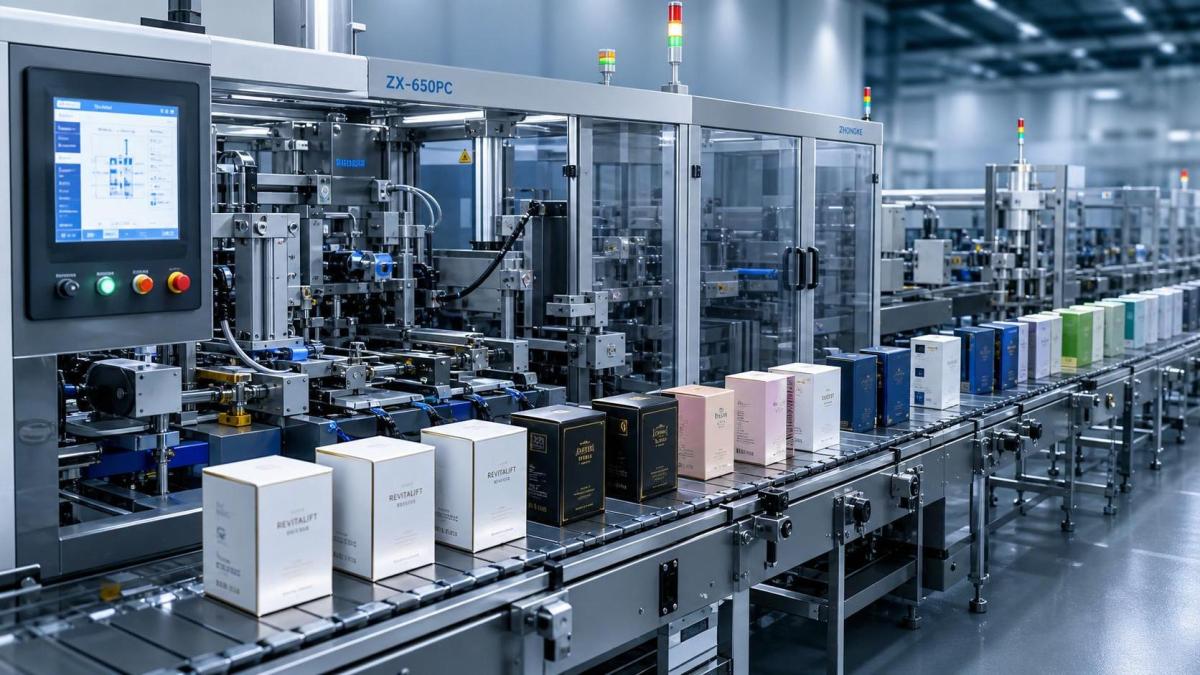
For output, quality, and ROI, high-speed folder gluers for retail packaging now shape far more than final conversion.
They influence launch timing, carton stability, labor use, and the consistency retailers expect across large programs.
That is why line speed should never be reviewed alone.
The stronger approach is to match carton structure, board behavior, glue system, and changeover rhythm as one decision.
In practical terms, the best high-speed folder gluers for retail packaging are the ones that keep throughput high without raising hidden costs.
Those hidden costs usually come from cracking, fish-tailing, warped blanks, glue skips, and long setup windows.
From recent market changes, a clearer signal is emerging.
Retail packaging runs are becoming shorter, SKU counts are rising, and launch calendars leave less room for trial and error.
This also means machine selection must support flexibility as much as top-end speed.
The sections below focus on which box styles suit high-speed folder gluers for retail packaging, what line speeds are realistic, and how to plan with fewer surprises.
What Really Drives Performance on High-Speed Folder Gluers for Retail Packaging
Machine catalog speeds look attractive, but actual output depends on converting discipline more than brochure numbers.
For high-speed folder gluers for retail packaging, five variables usually decide real productivity.
- Blank quality: inaccurate die-cutting, weak creases, and fiber spring-back reduce stable running speed.
- Board grade: SBS, FBB, kraft, and laminated substrates respond differently in fold memory and glue hold.
- Carton geometry: straight-line cartons run faster than multi-corner or crash-lock structures.
- Glue application: nozzle control, viscosity, and drying profile directly affect bond reliability.
- Changeover frequency: short runs can erase theoretical speed gains if setup takes too long.
In day-to-day business, glue consistency is often the first limit, not motor speed.
A line can be mechanically capable of very high output, yet still lose efficiency through rework or inspection holds.
So when comparing high-speed folder gluers for retail packaging, it is more useful to ask how fast the line runs in-spec, shift after shift.
Best Box Styles for High-Speed Retail Carton Production
Not every retail carton earns the same result on high-speed folder gluers for retail packaging.
Some styles are naturally stable at speed, while others need tighter process control or lower output targets.
1. Straight-Line Cartons
This is usually the strongest fit for high-speed folder gluers for retail packaging.
Straight-line cartons are common in cosmetics, pharmaceuticals, personal care, and dry food sleeves.
They offer simple folding paths, predictable glue zones, and lower setup complexity.
If the retail program values output above all else, this style usually gives the cleanest return.
2. Crash-Lock Bottom Cartons
These cartons add convenience in downstream filling, but they are more demanding at conversion speed.
They work well on advanced high-speed folder gluers for retail packaging with precise pre-break and lock-bottom sections.
Typical uses include beverages, health products, and heavier retail packs needing better base strength.
3. Four-Corner and Six-Corner Boxes
These styles support shelf-ready presentation and more premium retail formats.
However, they need more folding actions, stronger timing control, and better blank consistency.
They can run successfully, but rarely at the same speed as standard straight-line cartons.
4. Window Patching and Specialty Cartons
Retail presentation improves, yet process risk rises.
Film alignment, extra adhesive zones, and static can reduce the practical ceiling of high-speed folder gluers for retail packaging.
These cartons often justify speed trade-offs when brand impact is part of the commercial value.
Realistic Line Speeds by Carton Type
A useful planning model separates maximum machine speed from sustainable production speed.
For high-speed folder gluers for retail packaging, sustainable speed is the number that supports acceptable waste, bond strength, and operator control.
These ranges are directional, not universal.
Actual results shift with substrate thickness, coating, humidity, glue chemistry, blank size, and pack count per order.
Still, they help frame a realistic capital discussion around high-speed folder gluers for retail packaging.
How to Choose the Right Configuration
Selection should start with production mix, not with the highest published speed.
For most investment cases, the best high-speed folder gluers for retail packaging share several practical features.
- Fast recipe recall for repeat SKUs and shorter setup windows.
- Reliable pre-breaking for rigid or coated retail board.
- Vision inspection for glue lines, barcode presence, and carton orientation.
- Servo-driven adjustment where product mix changes frequently.
- Compatible glue systems for cold glue, hot melt, or hybrid applications.
- Packer integration that avoids bottlenecks after the folder gluer.
A common mistake is buying a machine around one hero product.
That decision can look efficient at first, then become restrictive when SKU growth arrives.
A better path is to map current carton styles, next-year launches, and expected run-length changes before freezing the specification.
Operational Risks That Slow Retail Packaging Lines
Even strong equipment can underperform if upstream and downstream controls are weak.
On high-speed folder gluers for retail packaging, these are the risks seen most often.
- Die-cut variation causing folding drift and squareness issues.
- Glue splash or weak adhesion from unstable viscosity control.
- Scuffing on printed surfaces during high-friction transport.
- Warped blanks from storage humidity or curing imbalance after printing.
- Manual packing limits that waste the speed gained at conversion.
More importantly, these risks are connected.
For example, weak crease quality forces slower running, which increases queue time, which then disrupts line balance at packing.
That is why high-speed folder gluers for retail packaging should be reviewed as part of a full converting system, not a single machine island.
A Practical Upgrade Framework
When evaluating a new line or retrofit, a structured checklist keeps the decision grounded.
For high-speed folder gluers for retail packaging, the most useful framework usually includes four steps.
- Rank carton styles by annual volume, margin, and customer service risk.
- Measure sustainable speed, waste, and setup time on current jobs.
- Test difficult substrates and premium finishes before approving the final line design.
- Confirm downstream bundling, case packing, and pallet flow match the target output.
This approach makes the ROI case easier to defend.
It also prevents a common problem: adding fast conversion capacity while the rest of the plant stays unchanged.
In many facilities, the winning move is not the absolute fastest machine.
It is the line that delivers repeatable output across the widest mix of retail cartons.
That distinction matters when launch schedules are tight and retailer penalties are real.
For PWFS, this is exactly where market intelligence becomes useful.
The strongest decisions connect box design, print quality, die-cut accuracy, gluing dynamics, and plant-wide automation in one model.
If the goal is a reliable retail packaging upgrade, start by matching box style complexity to sustainable line speed, then build the specification around real production behavior.
Related News
Get weekly intelligence in your inbox.
No noise. No sponsored content. Pure intelligence.
