
Packaging Automation vs Manual Packing: Where Labor Savings Justify the Investment
Packaging Automation vs Manual Packing: Where Labor Savings Justify the Investment
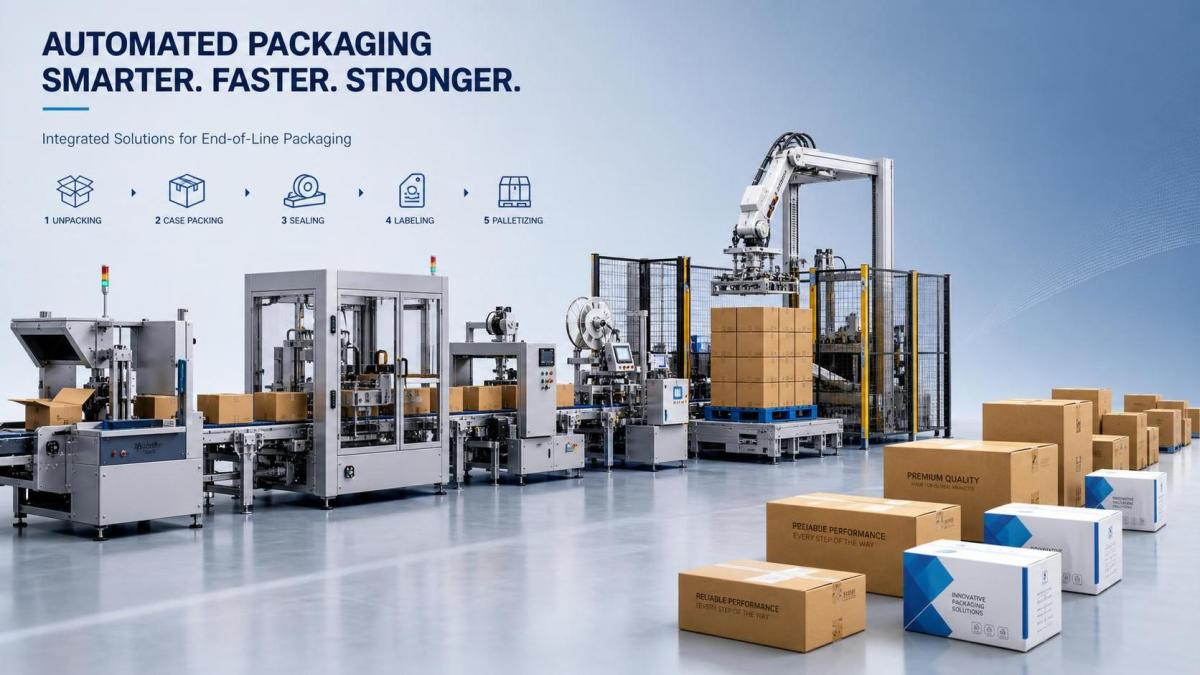
For business evaluators, the core issue is timing. Packaging automation only makes sense when labor savings and output gains clearly outweigh capital cost.
That decision has become more urgent. Labor is more expensive, hiring is less predictable, and delivery windows keep getting tighter.
In practical terms, the comparison is no longer manual packing versus machines alone. It is cost flexibility versus operating consistency.
For factories handling corrugated boxes, printed cartons, furniture components, or mixed packaged goods, packaging automation can remove labor bottlenecks that limit growth.
Still, not every line should be automated. Low volume, unstable SKU mixes, or frequent packaging redesigns can keep manual packing economically reasonable.
The right answer comes from unit economics. Once labor, rework, downtime, and service levels are measured honestly, the break-even point becomes easier to see.
Why the manual packing model is under pressure
Manual packing still works in many operations. It is flexible, simple to start, and usually cheaper on day one.
But its hidden costs are rising faster than many procurement teams expect. Wage inflation is only part of the story.
Training time, attendance swings, quality inconsistency, and ergonomic risk all affect the real packing cost per unit.
This is especially visible in operations with seasonal peaks. Temporary labor often increases errors exactly when order pressure is highest.
More importantly, manual packing scales linearly. If volume rises by 30%, labor hours usually rise in the same direction.
Packaging automation changes that relationship. After installation, added volume often requires less incremental labor than a manual process.
- Manual lines absorb demand swings with overtime, extra shifts, or short-term hiring.
- Automated lines absorb demand through speed, repeatability, and process balancing.
- The financial difference appears in cost per packed unit over time.
What packaging automation actually improves
A common mistake is reducing packaging automation to headcount reduction. Labor savings matter, but they are rarely the only benefit.
Automated case erecting, filling, sealing, labeling, palletizing, and inspection also improve pace control across the full packing cell.
That matters because weak downstream packing often wastes the value created by fast converting, printing, cutting, or machining equipment upstream.
For example, a high-speed folder gluer loses effective capacity if packing crews cannot keep up with finished cartons.
The same logic applies to corrugated plants and panel furniture operations. Throughput is only as strong as the slowest last-mile process.
In that setting, packaging automation supports measurable gains in several areas:
- Lower direct labor per shift.
- Higher stable output per hour.
- Fewer sealing, counting, and labeling errors.
- Less product damage during handling.
- Better traceability for regulated or branded packaging.
- Improved safety in repetitive lifting and motion tasks.
These gains are often easier to defend internally than simple labor elimination. They connect directly to margin protection and customer service.
Where labor savings justify packaging automation
The investment case becomes stronger when certain operating signals appear consistently. One strong month is not enough.
A reliable case for packaging automation usually starts with labor intensity. If a line depends on too many operators, savings can build quickly.
Another clear signal is overtime dependency. When premium labor hours become routine, the payback period often shortens fast.
The third signal is quality drift. Rework, repacking, missed labels, and inconsistent carton formation quietly raise total cost.
Packaging automation is usually justified sooner under these conditions:
- High daily volume with repeatable packaging formats.
- Multi-shift operations with chronic labor shortages.
- Frequent peak seasons that disrupt staffing plans.
- Customer penalties linked to packing accuracy or delivery delays.
- Products requiring consistent presentation, sealing, or trace coding.
- Plants where upstream equipment already runs faster than packing capacity.
In these situations, packaging automation stops being a technology upgrade. It becomes a capacity and cost control decision.
How to calculate the real break-even point
The strongest procurement decisions rely on modeled numbers, not vendor claims. A simple payback formula is useful, but incomplete.
Start with current labor cost per packed unit. Include wages, overtime, supervision, training, absentee cover, and turnover.
Then calculate the automated state. Add depreciation, maintenance, utilities, spare parts, software, and operator oversight.
After that, layer in quality and throughput effects. Those two items often decide whether packaging automation pays back in 18 months or 36.
A disciplined model should also test three scenarios: expected volume, low volume, and peak volume. That protects against optimistic assumptions.
In many cases, the labor case alone is borderline. The full business case becomes clear only after counting scrap, service failures, and missed throughput.
When manual packing still makes more sense
Packaging automation is not automatically the better choice. Some operations would simply lock money into underused equipment.
Manual packing remains competitive when product formats change constantly or order sizes are too small to stabilize machine utilization.
It also makes sense during market entry, pilot production, or periods when packaging design is still evolving.
The warning sign is different here. Teams sometimes buy packaging automation before process discipline exists upstream.
If carton dimensions vary too much, data quality is poor, or product flow is unstable, automation may magnify the underlying problem.
A better approach is phased readiness. Standardize pack patterns, improve line balance, and clean the production data before larger investment.
A practical buying framework for packaging automation
A sound buying process should focus on workflow fit, not brochure speed. The best system is the one that improves the entire packing operation.
Use a short evaluation framework before issuing technical requirements:
- Map the current packing process by labor minute, defect type, and queue delay.
- Identify which step limits shipment flow: erecting, filling, sealing, coding, or palletizing.
- Test SKU stability and format commonality across at least six to twelve months.
- Model packaging automation under realistic uptime, staffing, and maintenance assumptions.
- Check integration with MES, print inspection, barcode verification, or warehouse systems.
- Ask for reference data from similar throughput and product conditions.
This matters even more in print and wood-linked industries. Upstream precision is valuable only when downstream packaging automation preserves it efficiently.
For many manufacturers, the most sensible path is semi-automation first. That can reduce labor dependency without overcommitting capital.
From there, full packaging automation becomes easier to justify with live plant data instead of assumptions.
Conclusion: invest when savings are structural, not temporary
The decision between manual packing and packaging automation should be grounded in repeatable operating reality. Temporary spikes should not drive permanent capital.
When labor shortages, overtime dependence, error costs, and throughput limits persist, packaging automation usually becomes the stronger financial choice.
When demand is volatile and formats are unstable, manual packing may still protect flexibility better.
The most reliable next step is simple: quantify the current cost per packed unit, model an automated future state, and compare both under real production conditions.
That is where packaging automation stops being a trend topic and becomes a disciplined investment decision.
Related News
Get weekly intelligence in your inbox.
No noise. No sponsored content. Pure intelligence.
